
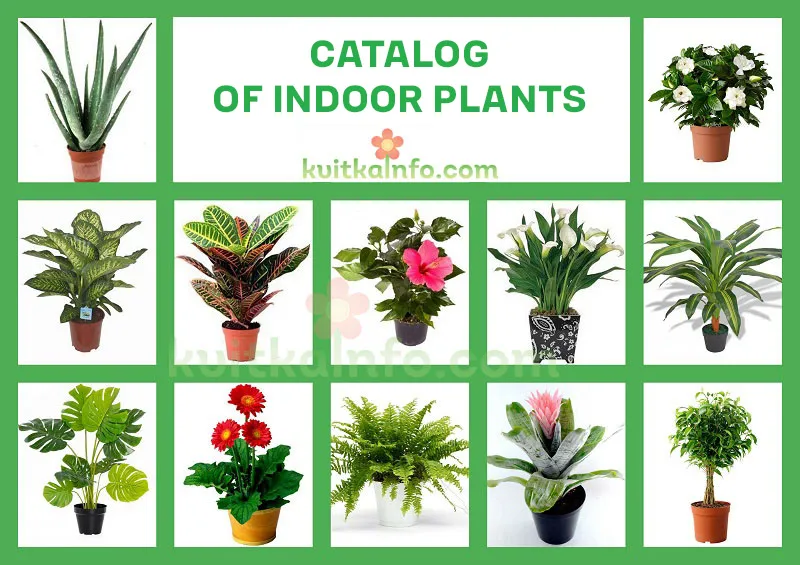
In our catalog you will find a list of popular indoor plants and flowers with photos. For detailed information on plant care, you need to click on the link on the name of the flower and go to the page with a detailed description and growing conditions for the plant you need.
Features of caring for indoor flowers follow from the conditions where they will grow. Sometimes our climate does not allow the flower to survive indoors, and this does not mean at all that you do not take good care of the plant, it’s just that this climate is not suitable for the plant. Therefore, before buying indoor plants, you should look into our Catalog of indoor plants, find a suitable flower by name or photo and, after studying the growing conditions, choose the right plant for your louse home.
A
Abutilon (indoor maple)
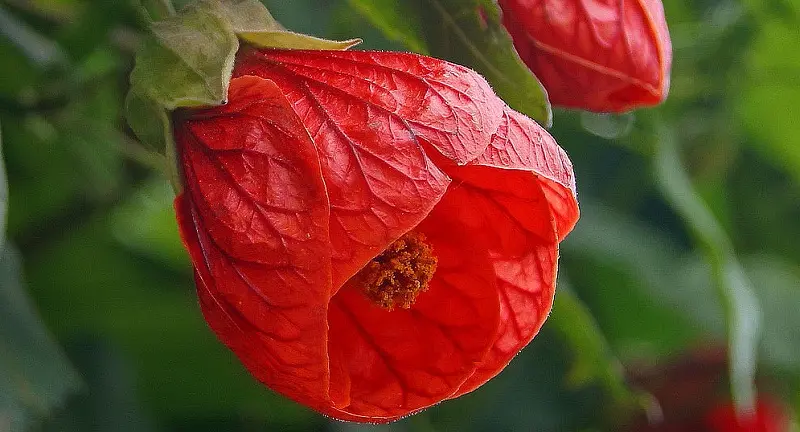
Indoor maple (Abutilon) is one of the few plants that blooms often and profusely with beautiful bell-shaped flowers, with proper care it can bloom all year round.
Azalea
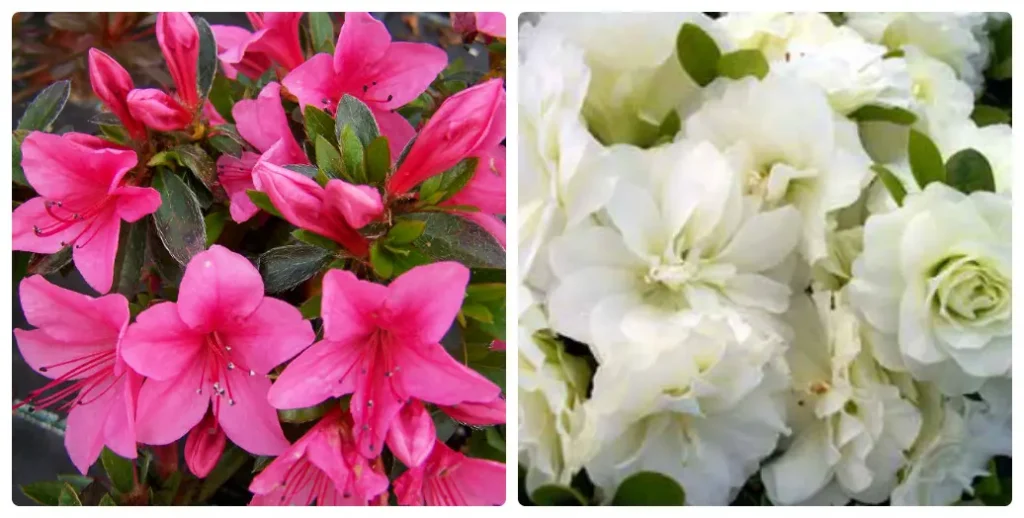
Azalea is the most beautiful flower with a delicate delicate aroma. However, this is not only a wonderful, but also a very whimsical flower. Azalea needs a lot of attention. Where is the best place to put a flowerpot and how to care for a flower?
Indoor acacia
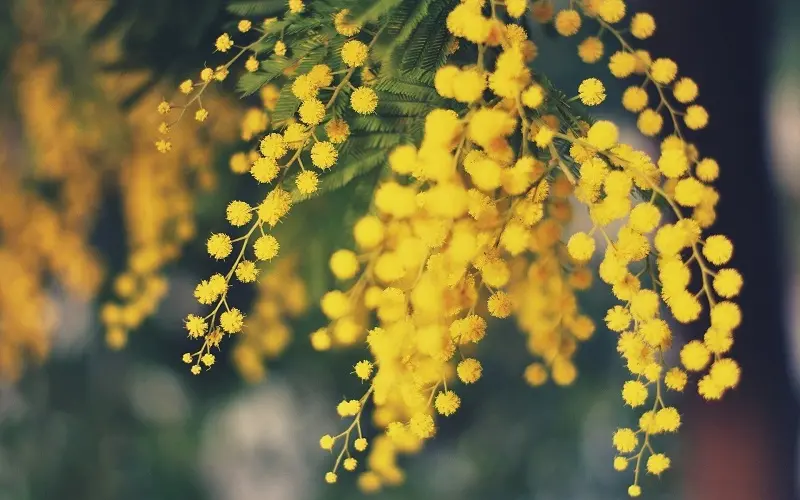
Acacia indoor (Acacia) is a perennial evergreen tree or shrub belonging to the legume family. Acacia leaves are mostly with numerous small leaves that combine into one large leaf. In many species of acacia, the leaf plate does not fully or partially develop, and then the function of photosynthesis is performed by a leaf-shaped expanded petiole-phyllodium.
Amarin
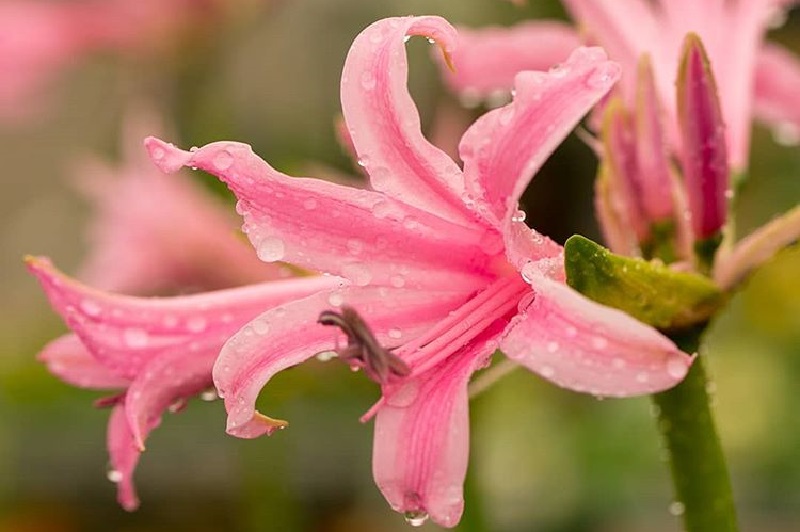
Amarin flowers have a pleasant delicate smell. The leaves are dark green, xiphoid shaped. The leaves are present practically all year round, except for the dormant period, which occurs in July and August (dormant period). The height of the peduncle is 40-75 cm. The plant is not frost-resistant (withstands -7 ° C).
Aloe
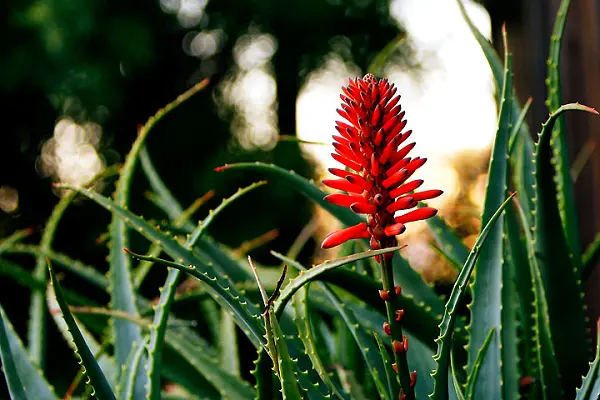
Aloe (Aloe) is a perennial deciduous herbaceous, bushy or tree-like houseplant with thick, fleshy, elongated leaves at the edges, smooth or serrated, or with thorns gathered in a dense rosette.
Read about aloe types, medicinal properties, care, reproduction.
Alocasia
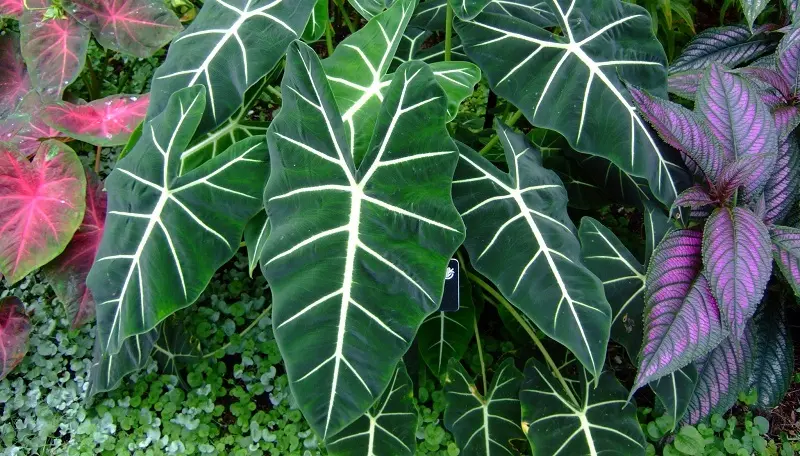
Alocasia (Alocasia) is a perennial, ornamental deciduous, exotic plant. The leaves of alocasia are elongated heart-shaped, pointed at the tips, the color of the leaf is dark green with white veins.
Orange
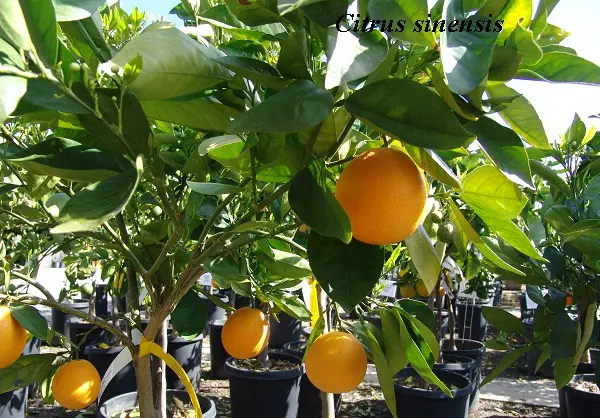
Orange in flowerpots at home. In order for fruits to appear, after flowering in the summer, they need to be taken outside, and the wind or bees will pollinate it, or you can artificially pollinate it: take a cotton swab (brush), remove pollen from the stamens, pollen the stigma with this pollen.
Read about citrus fruits, care and reproduction.
Amaryllis
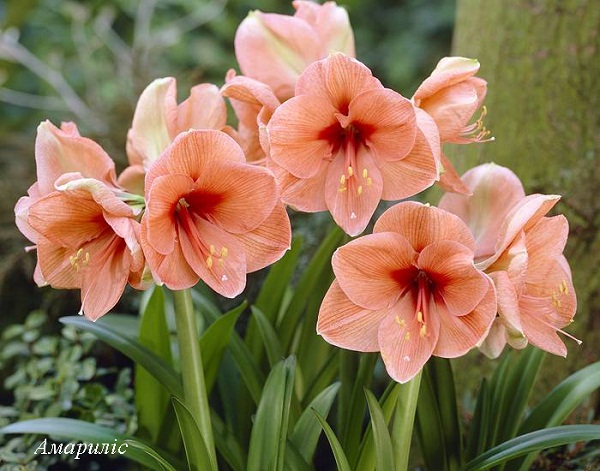
Amaryllis is represented by a single species of Amaryllis belladonna, it is very rare, those plants sold under the name “amaryllis” are actually hippeastrum. Hybrid hippeastrum are very beautiful, their flowers are of different colors: orange, white, pink, red, they are also found with stripes of a different color along the edges or along the petals.
Read about room care, reproduction, fertilization, care after flowering.
Read about what amaralis does not bloom.
Anthurium
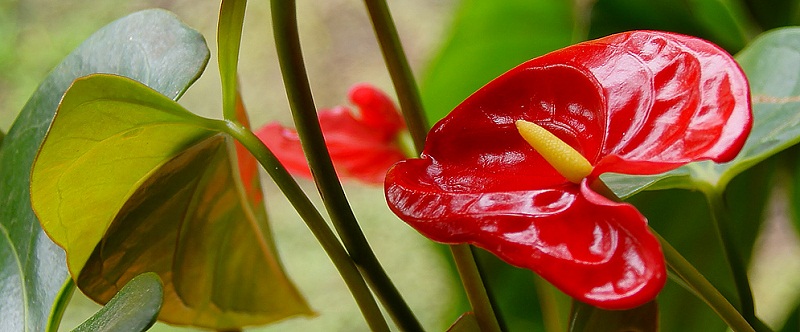
Anthurium (Anthurium) is a perennial decorative deciduous houseplant, with beautiful flowers, which reaches a height of up to 70 cm, belongs to the Aroid family. In its natural environment, it can be found in the tropical forests of Central and South America. In the natural environment, there are more than 500 species of anthurium.
Read about indoor types of anthurium, care, fertilizer, transplantation, reproduction, diseases and pests.
Araucaria
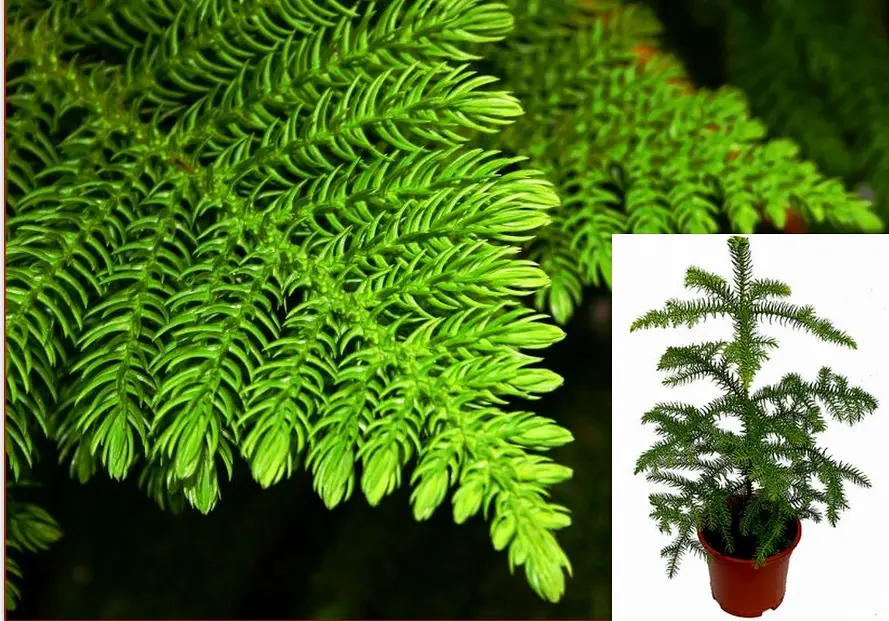
Araucaria (Araucaria) is a coniferous evergreen plant that can be grown indoors in a pot.
In its natural environment, Araucaria grows to the size of large coniferous trees (60 m), it can be found in the forests of the South. America, Brazil, Australia and New Zealand. In apartments, it can be found as an ornamental Christmas tree, the height of which does not exceed 2 meters. Araucaria blooms, but in indoor growing conditions it is impossible to wait for inflorescences from the plant.
Useful properties of Araucaria Araucaria, like other conifers, purifies the air. Araucaria improves the chemical composition of the air, so doctors order people with asthma to grow this plant.
Achimenes
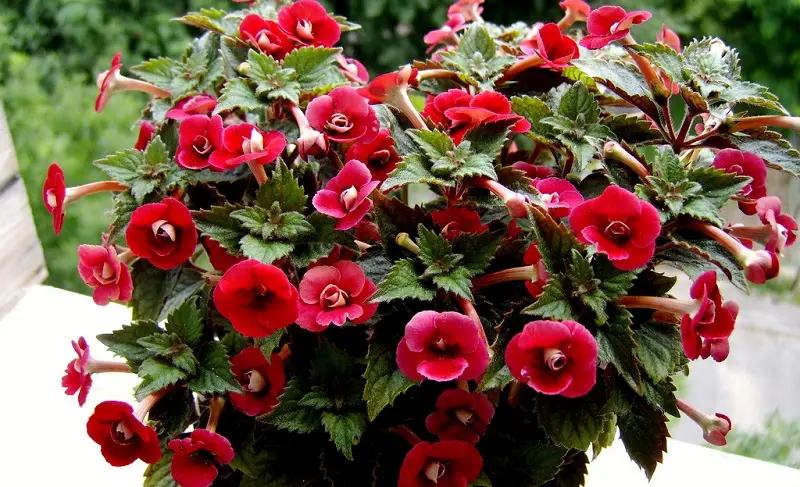
Achimenes is a plant with beautiful velvety leaves, the flower pleases with abundant and long-lasting flowering. Looks beautiful in hanging baskets. For the winter, the plant dies off, and tubers remain in the soil. Achimenes is a perennial seasonal plant, a relative of violets, belongs to the Gesneriaceae family, reaches a height of 30-60 cm.
Aglaonema
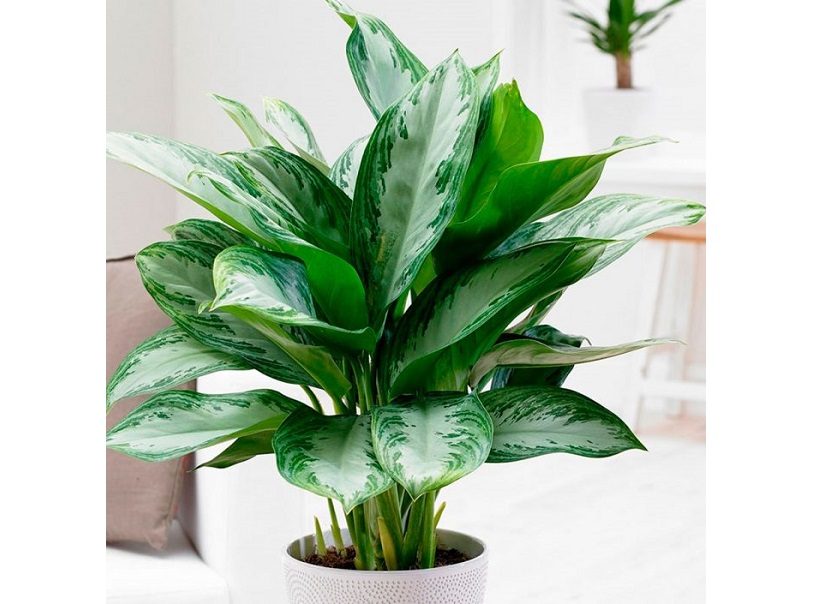
Aglaonems are beautiful plants that will decorate any interior. They are not only beautiful, but also useful, as they purify the air from harmful substances.
Aglaonema is a beautiful houseplant that is easy to care for, so it is well suited for beginners.
Agapanthus
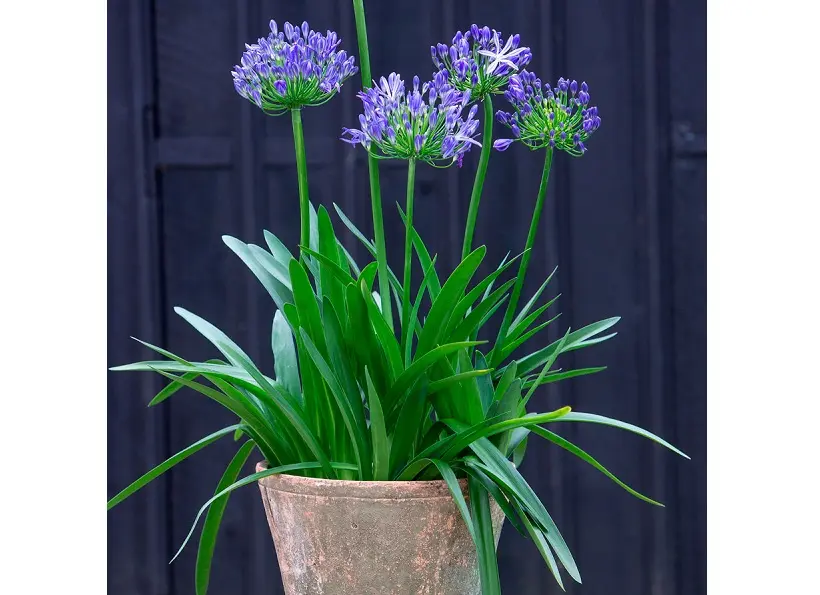
Agapanthus is a species of perennial herbaceous plant with a thick rhizome of the Liliaceae family. They come from South Africa, where there are about 10 species. The leaves are elongated, collected in a basal rosette. The flowers are funnel-shaped, collected in a large spherical inflorescence. The color of flowers can be different: blue, blue, white, pink, purple.
Adenium
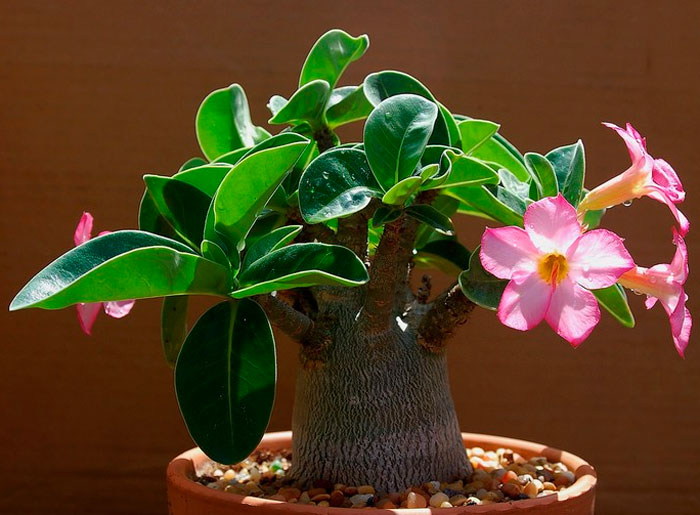
Adeniums are rather unpretentious succulent plants that are grown at home. They tolerate dry air well and do not require frequent watering.
Adenium (Adenium) is a genus of succulents native to Africa and the Arabian Peninsula. Adeniums are distinguished by a variety of flower shapes and colors. They are very popular among amateur flower growers, because they are unpretentious in care.
Aptenia
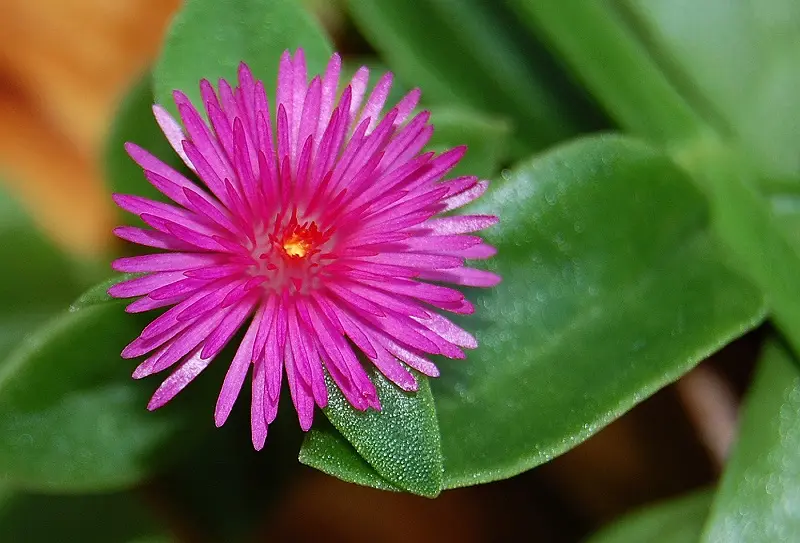
Aptenia is hardy and unpretentious, like any other succulent, but at the same time it looks like a flower star, quickly gaining popularity with its flowering. A small evergreen miracle can effectively decorate window sills and hanging pots. Even beginners can grow this beauty.
Allamanda
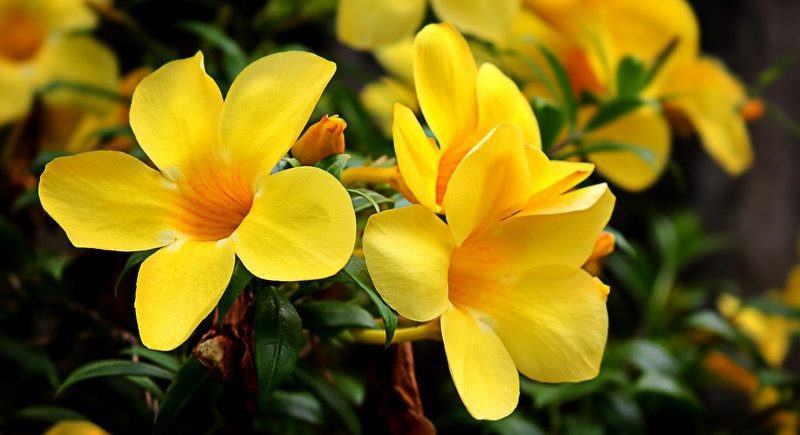
Allamanda is a fairly unpretentious indoor climbing plant that is well suited for growing at home. Allamanda (Allamanda) is a genus of tropical vines belonging to the Apocynaceae family from Brazil.
Allamanda is a vine that can reach a height of 3-4 m.Allamanda leaves are lanceolate, up to 20 cm long. Allamanda flowers are collected in inflorescences that can reach a diameter of 10-15 cm. Allamanda is known for its vibrant colors, which can be yellow, orange, red, or white. Allamanda flowers are tube-shaped and collected in inflorescences, have a strong aroma.
Alstroemeria
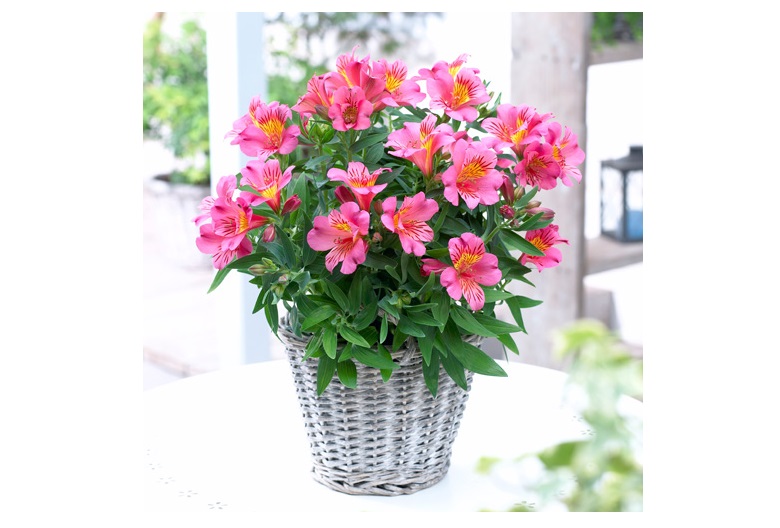
Alstroemeria is a beautiful and unpretentious plant that can be grown both in the garden and indoors. With proper care, it will delight you with its flowering for a long time.
Alstroemeria is a perennial plant native to South America. It has bright flowers of a variety of colors, which can be plain or variegated. Alstroemeria is a popular garden plant and is also often grown indoors.
Amaranth
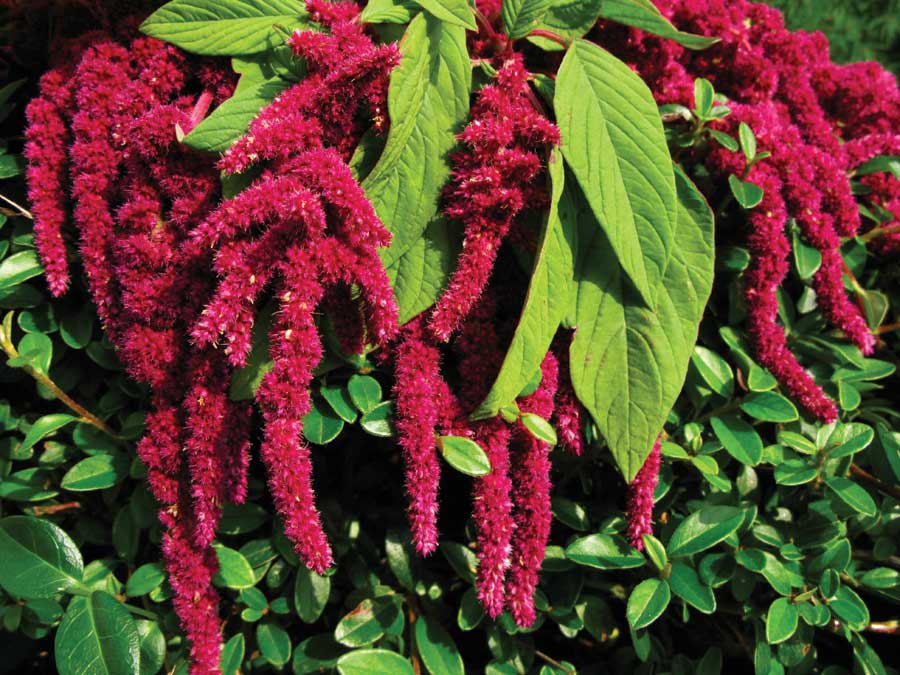
Amaranth is an unpretentious food plant that can be grown both in the garden and indoors. Amaranth seeds are rich in vitamins and minerals, they are used for food, as well as in cosmetology.
Amaranth is an annual plant native to South America. It has brightly colored leaves and flowers that can be plain or variegated. Amaranth is a popular garden plant and is also often used in cooking and traditional medicine.
B
Balsam
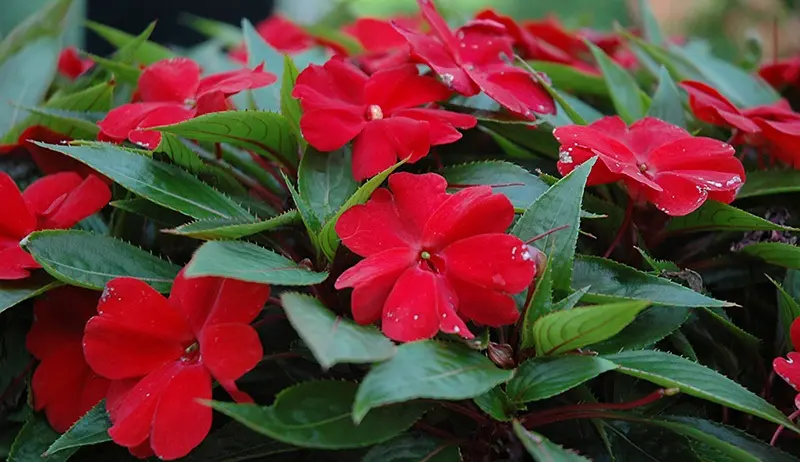
Balsam (Impatiens) is a perennial and annual plant belonging to the balsam family. In its natural environment, balsam can be found in tropical and subtropical forests of Asia and Africa. Balsams are unpretentious plants, easy to care for, they grow quickly, bloom profusely and for a long time, and reproduce easily.
Read about the types of balsams, how to care, watering and humidity, fertilizers, pruning, diseases and pests.
Begonia
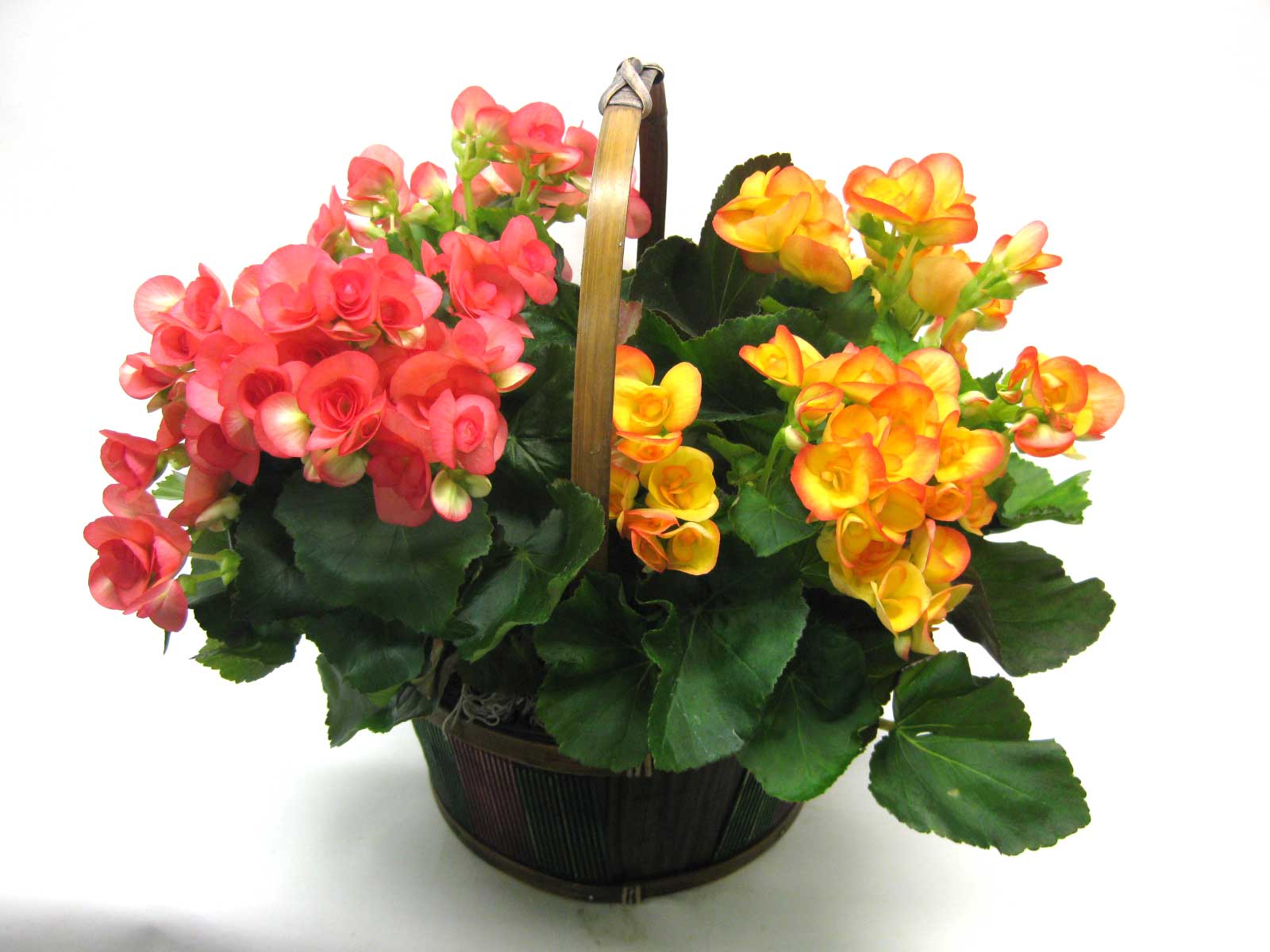
Begonia is a perennial, herbaceous plant, with very beautiful white, pink, red flowers from the begonia family. To date, there are 2 thousand hybrid species of begonias that grow in the tropics and subtropics of Southeast Asia and Africa. Under natural conditions, the size of begonias is impressive, from 5-12 cm and up to 2 meters in height, it grows in crevices of rocks, on the roots of old trees. At home, flowers grow in flowerpots and pots
Read about different types of begonias, how to choose a begonia in a flower shop, care rules.
Bougainvillea
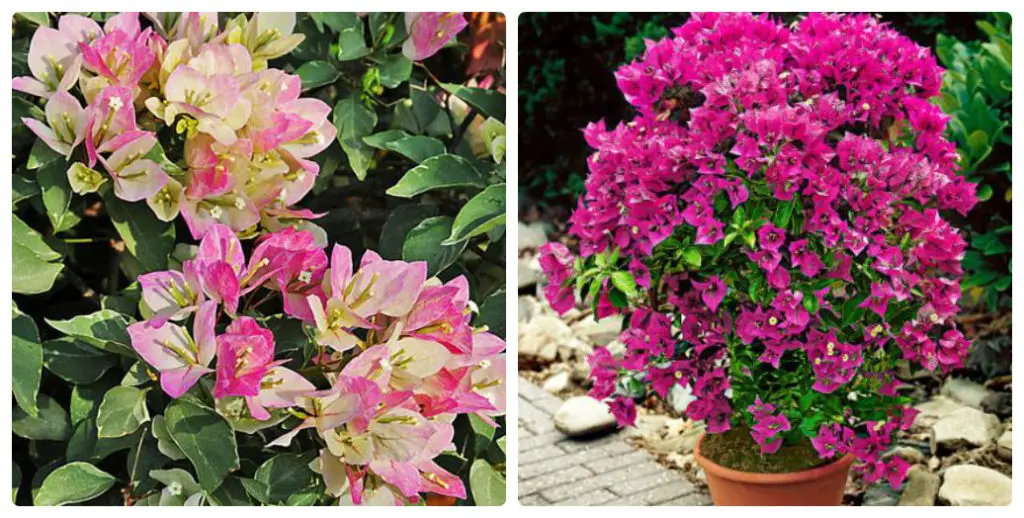
Bougainvillea (Bougainvillea) is a perennial plant that grows as a vine, or as a tree. Bougainvillea shoots are rarely covered with thorns with which the plant clings to a support. This plant belongs to the nictagine family. In bougainvillea, the leaves are oval, pointed at the end, up to 7 cm long, the flowers are tubular, very small, yellowish in color, and quickly fade. The plant is decoratively given by colorful bracts – bractae, resembling transparent paper with dark veins.
Bracts in shape are round-triangular or heart-shaped, the size of the bract reaches up to 5 cm, they are very bright and can be of different colors. The flowers fade quickly, and the bracts adorn the plant for a very long time. Bougainvillea shoots grow very quickly, the annual growth of shoots reaches up to 5 m (subject to natural cultivation). At home, bougainvillea also gives a good increase of up to 1m, if properly cared for.
Brachychiton
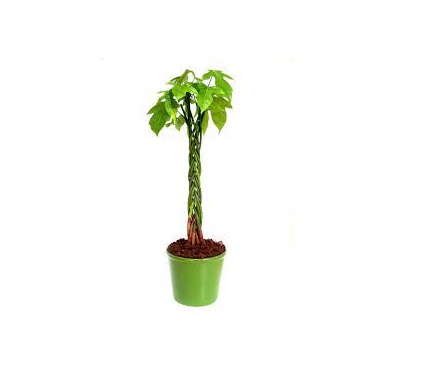
Brachychitons are ornamental plants that can decorate any room. They are unpretentious in care and well suited for novice flower growers.
Brachychitons are unpretentious plants, but for their normal development, it is necessary to follow some rules of care. It practically does not bloom indoors.
Bilbergia
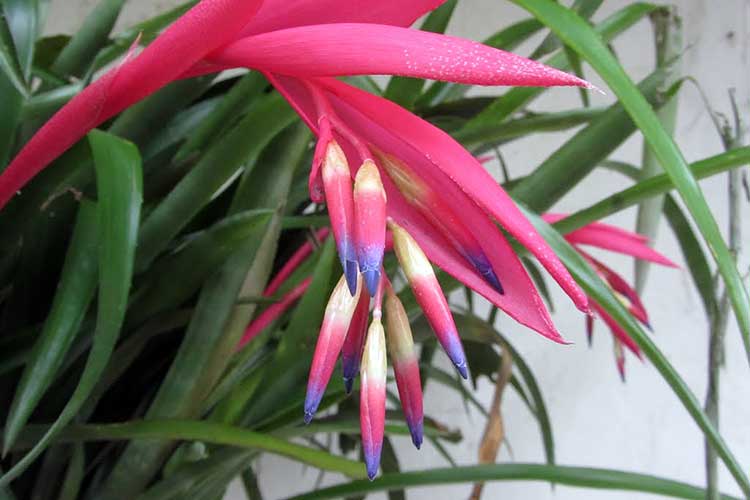
Bilbergia are popular houseplants that are prized for their bright flowers and decorative foliage.
Bilbergia (Billbergia) is a genus of bromeliad plants, a relatively unpretentious plant, but for its successful cultivation at home, certain rules must be followed.
Beloperone
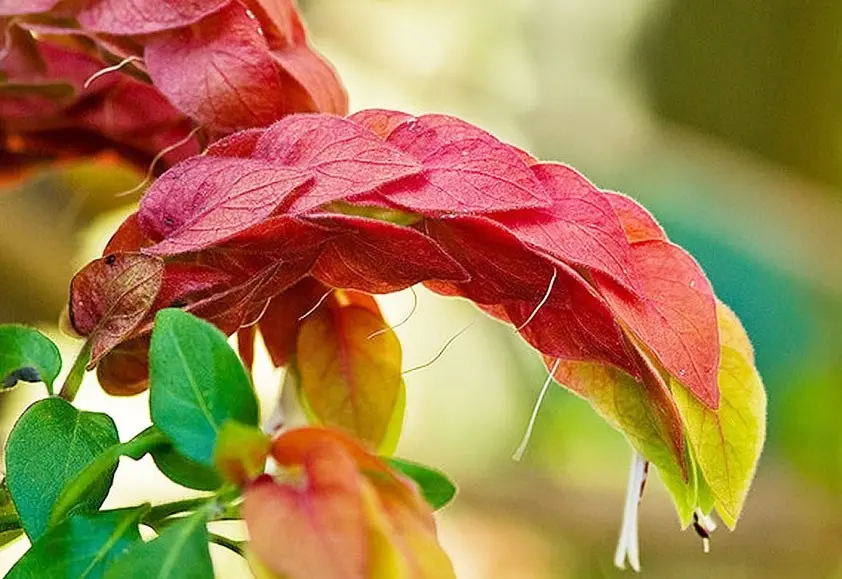
Beloperone ( Justicia ) is an undemanding houseplant that is well suited for beginners and can grow indoors.
Bromeliad
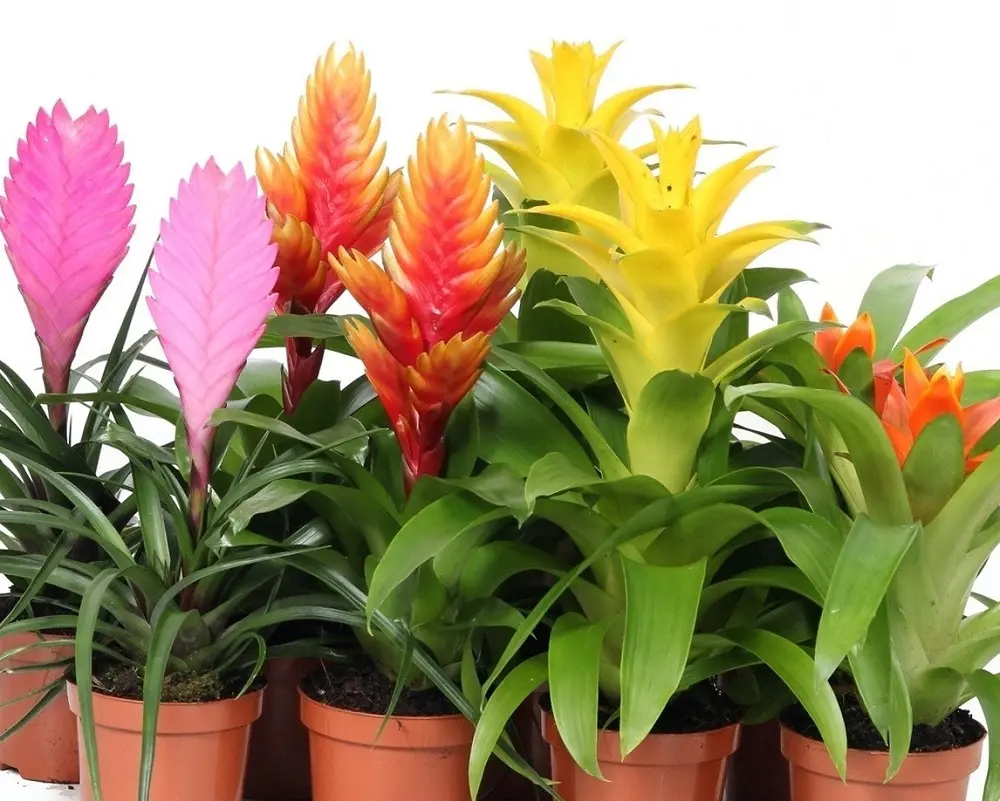
Bromeliad are ornamental indoor plants that can decorate any room. They are unpretentious in care and well suited for novice flower growers.
In
Venus flytrap (Dionea)
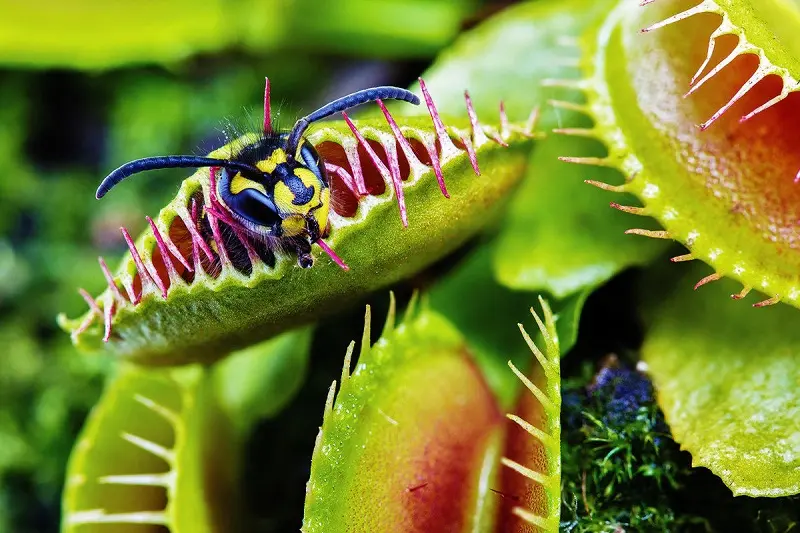
Venus flytrap (Dionea) is considered the most exotic of plants in Ukraine. It is a plant predator that eats insects. For successful cultivation, you need to create special conditions. It is also important in the care and nutrition of the flower. What can you feed? How to care? Read our article.
Read about nutrition, care, lighting, watering, reproduction, dormant period, feeding Dionea
Indoor heather
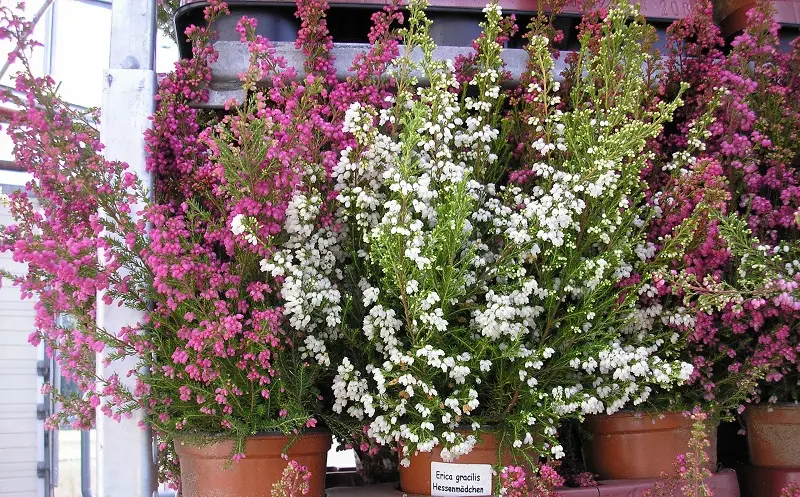
With the most adapted for growing indoors are indoor heather slender (Erica gracilis) and winter heather (Erica huemalis).
Valotta
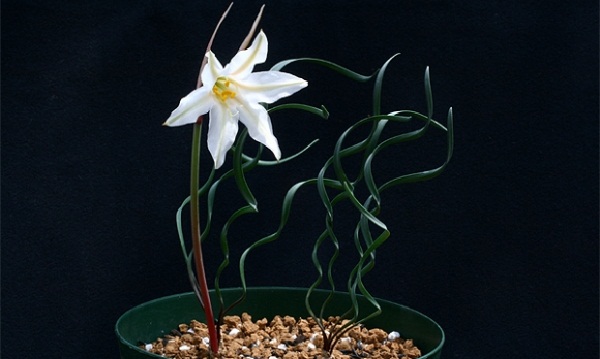
Vallota is a deciduous bulbous plant that blooms beautifully in a flowerpot indoors, grows in its natural environment in the tropics and subtropics. Vallota (Vallota) is a genus of the Amaryllis family (Amaryllidaceae). This genus has more than 50 species of bulbous plants, known to amateur flower growers as Amarilis.
Vriesia
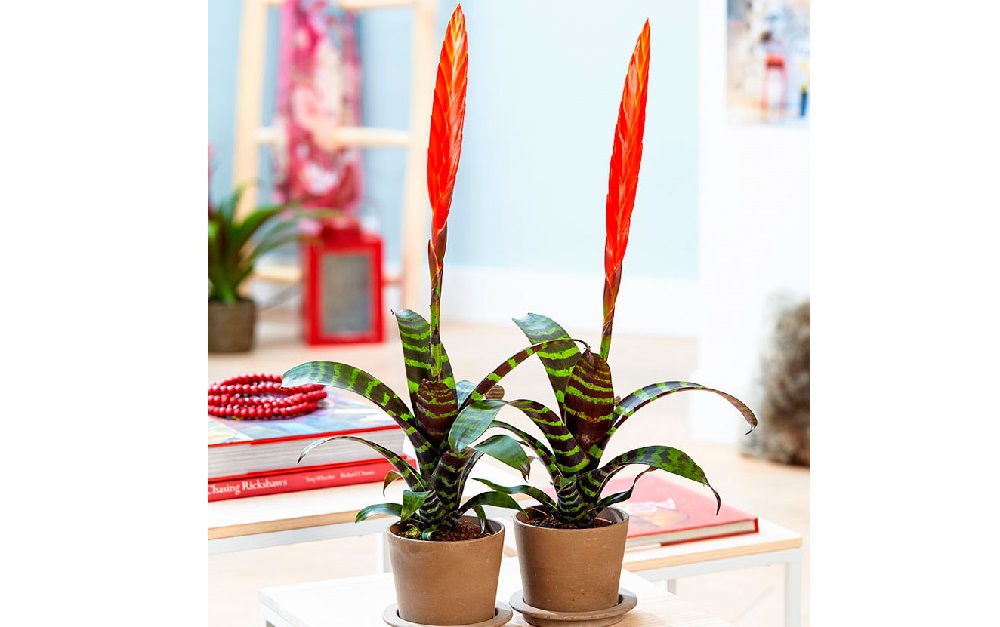
Vriesia is a perennial houseplant with a rosette of leaves. The leaves are dense, leathery, green or reddish in color. Vriezia flowers are collected in an inflorescence, which can be tubular, spike-shaped or corymbose. The flowers come in a variety of colors, including red, yellow, orange, white, and pink.
Washingtonia palm
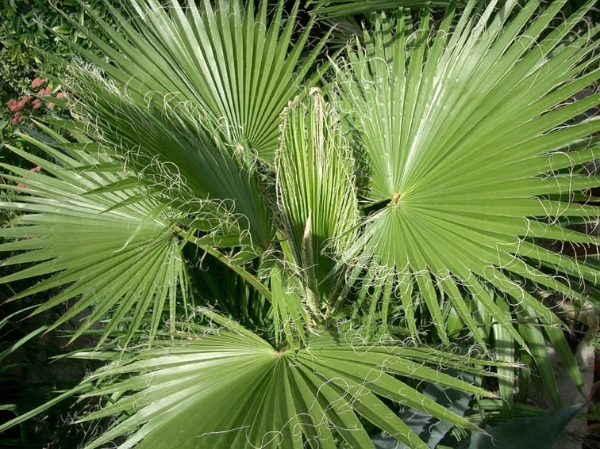
Washingtonia is a large, wide indoor palm tree that is easy to care for and suitable for beginners. It can reach a height of 30 meters in the natural environment. The trunk is straight, cylindrical, covered with the remains of leaves. The leaves are pinnate, up to 3 meters long, dark green in color. The petioles of the leaves are covered with thorns.
D
Gardenia
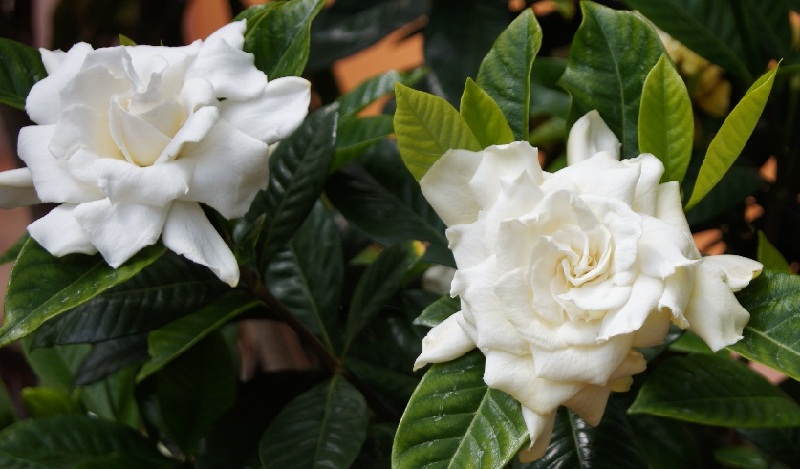
Gardenia (gardenia) is a perennial bushy plant that blooms with beautiful flowers with a pleasant aroma. The smell of gardenia is reminiscent of jasmine – hence the name jasmine gardenia. Gardenia belongs to the madder family. In its natural environment, a gardenia bush can grow up to 2 meters. The leaves are oval, bright green, shiny with pointed ends. Flowers in indoor species of gardenia (jasmine) are predominantly white, up to 7 cm in diameter, and in nature the diameter of the flower can reach more than 10 cm, the flower has matte petals.
Read about how to care for gardenia, fertilizer, pruning and how to transplant a gardenia.
Carnation
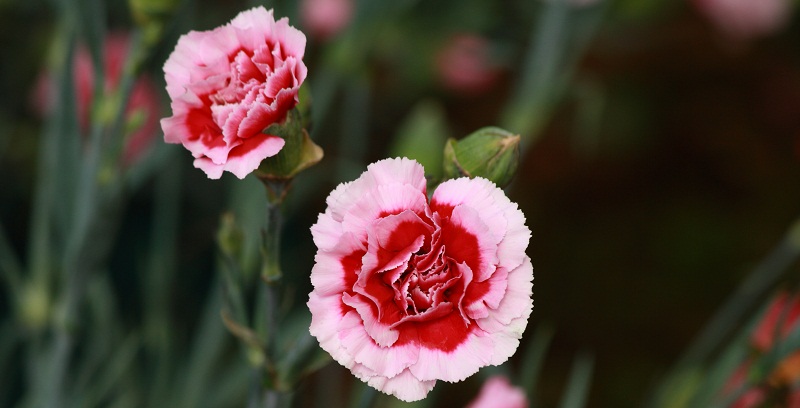
Carnation flowers will decorate an apartment or yard with their long-lasting and bright flowering from spring to autumn.
Read about the types of carnations, care, reproduction, winter shelter for carnations.
Hemanthus
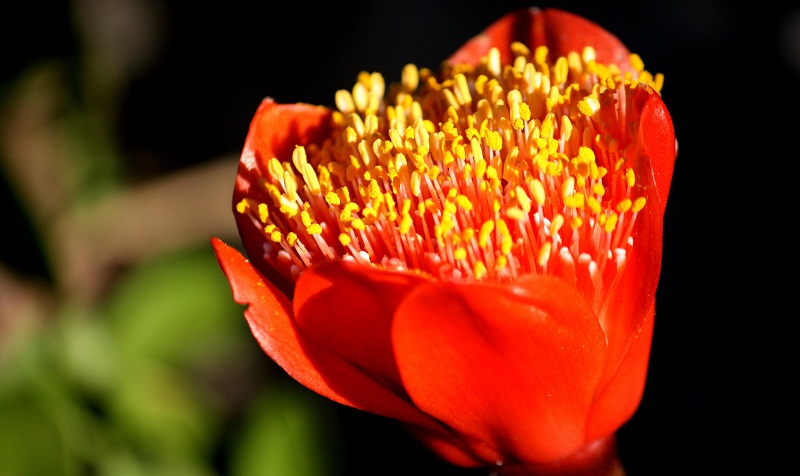
Hemanthus is a bulbous plant with thick, leathery, elongated leaves, belonging to the amaryllis family. During flowering, hemanthus produces a strong pedicel, on which unusual flowers bloom.
Hemanthus inflorescence – similar to a large spherical dandelion, the flower reaches up to 20 cm in diameter, consisting of many small red, white or orange flowers with long stamens. Often the inflorescences are surrounded by several large bracts of the same color. The hemanthus flower has a peculiar smell.
Gerbera
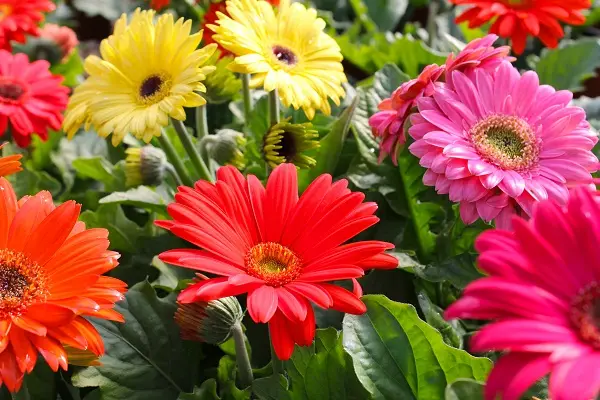
Hebera is a perennial herbaceous plant that forms a basal rosette from which pedicels grow. Gerbera belongs to the Asteraceae family. The shape of gerbera flowers is very similar to chamomile flowers, they are compound-flowered. A peduncle grows from the basal rosette, on a coarse stem and a delicate colorful flower blooms on it.
Read about how to care for gerbera, transplanting, fertilizing, reproduction.
Hibiscus (Chinese rose)
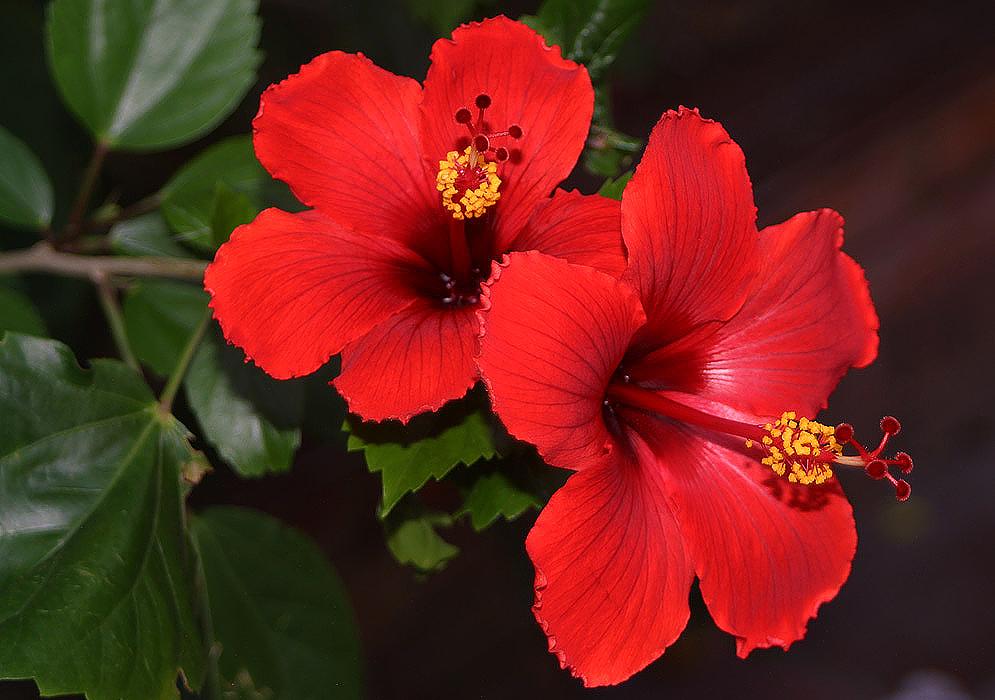
Hibiscus is a houseplant, grows in flowerpots, is famous for its magnificent bloom and easy care. How to care for hibiscus to admire its blossom every year?
Read about species, care, transplantation, reproduction, pruning.
Gloxinia
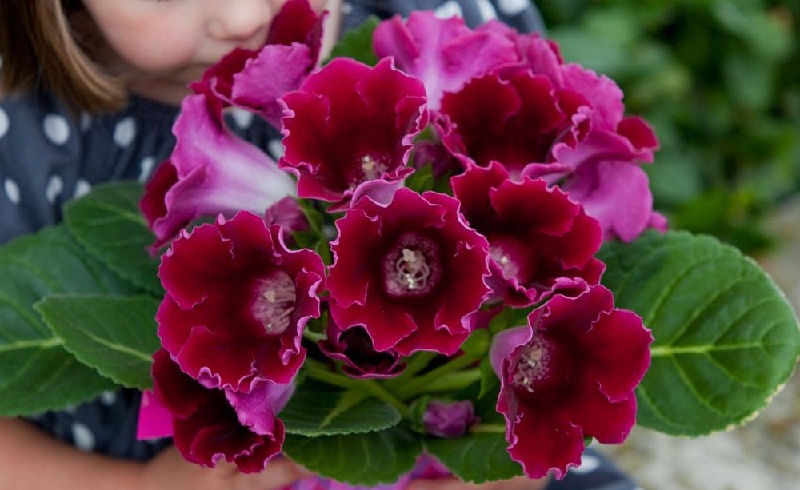
Gloxinia (Gloxinia) or Sinningia is a perennial tuberous plant, its large velor leaves are held on small stems, blooms with bell-shaped flowers of different colors, this flower belongs to the Gesneriaceae family. In its natural environment, the velvet bellflower can be found in Brazil. It was from Brazil, at the beginning of the nineteenth century, that this flower came to Europe thanks to the Australian botanist Peter Gloxinia, which was called gloxinia. On the basis of this flower, breeders bred a whole genus of gloxinia.
Hymenocallis
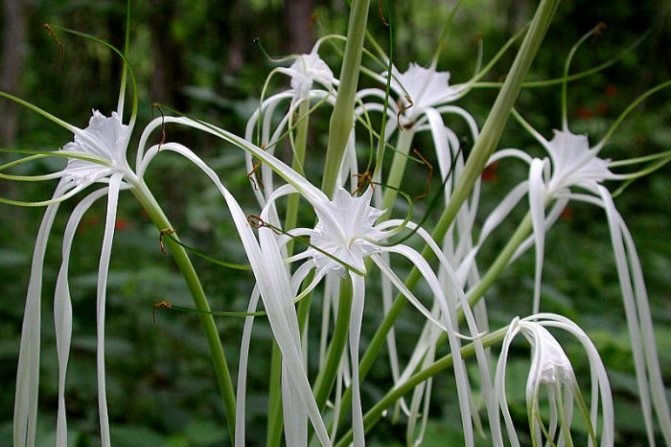
Hymenocallis are beautiful indoor plants that delight us with their bright flowering in spring and summer. It belongs to the Amaryllis family.
Hymenocallis is widely used for landscaping gardens and parks. They are also well suited for growing at home.
Gloriosa
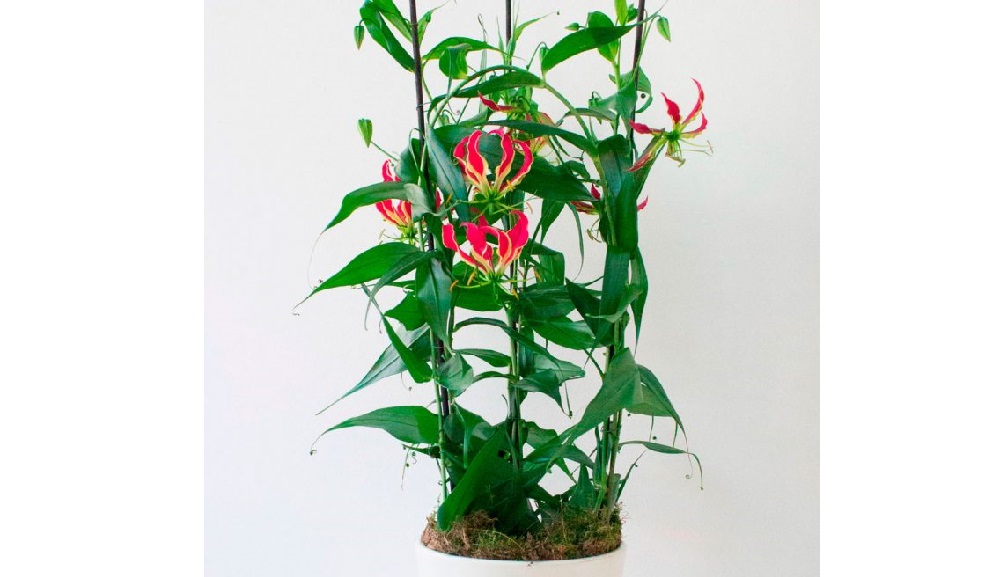
Gloriosa is called the queen of flowering vines. This is an incredibly beautiful houseplant with climbing shoots and original flowers, the shape of which resembles bright Chinese lanterns.
Ginura
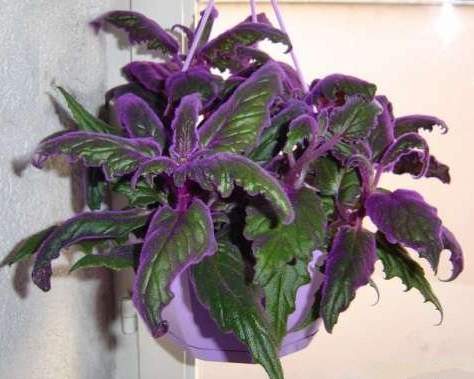
Ginura is a beautiful and unpretentious houseplant that can decorate any interior. Due to the variety of species and varieties of ginuru, you can choose a plant that is ideal for a particular room.
Indoor pomegranate
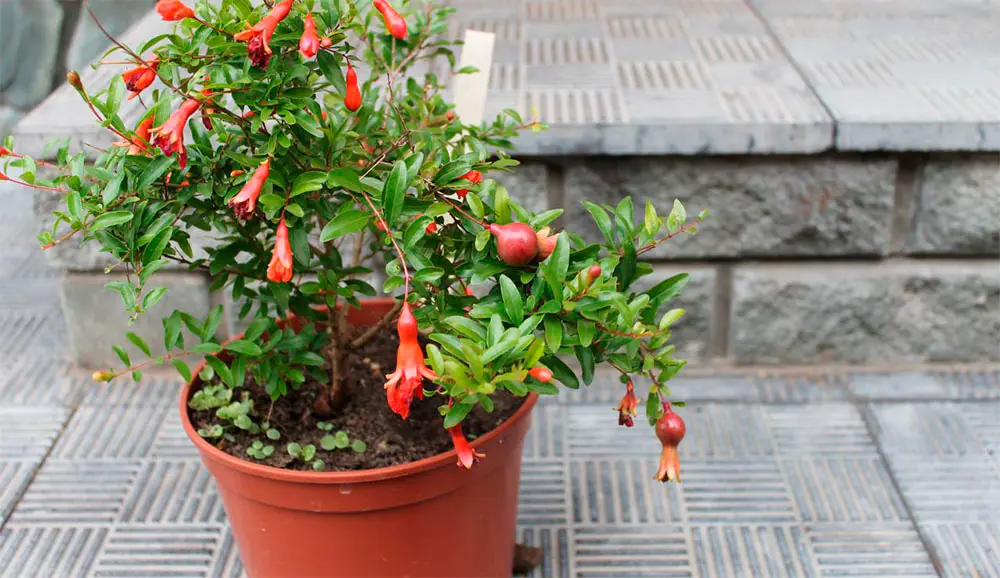
Pomegranate can be grown at home as an ornamental houseplant. Pomegranate blooms from April to May. Pomegranate flowers are small, bright red, solitary or collected in inflorescences. Indoor pomegranate fruits are inedible.
D
Delosperma
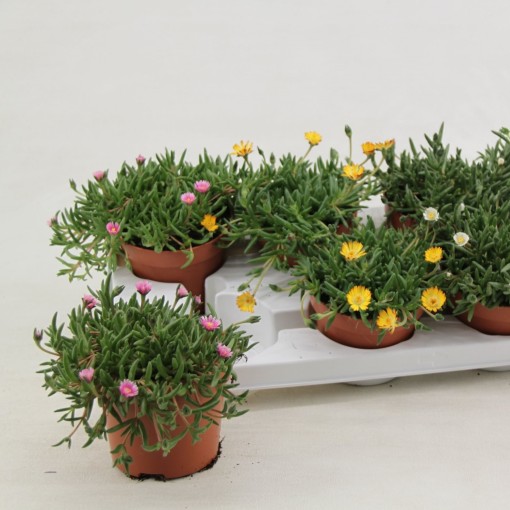
Due to the bright flowering of delosperma and the variety of flower colors, this plant is often used in the design of the front edge of flower beds. Due to its small size, this plant is also well suited for home or container cultivation.
Read about the care and transplantation of delosperma
Dipladenia
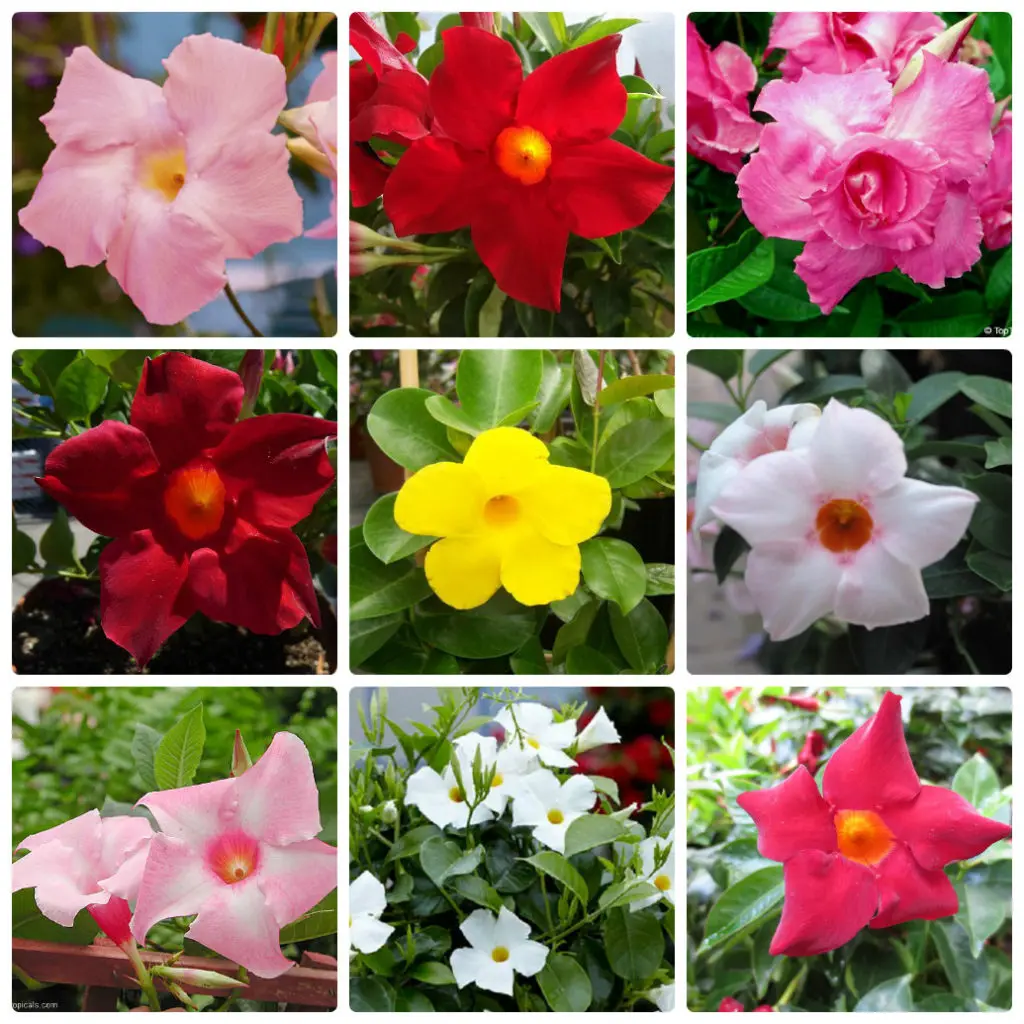
Dipladenia is a rather whimsical houseplant. For the successful cultivation of Dipladenia, it should be taken into account that it is a rainforest plant. This vine is photophilous, feels good in full sunlight, requires shading only on hot summer days, and is also sensitive to watering.
Read about the types of Dipladenia.
Read about care, light brightness, fertilizer, pruning, support for dipladenia.
Dieffenbachia
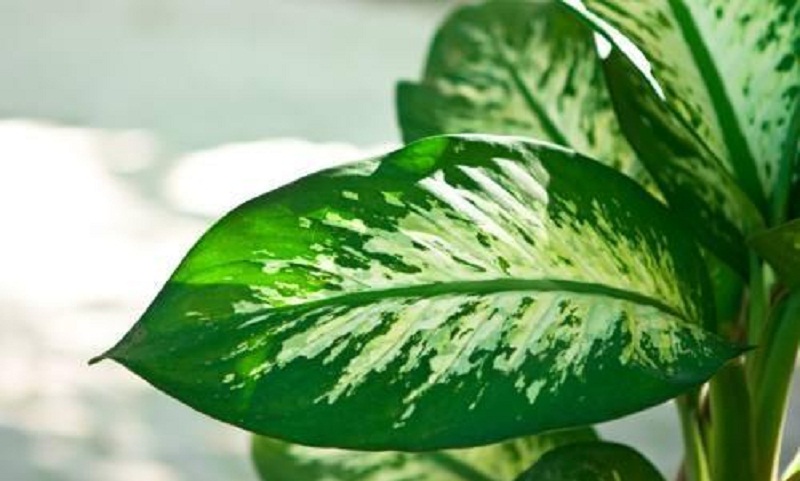
Dieffenbachia (Dieffenbachia) is an evergreen plant with large, colorful leaves, belonging to the Aroid family. The stem of dieffenbachia is thick, strong and juicy, similar to a tree trunk on which large variegated leaves grow. The pattern on the leaves can be different, depending on the species: it can be stripes, dots, dots of different colors – from light green to dark yellow.
Read about the beneficial properties of dieffenbachia, how to care for leaves, pruning, pests and diseases.
Dichondra
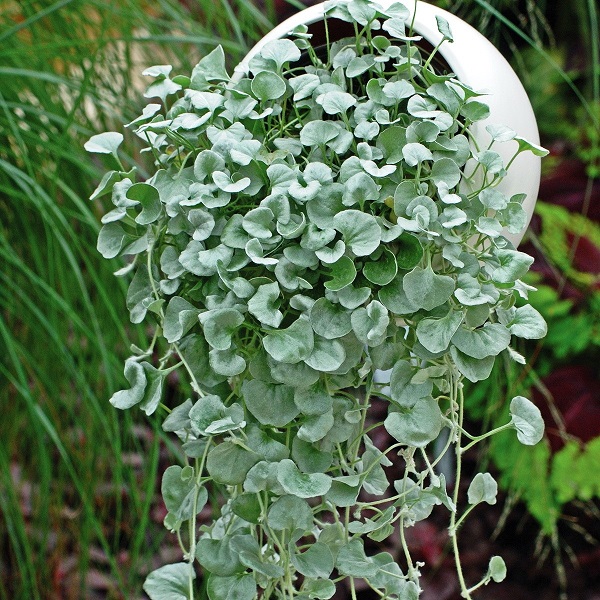
Dichondra attracts with its decorative effect, namely leaves that hang on thin stems and look spectacular in hanging planters or in balcony boxes. With the help of dichondra, you can create a waterfall effect. By the way, this plant was recognized as one of the best decorative deciduous plants that can decorate hanging baskets or planters.
Read about cultivation, care, air temperature, soil, watering, fertilization and propagation for dichondra
Dracaena
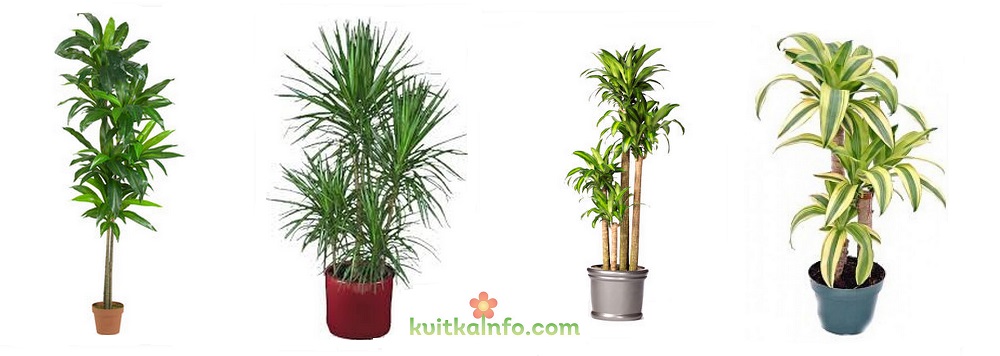
Dracaena is a houseplant consisting of a rosset of leaves on straight stems that turn into a trunk with age. In its natural environment, it can be found in Africa. Depending on age, it can reach several meters in height. Dracaena has become popular because of its exotic appearance. It fits perfectly into the interiors of apartments, houses, offices and, most importantly, has a lot of positive qualities.
Read about care, watering, fertilizing, reproduction, transplanting, pruning, diseases and pests.
Dizygotheca
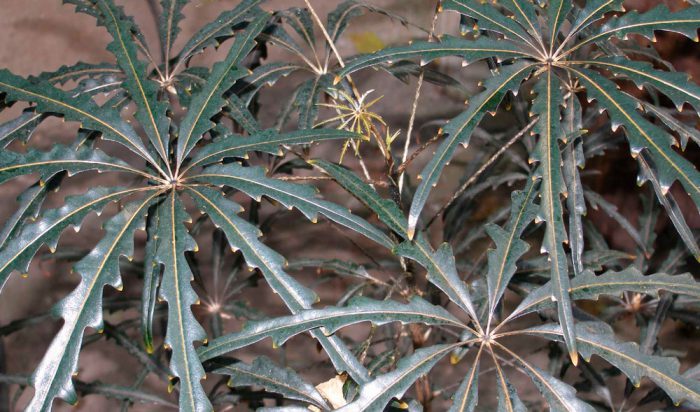
Dizygotheca is an ornamental houseplant that is often used for landscaping. It looks good in any interior of the house.
F
Eucharis
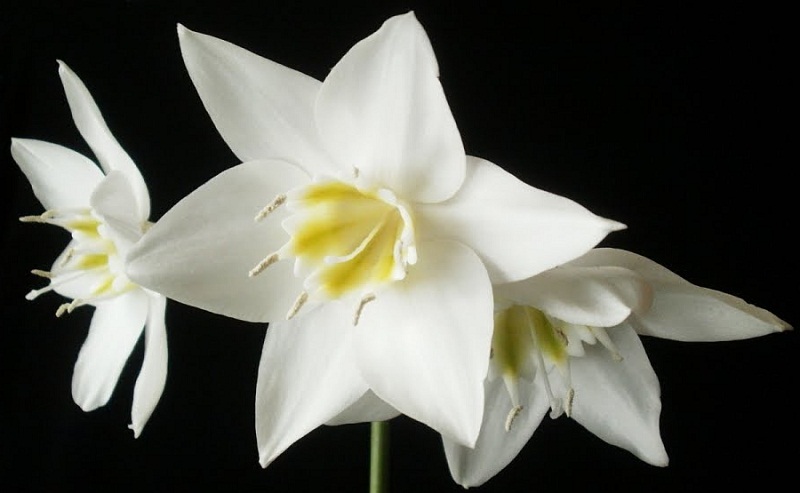
Eucharis (Eucharis)- an ornamental bulbous plant that blooms in winter with unusual graceful white flowers with a delicate pleasant aroma, belongs to the genus Amaryllis. The leaves of eucharis are large (up to 40 cm long and up to 20 cm wide), dark green, broadly oval, pointed at the tip, growing on long leaf petioles, the leaf plate has a shine. The leaves do not dry out after flowering, they remain so for quite a long time (several years), but after flowering, the leaves may die off. The flowers of eucharis are large, up to 10 cm in diameter, similar to a daffodil, snow-white, collected in inflorescences, the peduncle is up to 70 cm long in height. In the middle of the flower, a dense greenish crown with teeth along the edge stands out. In its natural environment, eucharis can be found in the rainforests of the South. America.
Eustoma (Lisianthus)
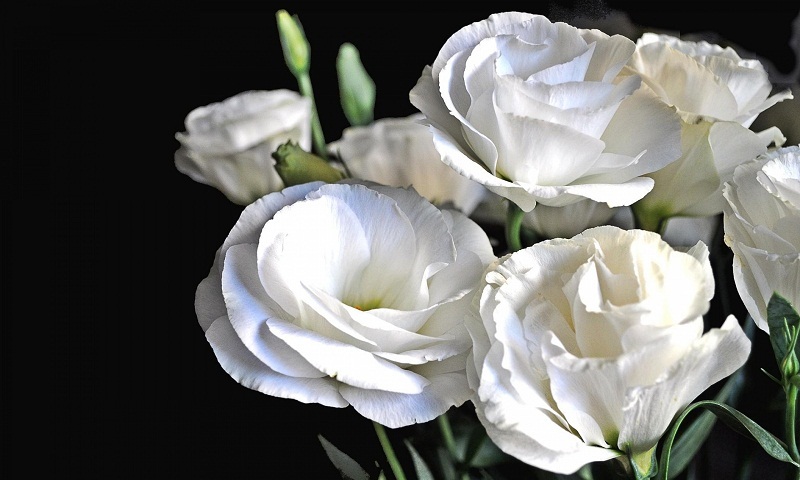
Eustoma or lisianthus (there is also one name “Irish rose”) appeared in Ukraine relatively recently in the 1990s. At first, it was grown as a houseplant, and later began to be planted in open ground, as an annual plant. In nature, eustoma grows in central America, where the climate is warm and humid. The leaves of eustoma are grayish in color, cylindrical with a matte fleecy texture. Eustoma blooms. Lisianthus flowers come in different colors, from simple to double, there are low (up to 30 cm) and tall (up to 70 cm) species, and the shape of the flower resembles a classic rose, hence the name “Irish rose”. Eustoma blooms for quite a long time: from June to frost, and when grown in greenhouses and winter gardens, eustoma will bloom again.
Echeveria
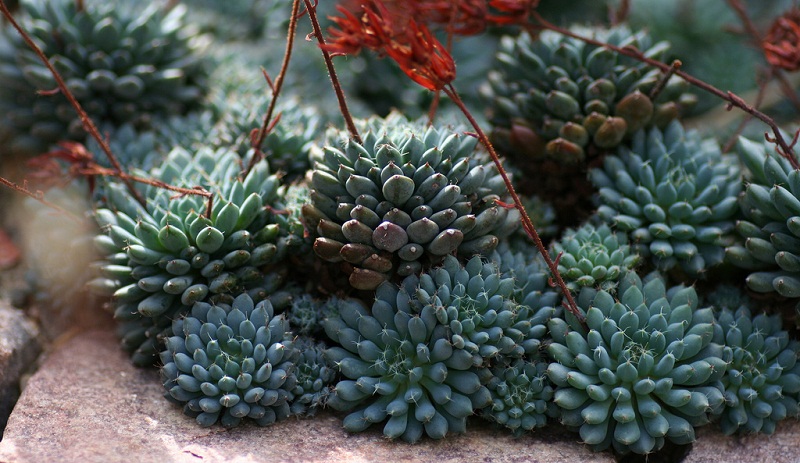
Echeveria (Echeveria) is a succulent perennial herbaceous undersized plant, sometimes bushy, with a short branched fleshy trunk. The leaves of echeveria are placed very densely apart in a spiral, forming a rosette. The leaf blade is grayish-white (plaque) in color, in some species it is lowered, this leaf surface protects the plant from direct sunlight.
Aechmea
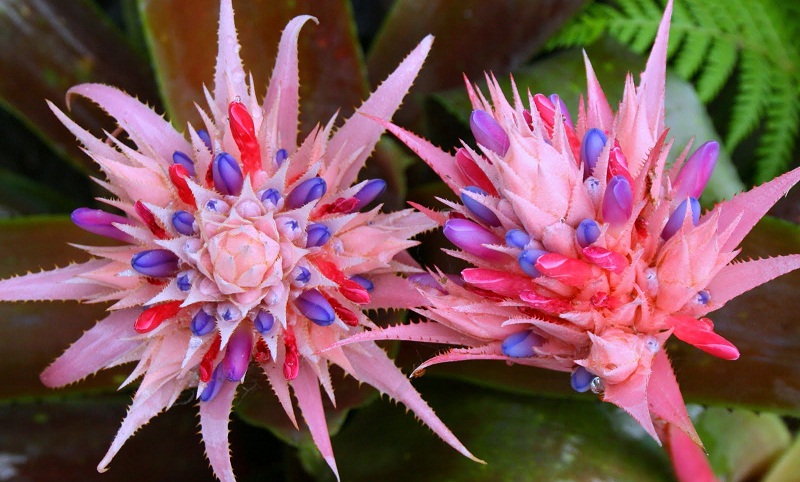
Aechmea is a perennial ornamental houseplant, from the bromeliad family. The leaves are elongated and have serrated edges, sometimes with thorns, gathered in monochromatic or variegated rosettes depending on the species. The flowers are collected in a complex inflorescence, the peduncle grows from the middle of the rosette.
Epipremnum
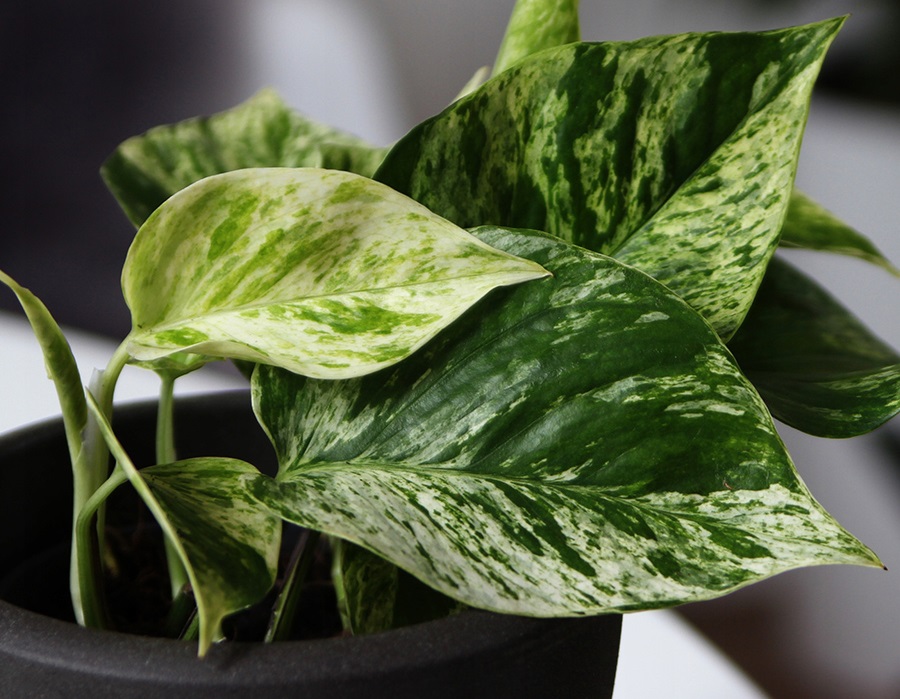
Epipremnum is a beautiful and unpretentious vine that will decorate any interior.
Yes
F
Jasmine
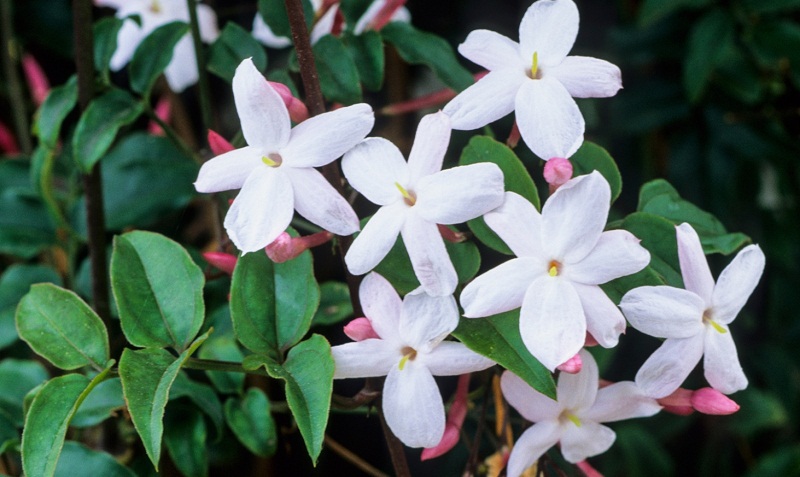
Jasmine is a very attractive plant on which many small star-shaped white flowers with a delicate jasmine aroma bloom in winter – it seems that spring has come in the apartment.
With
Zamioculcas (Money tree)
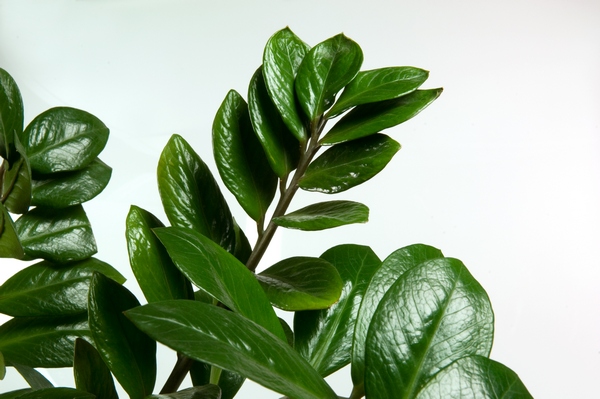
Zamioculcas is similar to the “Money Tree” and is therefore popularly called the “dollar tree”. The “Money Tree” increases the family’s income by attracting hryvnias, and the Zamioculcas, that is, the “Dollar Tree”, helps to earn and accumulate dollars.
The plant is more often used in interiors in apartments and trading floors.
Read about the brightness of light for zamioculcas, how to care, fertilizing, transplanting, reproduction.
AND
Isolepis graceful
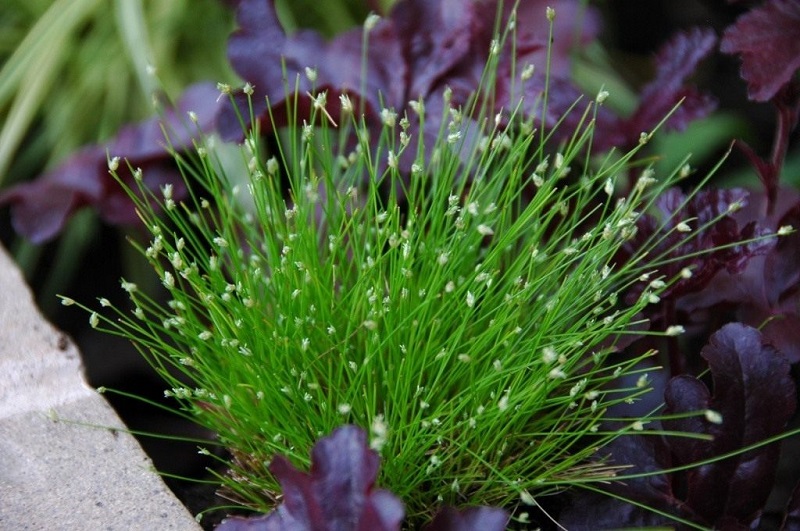
In appearance, this is an attractive plant that looks very much like a grass with thin leaves, like hair, on which there are many beads, like white drops of water – flowers.
Read about care, how to plant, fertilizer, humidity, reproduction, fertilizer for isolepis
Ipheion
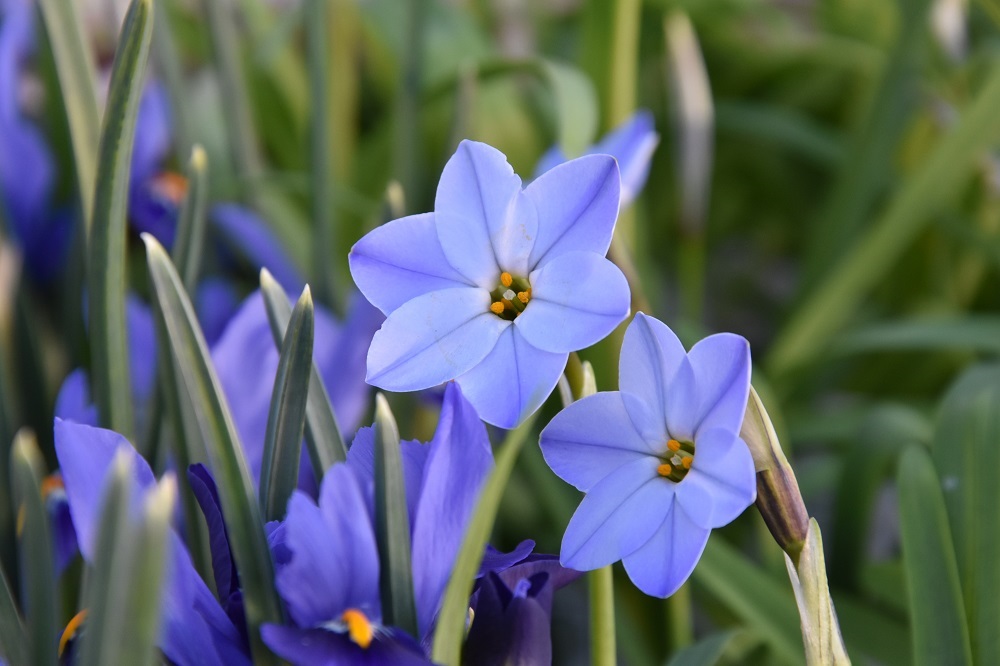
Ipheion is a beautiful and unpretentious houseplant. It is an early spring bulbous plant from the Amaryllis familywhich can be a real decoration of your garden or windowsill. Ipheion flowering begins in early spring, when other plants have not yet woken up.
K
Coffee tree
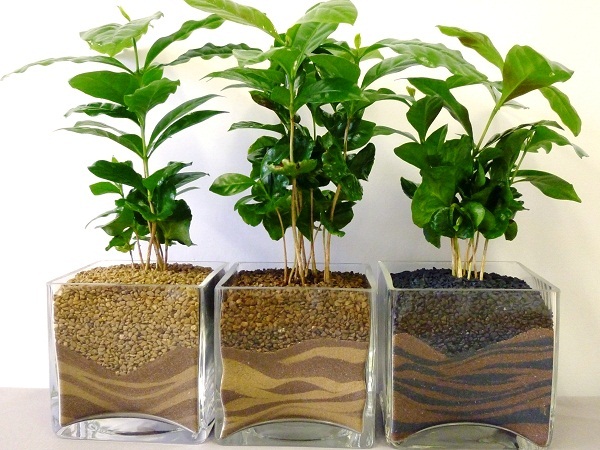
Growing a coffee tree is fun for coffee lovers and plant lovers. A coffee tree will become a universal decoration of any room and will look beautiful in a children’s institution, and in your own apartment, and at work in the office.
Read about how to grow a coffee tree at home.
Forest cactus
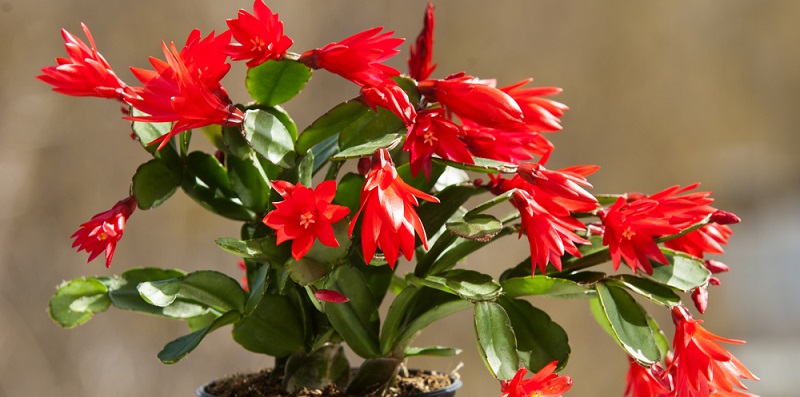
In nature, forest cacti grow in tropical forests in trees, between trees and that is why they differ so significantly from thorny desert cacti. Forest cacti are epiphytic plants. Forest cacti do not have thorns, but have flat stems that are very similar to leaves.
Forest cacti also grow in flowerpots at home, which are completely different from the usual prickly cacti. Under natural conditions, they grow in the tropics on or under trees. These are species such as zygocactus, ripsalidopsis, rilsalis barren, epiphyllum.
Desert cactus
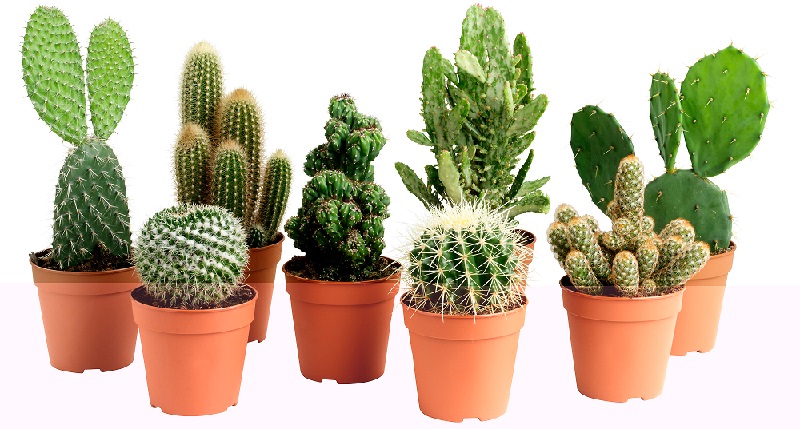
Cactus is an evergreen plant that has succulent stems with areola spines, belongs to the genus Sucolentae. Areolas are thorns and hairs on the stems of a cactus. Cacti are native to America, in nature they grow in the desert, bloom beautifully, tolerate drought and prolonged heat.
This indoor flower is unpretentious in care, suitable for owners who forget about watering or are often on business trips.
Calla
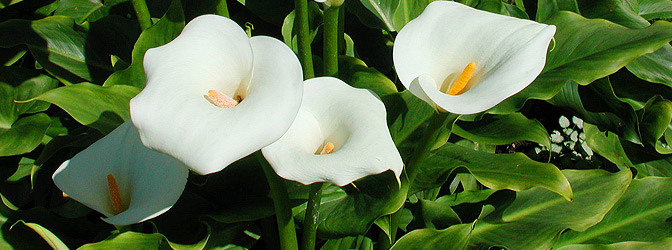
Calla lily is a perennial herbaceous plant with large leaves and graceful flowers of white, yellow, red and other flowers from the Aroid family. Calla lilies are found in their natural habitat on the African continent, where they can grow up to 2.5 meters, the leaves are dark green in color, wavy at the edges. The flower of the calla lily is unusual, resembling a head of cabbage, which gently wraps a fragile bedspread. Indoor calla flowers practically do not smell, but garden calla lilies in warm sunny weather exude a delicate aroma.
Read about the types of calla lilies, how to care, when to feed, which pot to choose, care after flowering.
Kalanchoe
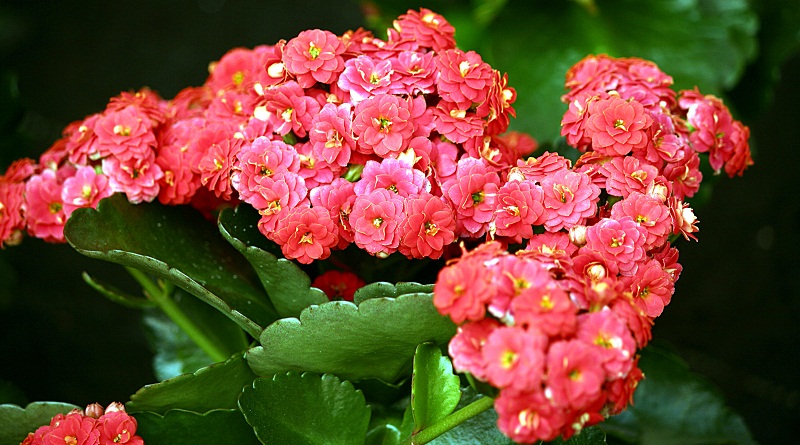
Kalanchoe is a perennial plant that simultaneously performs 2 functions: decorative and medicinal. This plant can be easily grown indoors, it is not capricious and does not need any specific growing conditions.
Read about the beneficial properties of Kalanchoe, care, reproduction, difficulties in growing Kalanchoe.
Camellia
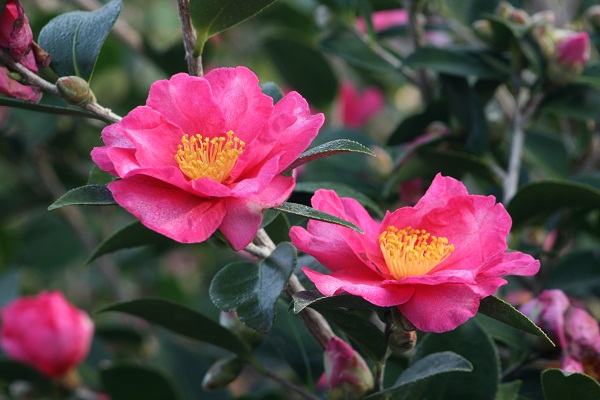
Camellia is a plant that impresses with its original flower shape, it is also called the “queen” of indoor plants.
Read about the types of camellia.
Read about the care, pruning and propagation of camellias.
Catharanthus
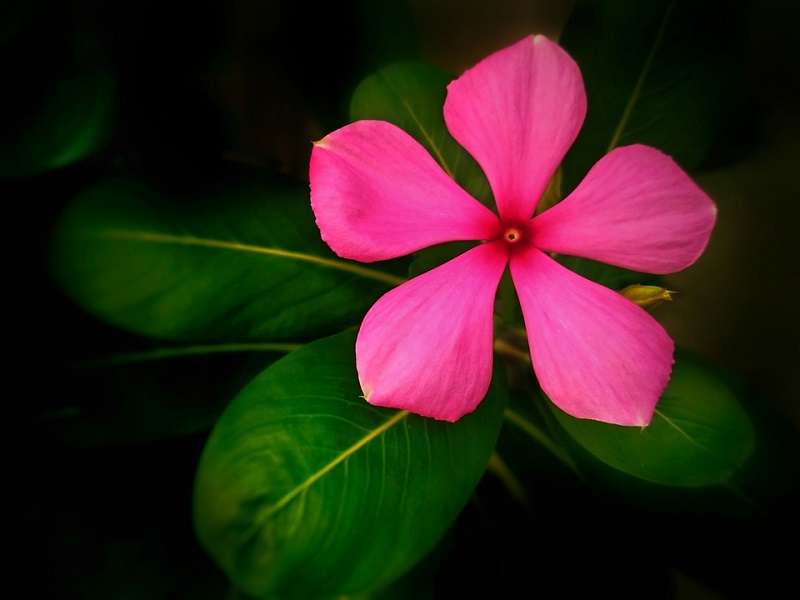
Catharanthus is a beautiful flower and not at all whimsical, it can grow in the garden in a flower bed, in containers, as well as indoors in flowerpots. By the end of summer, this flower will cover the ground with a flowering mat. But, in order for the catharanthus to bloom longer, you need to know some rules for caring for it.
Read about species, watering and humidity, soil, fertilizing, pruning, cultivation and propagation of catharanthus.
Caladium
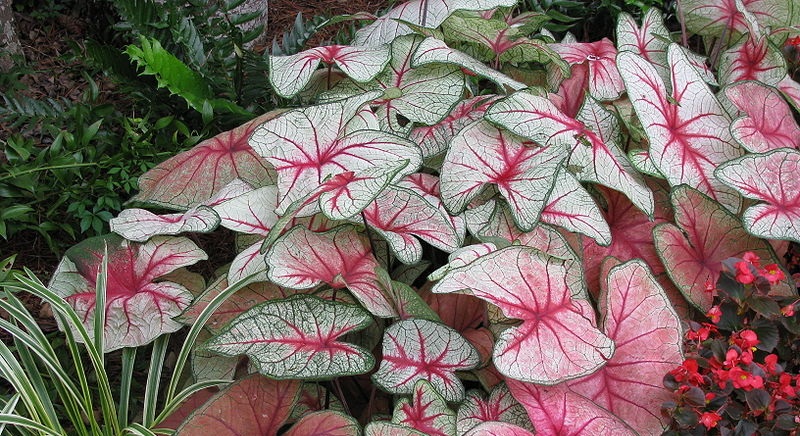
Paper-thin, brightly painted heart-shaped leaves – this amazing plant is called caladium. Caladium is a perennial houseplant with large, bright leaves, belongs to the Aroid family. The roots of caladium are tuber-shaped, so during dormancy (autumn – winter) the leaves disappear and in the spring new ones grow, which decorate our rooms with bright colors until early autumn.
Read about what types of caladium, care spring-summer and autumn winter, fertilizers and reproduction.
Coleus
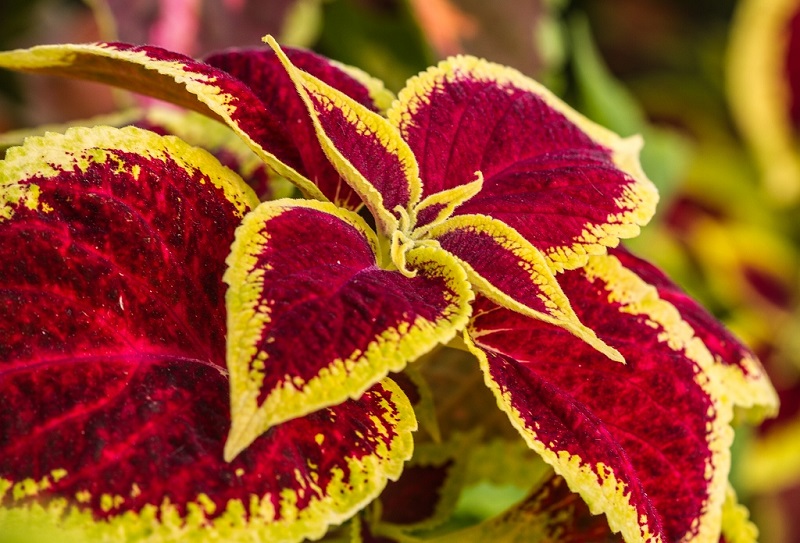
Coleus is a plant valued for the decorative nature of the leaves, not for the flower. The leaves of coleus are variegated, with a varied combination of red, yellow, green, brown colors, spots and stripes. Coleus can be grown both indoors and in a flower bed or in pots in the yard.
Read about care, watering, humidity, lighting, pruning, when to transplant and fertilize, reproduction
Croton
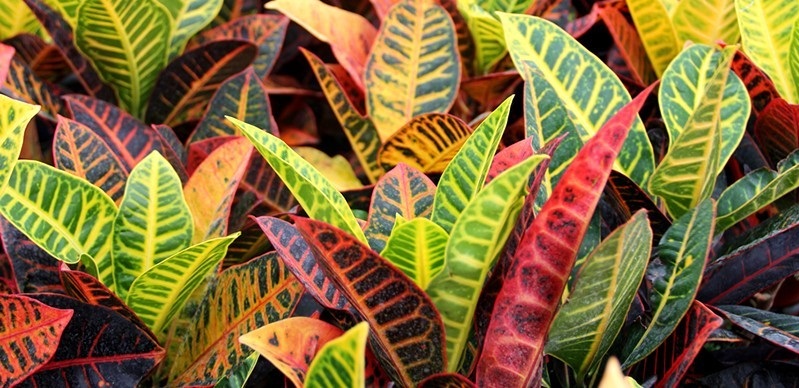
Croton or codiaeum (Codiaeum) is one of the popular indoor plants, and this is not surprising, the leaves of this plant are simply striking in their color and shape. Croton is an ornamental evergreen shrub with large, shiny, brightly colored leaves from the Euphorbiaceae family. The color of the leaf of the croton is dark green, on which the following are randomly scattered: pink, yellow, gray, light green dots and stripes, and the veins of the leaf are bright red or yellow. It is for the beautiful natural painting on the leaves that croton is valued. Croton blooms. The flowers are inexpressive, collected in inflorescences, hanging down to the bottom and do not present any decorative effect.
Read about how to care for croton, air temperature for croton, fertilizer, watering and humidity for croton.
Callisia:
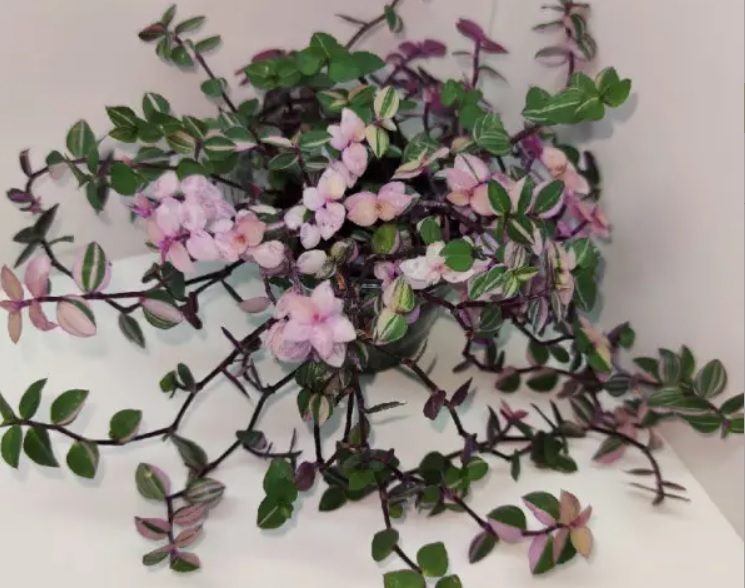
Callisias are beautiful and unpretentious plants that can decorate any room. They are well suited for beginner flower growers.
Calceolaria
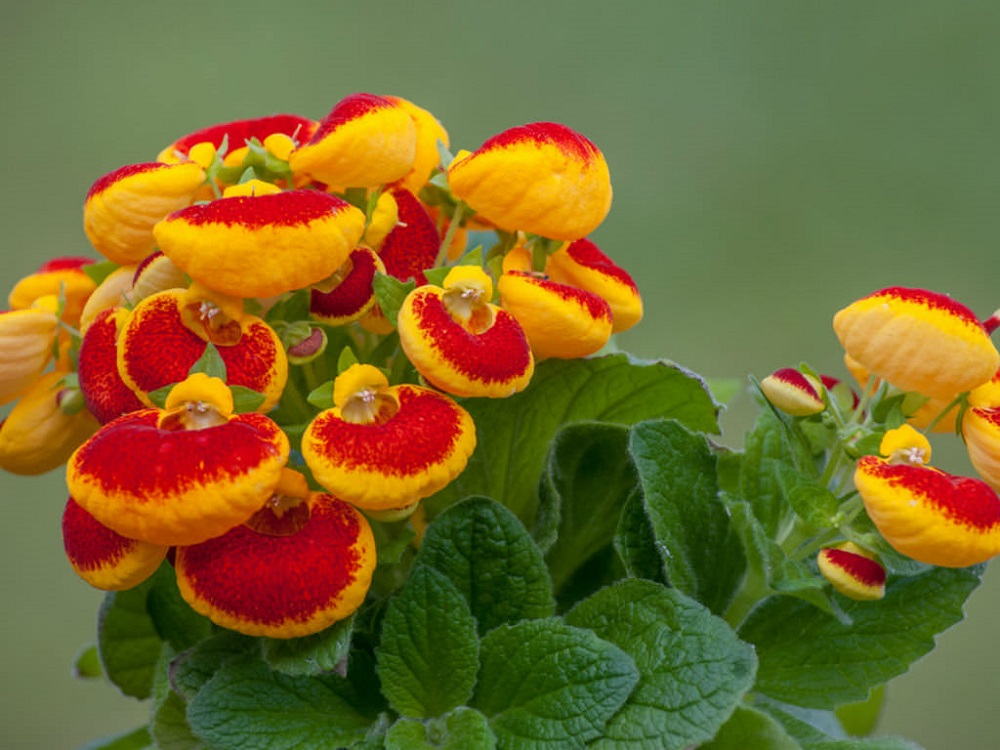
Calceolaria are popular houseplants. They are valued for their bright flowers and unpretentious care.
Cattleya
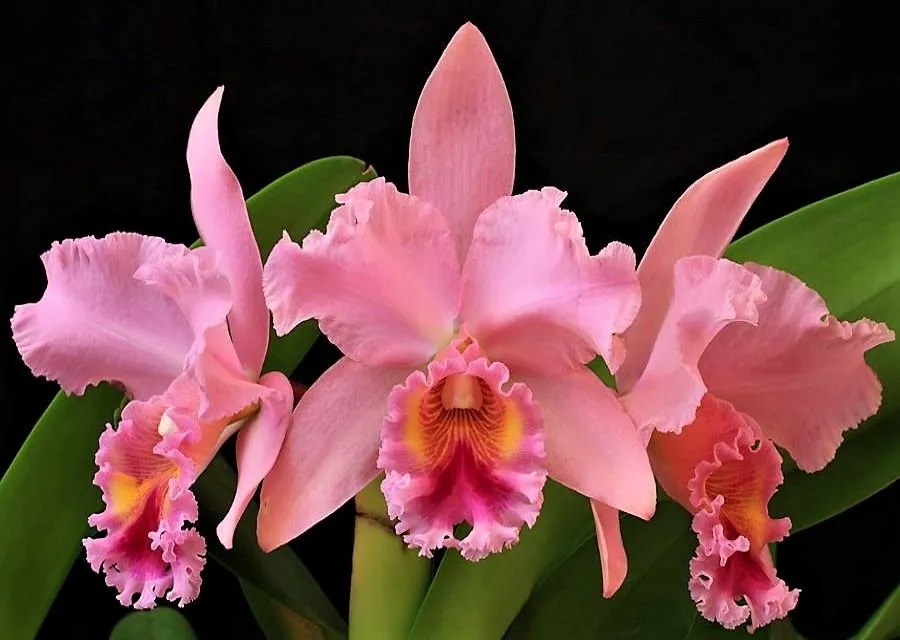
Cattleya is a beautiful and elegant indoor orchid that can become a real decoration of your home. Thanks to proper care, it will delight you with its bright flowers for many years.
Kvasenitsa
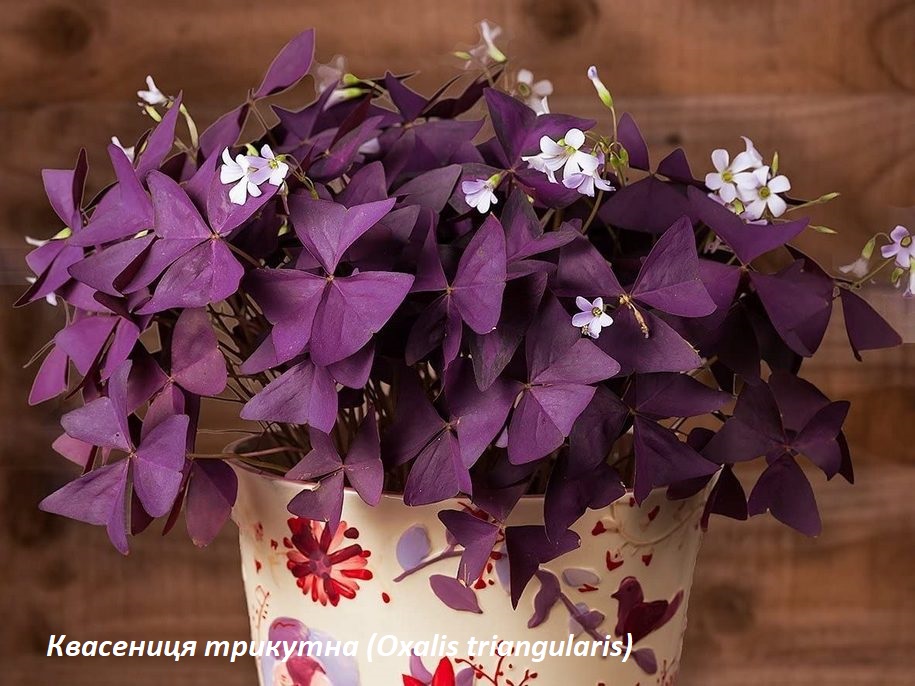
Apache is not only a beautiful, but also a useful houseplant. It has a wide range of applications in traditional medicine and cooking.
Clerodendrum
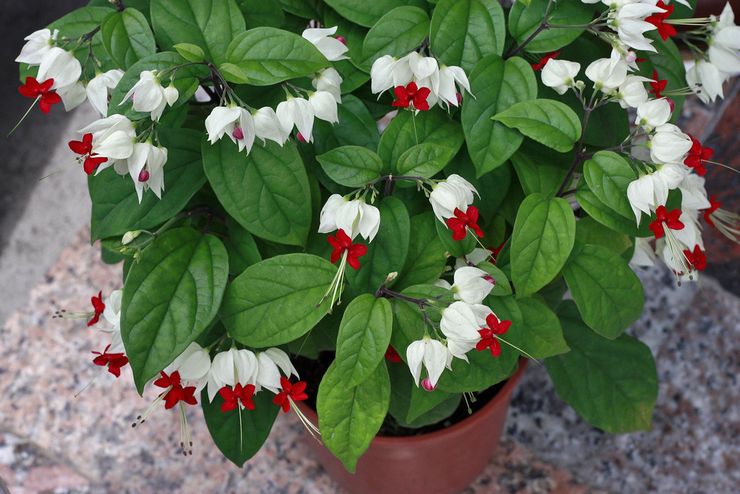
Clerodendrums are popular houseplants, and they can add a bright accent to any interior. They are also a good choice for beginner gardeners because they are relatively unpretentious.
Corelia
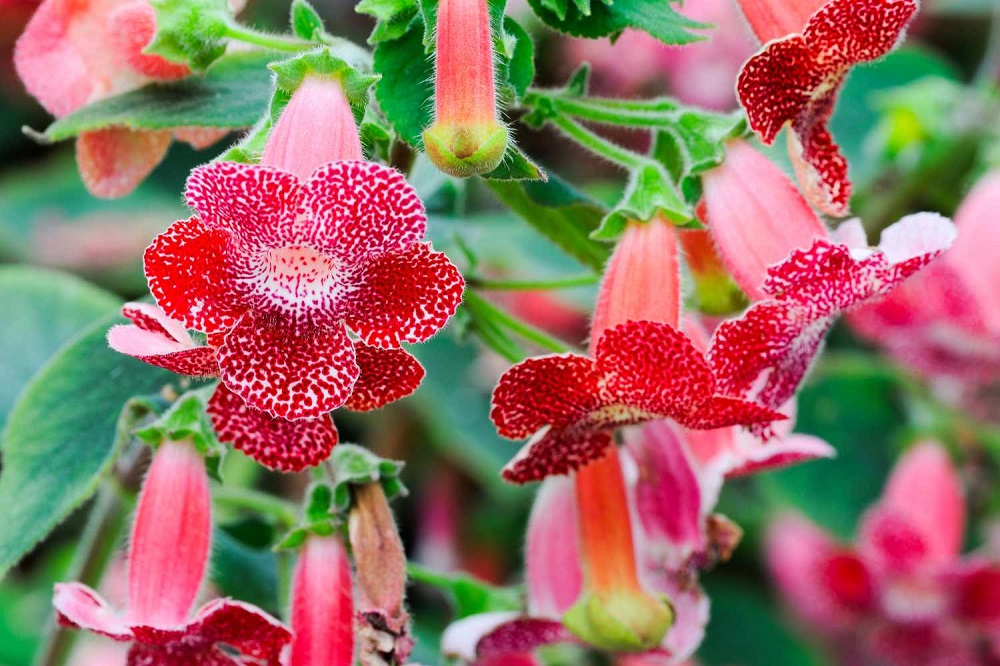
Colerias are popular houseplants, and they can add a bright accent to any interior.
Cordyline
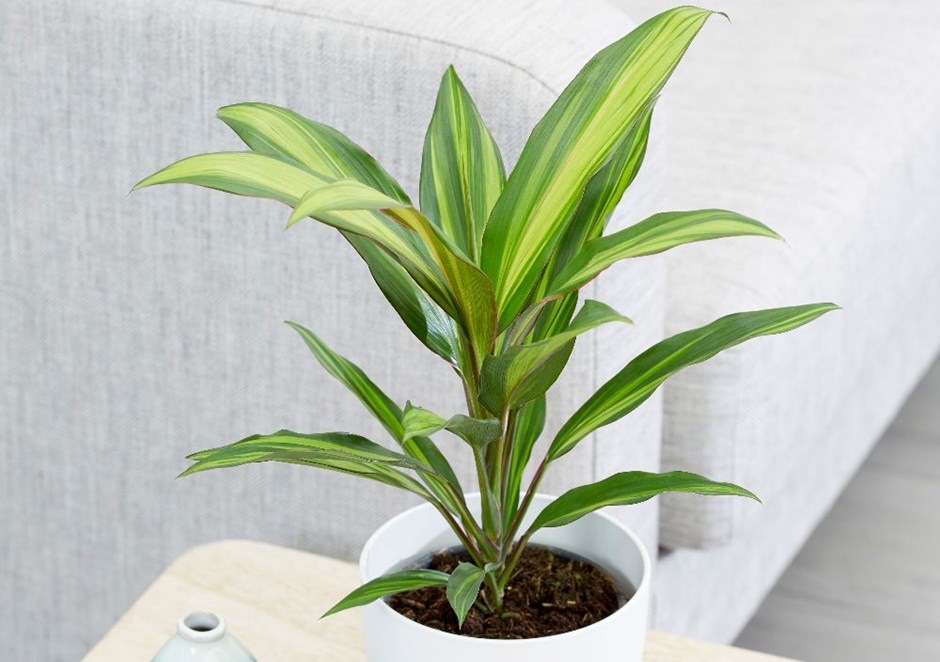
Cordyline is a beautiful and unpretentious plant that can be a great addition to any interior. Thanks to proper care, it will delight you with its bright leaves for many years.
L
Laurel
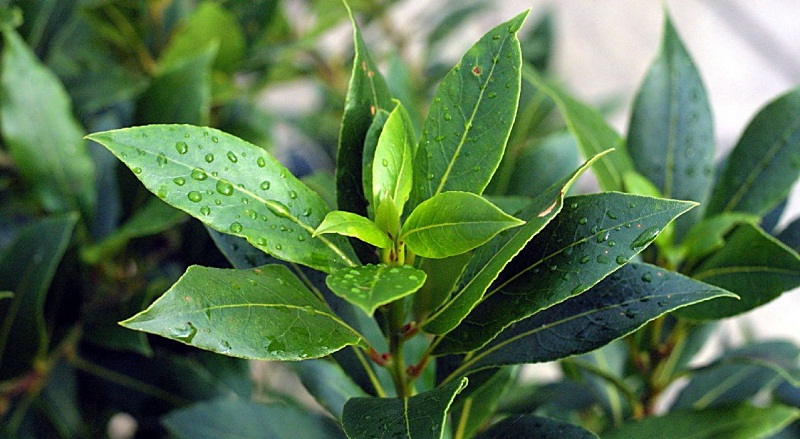
Laurel or noble laurel (Laurus nobilis) is a small evergreen tree, or shrub. Laurel leaves are simple, elongated at the tip, pointed, the length of the leaf can be from 5 to 10 cm. Indoors, laurel can grow up to 1 meter in height, and in its natural environment, the height of the tree is impressive – up to 15 meters.
Read about the medicinal properties of laurel, how to care, fertilizer, transplanting and soil, pruning.
Lagerstroemia
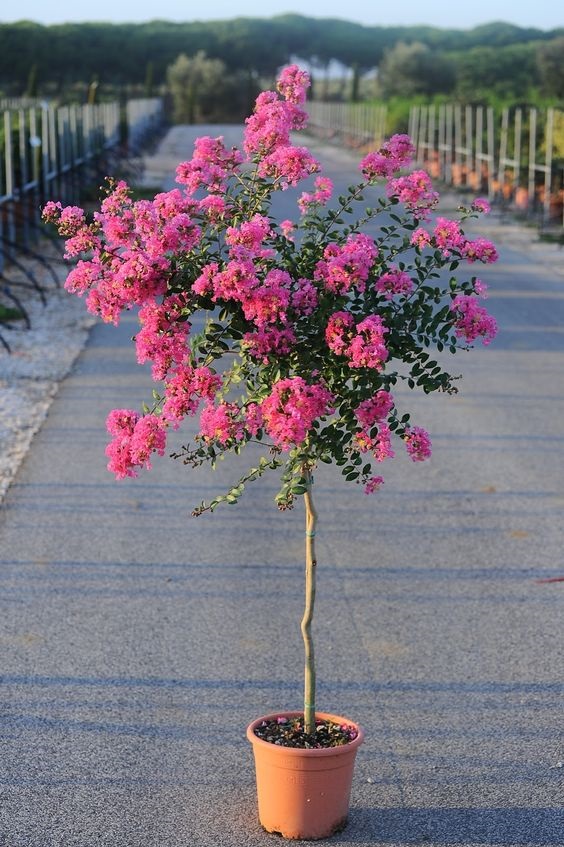
Lagerstroemia is a small tree or shrub that blooms in summer with many pink, white, purple flowers. With its magnificent flowering, Lagerstroemia attracts both gardeners and lovers of home exotic indoor plants. The southern beauty got her name in honor of the merchant Magnus von Lagerstroemia, he gave unusual flowers to the governors of Mediterranean cities.
Read about care, lighting, air temperature, soil and transplanting, watering and fertilizing, pruning and reproduction
Lantana
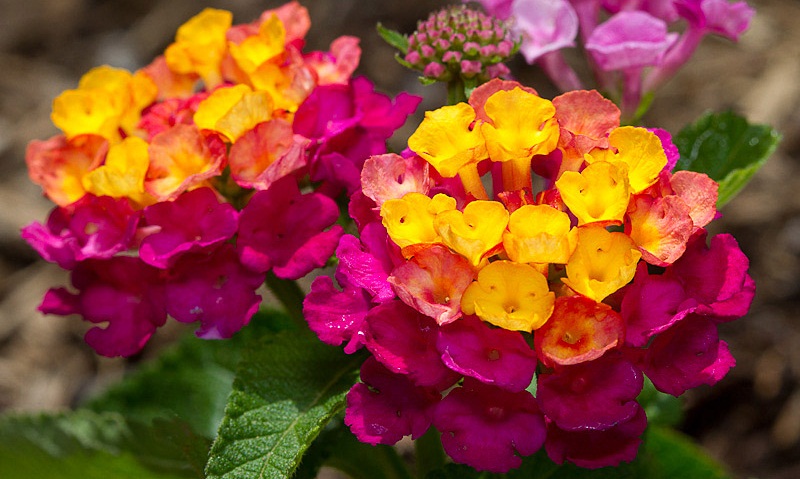
A small tree, covered with amazing bright flowers, will always find a place in any interior in an apartment and house, and this plant is called lantana.
Lantana flowers are small, collected in a spherical inflorescence with a lemon-mint smell.
Read about how to care, light brightness, temperature, watering and humidity, soil transplanting and pinching lantana.
Indoor lemon
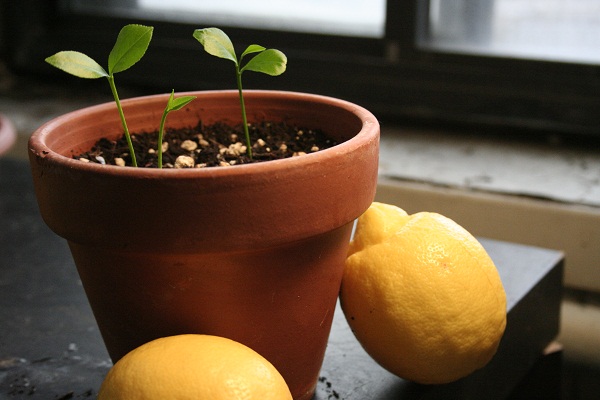
Having a lemon, tangerine or orange tree at home is very fashionable and pleasant, it is especially pleasant to pick and eat exotic fruits grown with your own hands. If you want your lemon or tangerine to bear fruit, it is better to buy a tree specially adapted for growing indoors.
Read about citrus fruits, care and reproduction.
M
Indoor tangerine
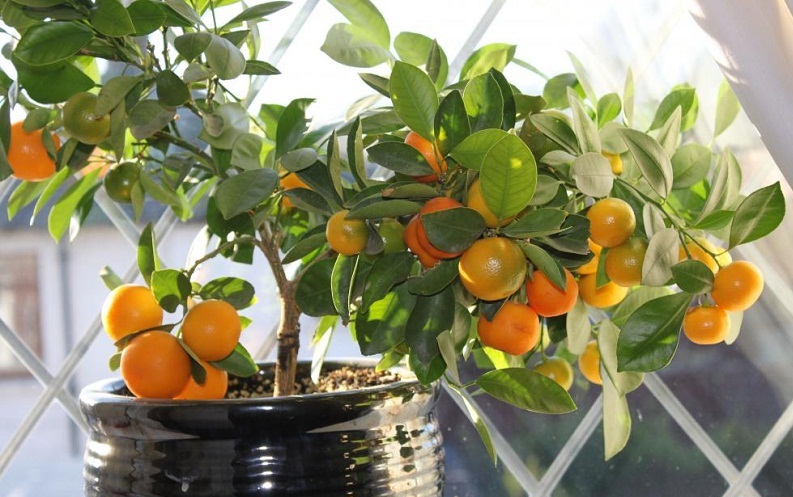
Citrus plants grown from seeds will bear fruit only in adulthood (20 years), and the fruit will taste tasteless. In stores, special types of young dwarf citrus trees are sold in flowerpots, which bear fruit at a young age.
All citrus fruits usually bloom in summer with small white flowers with a pleasant rich aroma.
Read about citrus fruits, care and reproduction.
Medinilla
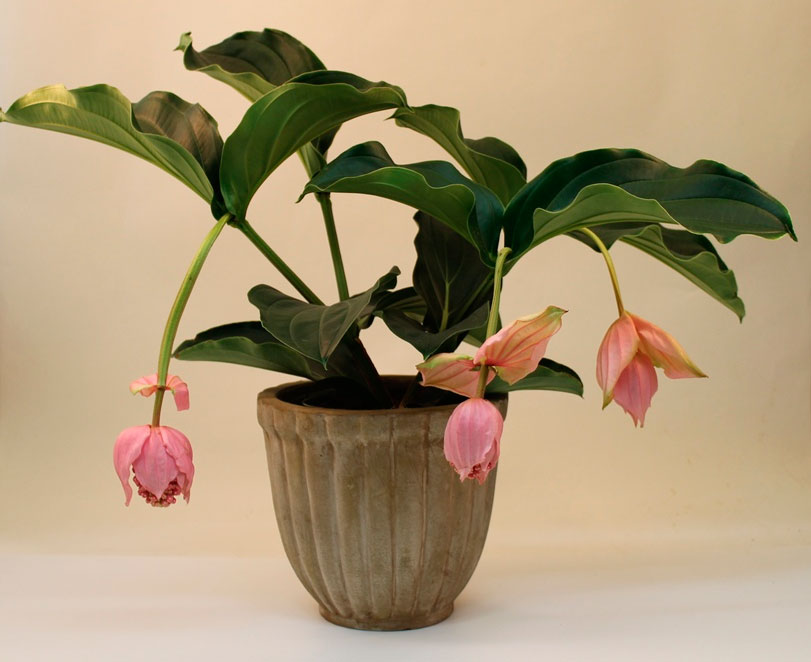
Medinilla among flower growers is valued for the special decorative effect of leaves and flowers. But caring for medinilla at home is very difficult, so more often it can be found in botanical gardens, greenhouses or greenhouses. The plant loves to grow in a strictly defined temperature regime and at high humidity.
Read about the care and transplantation of Medinilla
Rejuvenation
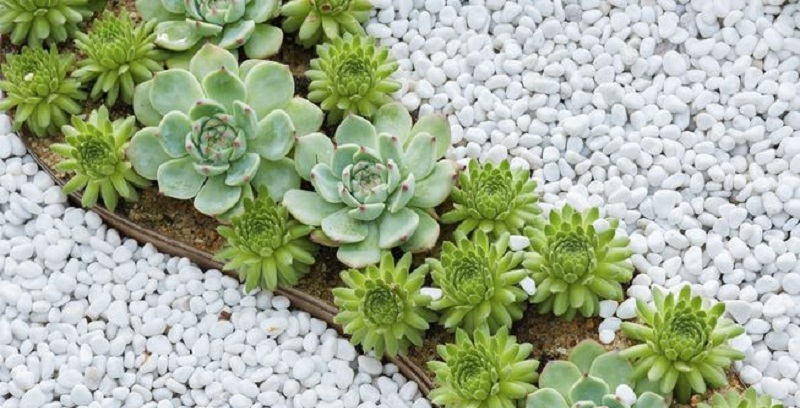
A green stone rose that forms green mats on stones – of course we are talking about rejuvenation.
Read about how to care for juveniles indoors, watering, soil, reproduction.
Monstera
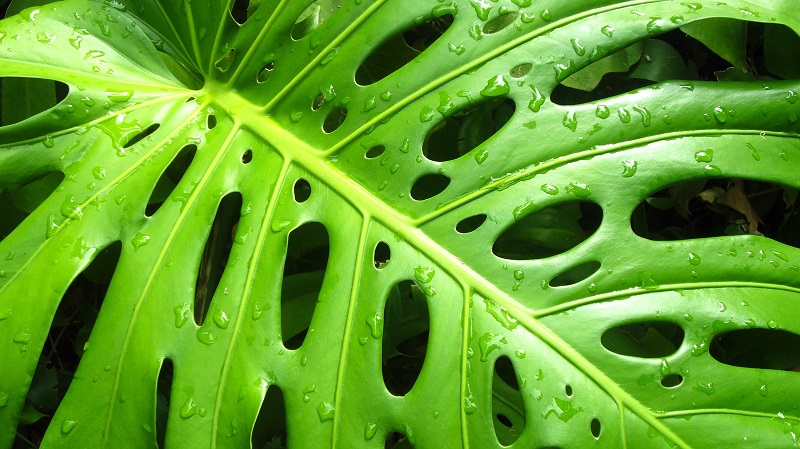
Monstera is a large, fast-growing tropical plant. The leaves are dark green in color with a sheen. The size of the leaves of a young plant is small, but upon reaching adulthood, the leaves of the monstera can reach up to 1 meter in diameter, it has symmetrical slots on the leaves. In its natural environment, monstera is found in the rainforests of America.
Muraya
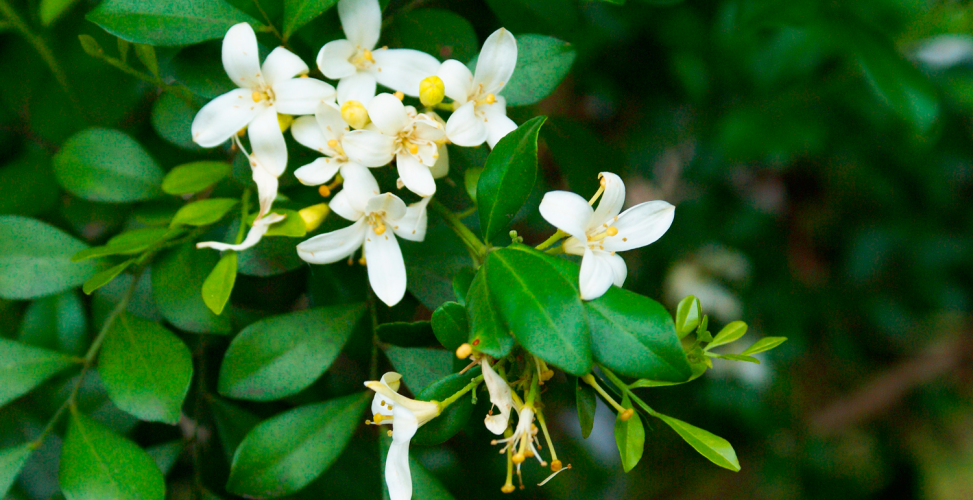
Muraya is a popular ornamental houseplant, and is also used in cooking and traditional medicine. Muraya flowers are white or cream, have a strong pleasant aroma. Ripe Murraya fruits are edible, they are dark red in color, shaped like hawthorn fruits, and taste slightly sweet.
N
Nematanthus
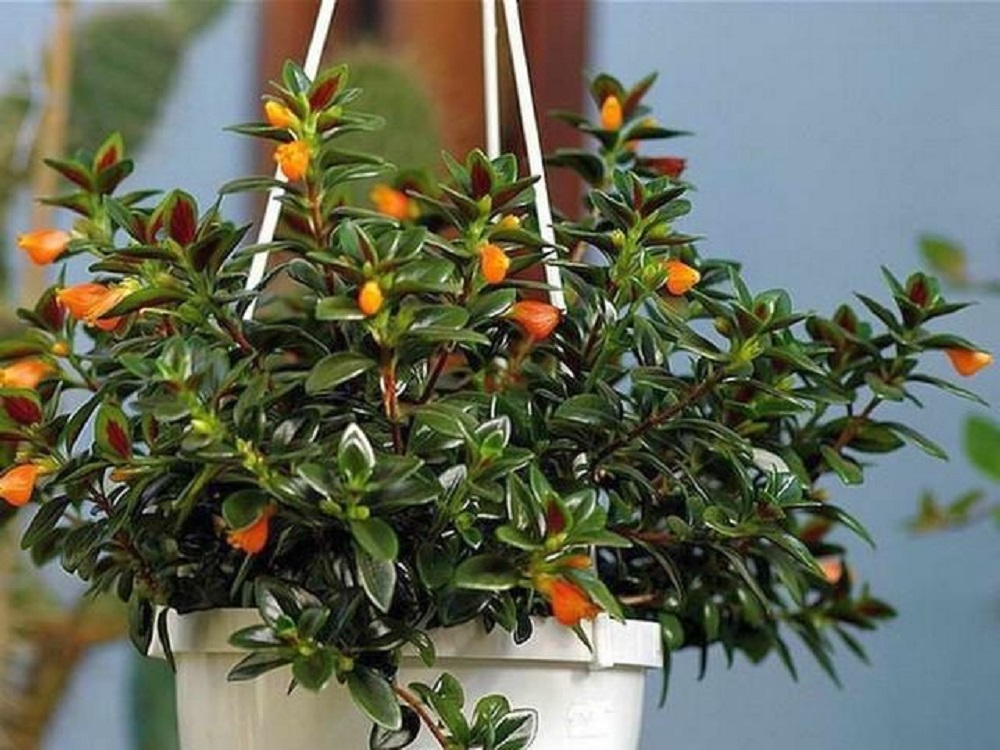
Nematanthus or goldfish is a tropical plant from the Gesneriaceae family. It has bright, tubular flowers that can come in a variety of colors, including red, orange, yellow, and white. Nematanthus can be grown as a houseplant or in a summer garden or greenhouse.
Nertera – care
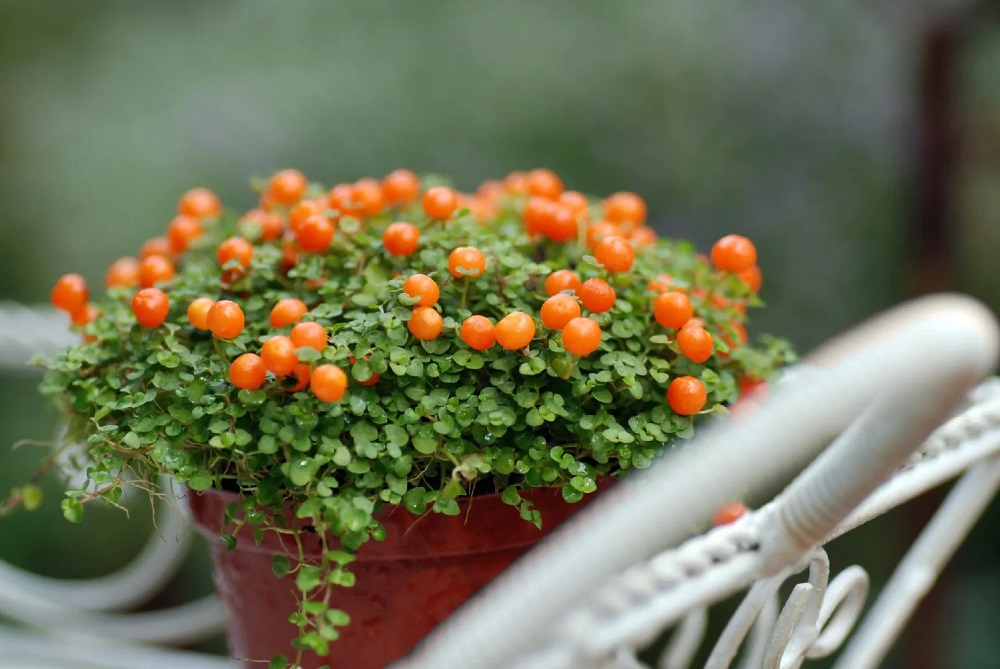
Nertera, coral moss is a small ornamental leafy houseplant that produces small, white or yellow flowers, and after flowering, small, red berries appear.
About
Orchid (Dendrobium)
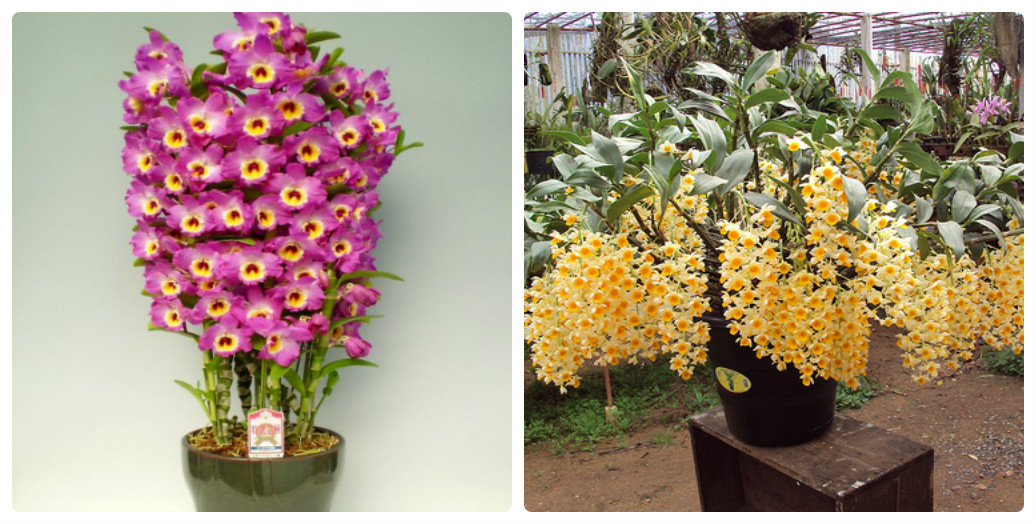
The Dendrobium orchid, translated from Greek means “plant that lives on a tree”, and is a representative of the orchid family. This is the second most popular orchid that can be found in flower shops. Dendrobium is a plant epiphyte, that is, it has aerial roots with which it absorbs the necessary substances for subsistence, some species of these flowers grow on trees, on rocks or on the ground.
This flower can bloom several times a year with proper care, read how to properly water a flower in a pot at the links below.
Read aboutorchid, dendrobium throughout the year, how to water an orchid, root and leaf care.
Read about how to propagate and transplant an orchid and how to choose an orchid pot (dendrobium).
Read about orchid care, feeding methods, air movement, hot showers.
Prickly pear – care
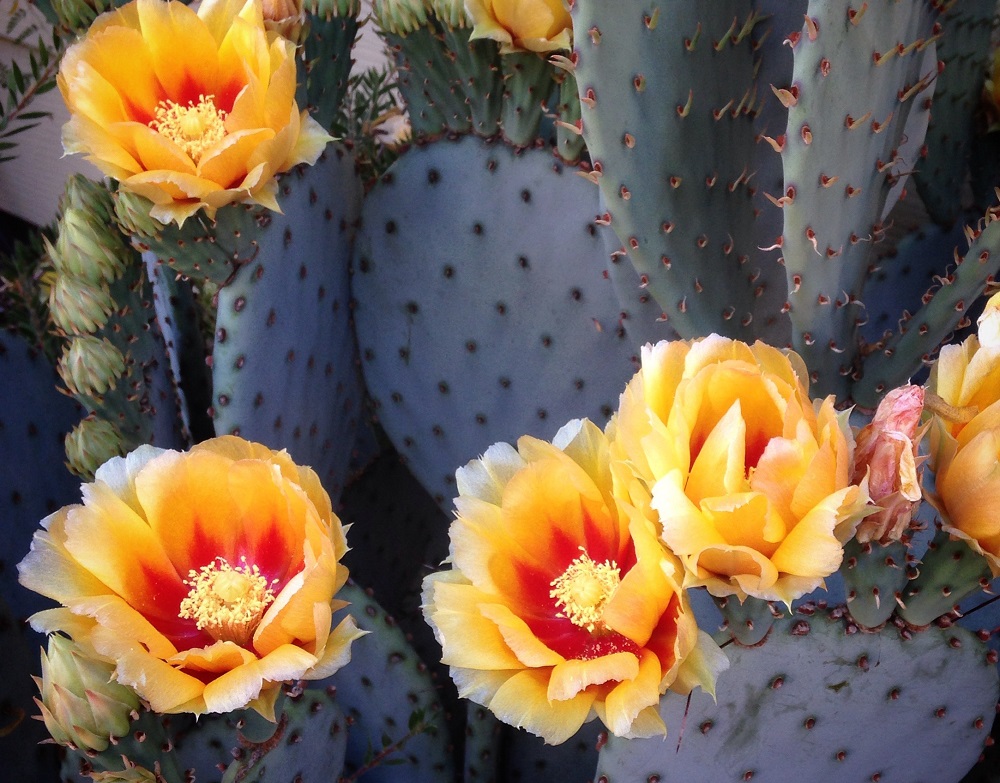
Prickly pears are cacti, unpretentious houseplants. They can withstand heat, drought and lack of moisture. Prickly pears have flat, juicy stems covered with sharp thorns. Prickly pear spines can be of different shapes and sizes. Flowers come in different colors, large.
P
Indoor palm trees

Palm trees are the best representatives of ornamental deciduous plants for growing indoors. Most palm trees are native to the tropics and subtropics. In their natural environment, palm trees grow very large, the leaves can reach up to 15 m in length and 2 m in width.
Read about the types of indoor palm trees, care, fertilization, watering, reproduction, pests and diseases.
Fern
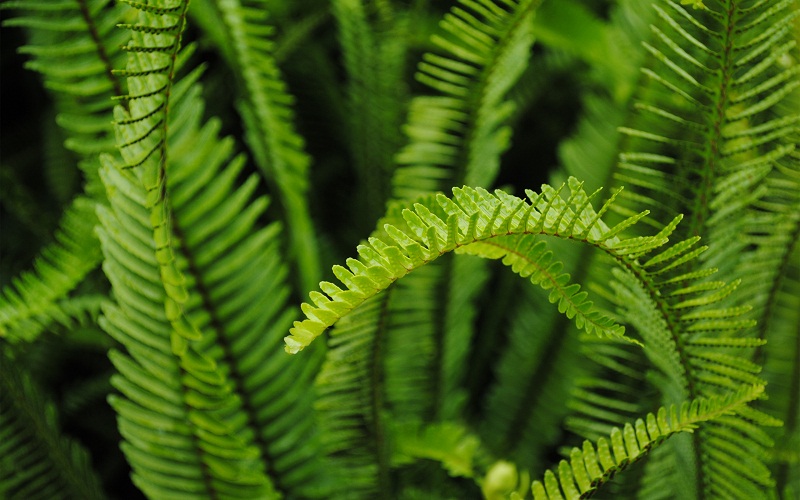
Ferns have been very popular since ancient times, and have always been present in our houses or apartments, and they have also been very often grown and propagated in greenhouses. The genus of ferns has more than 2 thousand species, one of them can grow in a pot in your apartment.
Read about how to care for fern, watering and humidity, transplanting and soil, fern fertilizer.
Pelargonium (Geranium)
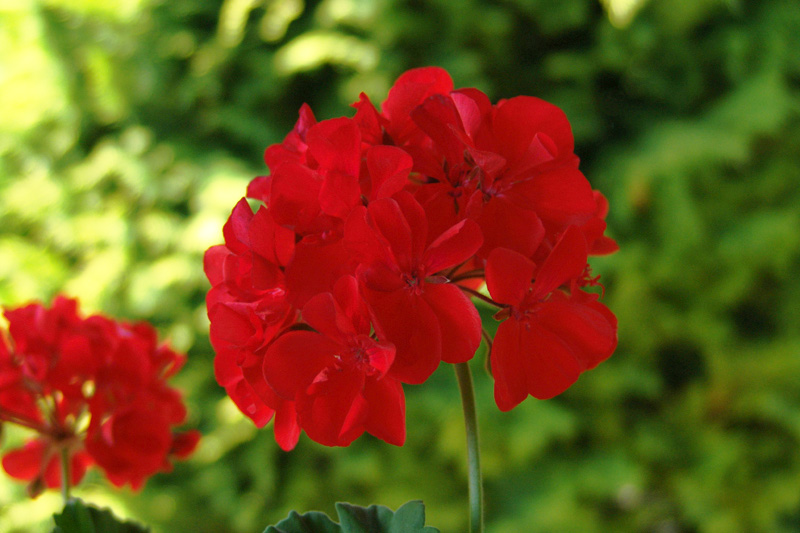
Pelargonium is a perennial herbaceous, bushy plant with beautiful flowers of various colors from the geranium family. A few recommendations for caring for pelargonium.
Read about the types of pelargoniums, care, temperature, watering and humidity, pruning and pinching, mistakes in care.
Ivy
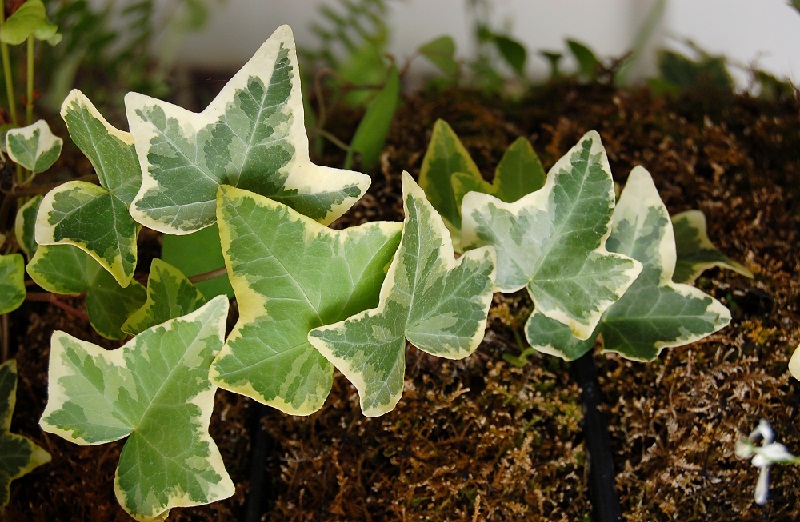
Ivy (Hedera) or hedera is a perennial evergreen plant growing as a vine, belonging to the Araliaceae family. In its natural environment, it can be found in almost all forests on our planet. This plant looks beautiful in interiors in apartments and non-residential premises, often used in catering establishments.
Read about care, useful properties, fertilizer for ivy.
Primrose
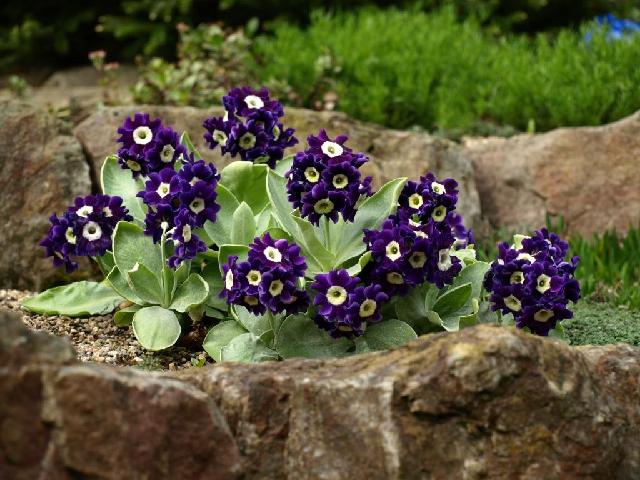
At the end of winter, blooming primroses appear on the windows of flower shops. Flowers of various colors in the middle of green leaves enchant with their spring freshness. For the owners of these beauties, there are brief recommendations for their care.
Read about the types of primroses, care, reproduction.
Proteus
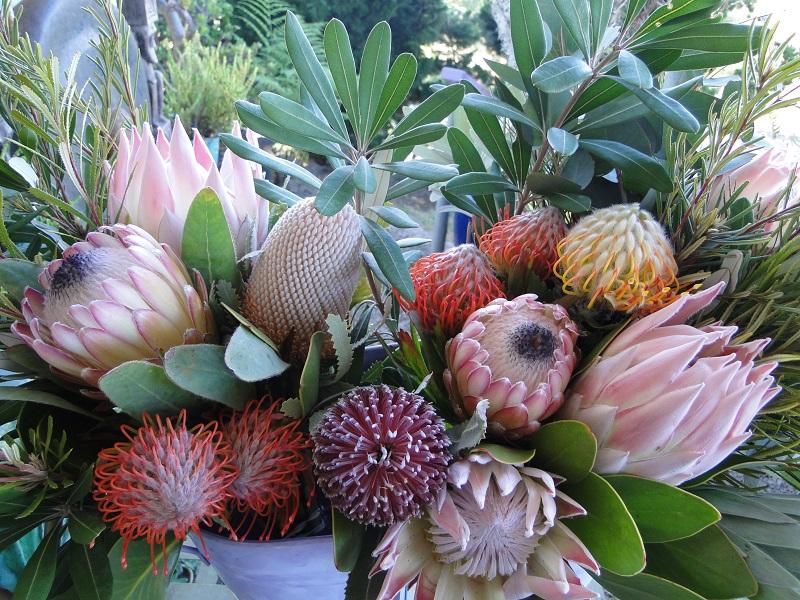
Proteas are not at all easy flowers to grow, but they are so beautiful that they will be in the center of any flower arrangement, and will also replenish the collection of the most original dried flowers.
Read about care, place of cultivation, watering, pruning and fertilizing Proteas
Poinsettia (star or Christmas star)
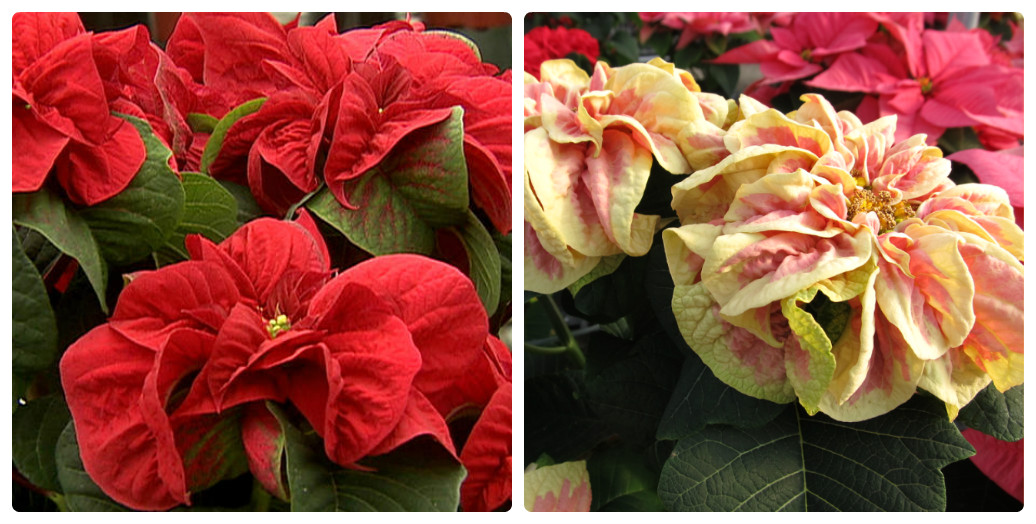
Poinsettia (Poinsettia ) is a bushy plant that belongs to the Euphorbiaceae family. The poinsettia is called the “Christmas tree” or “Christmas star”, because it blooms in winter, at Christmas.
Read about poinsettia care during and after flowering, how to make poinsettia bloom, reproduction.
Pachistachys
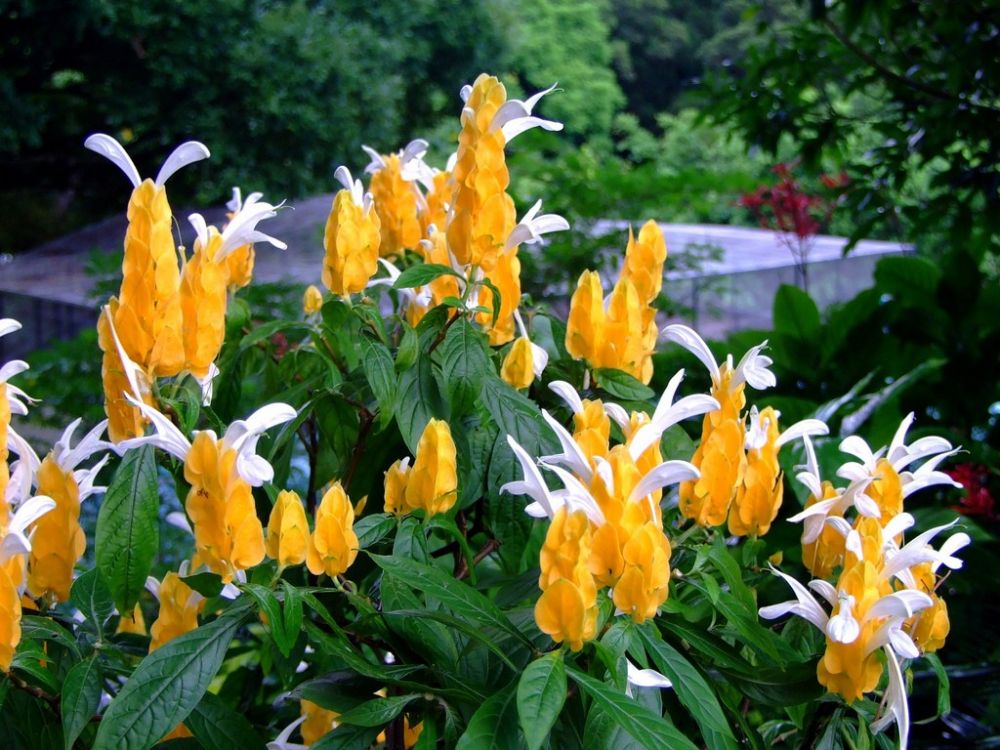
Pachystachis is a perennial houseplant that can reach a height of 30 cm to 1 m.It has oval or elongated leaves that can be green, silver or variegated in color. Pachystachis flowers have the appearance of tubes that are collected in inflorescences, they can be of different colors, including white, yellow, orange, red and pink.
Passionflower
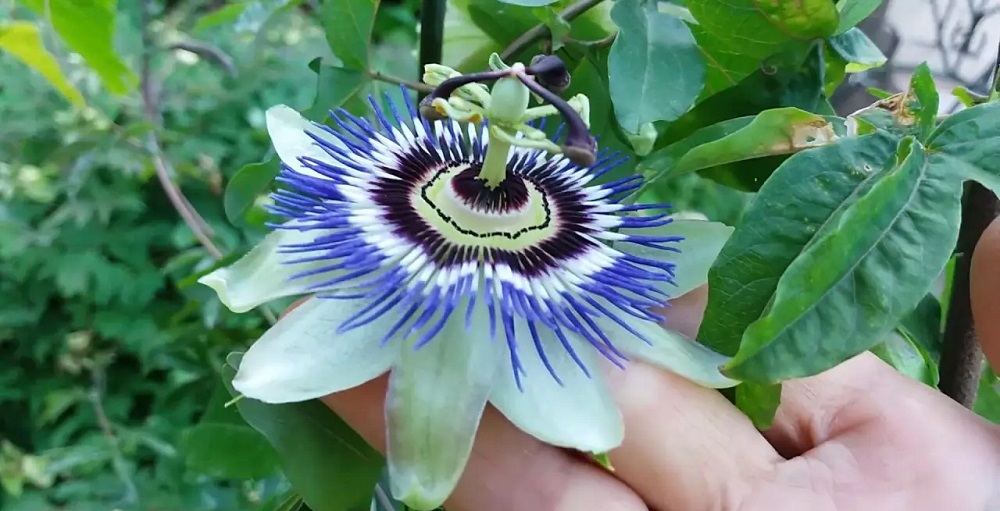
Passionflower is an unpretentious houseplant that brings a lot of joy to its owners, both for its exotic flowers and for its delicious fruits. Grow passionflower from seeds and it will surely decorate your home with its exotic flowers!
Pereski
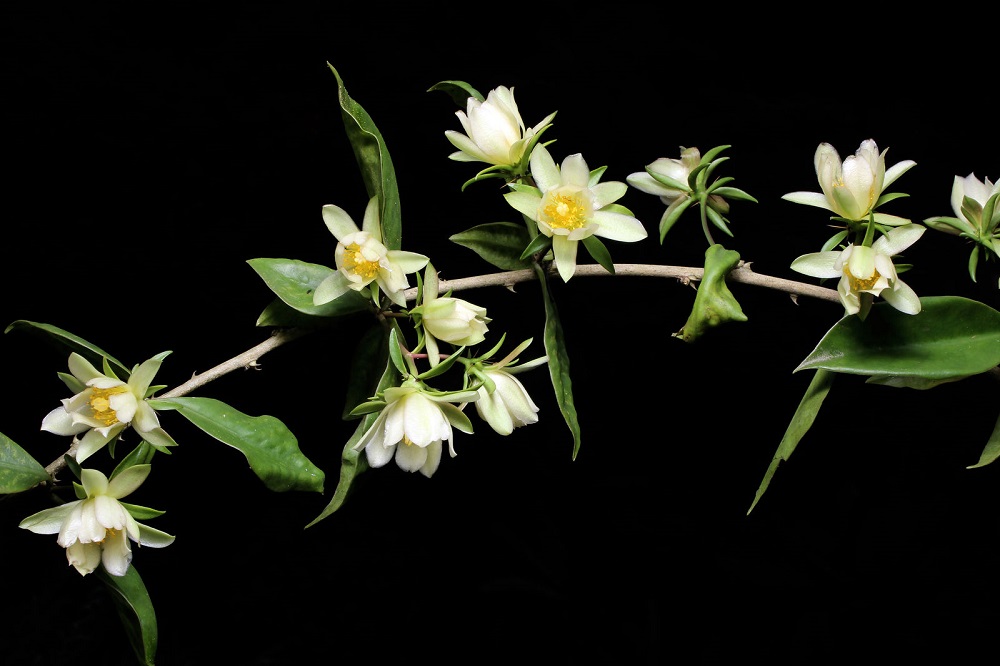
Pereschia flowers are large and brightly colored. They can be yellow, red, orange or white. Peireschia fruits are also edible. They can be round, oval or oblong. They usually have a sweet or sweet and sour taste.
Peperomia
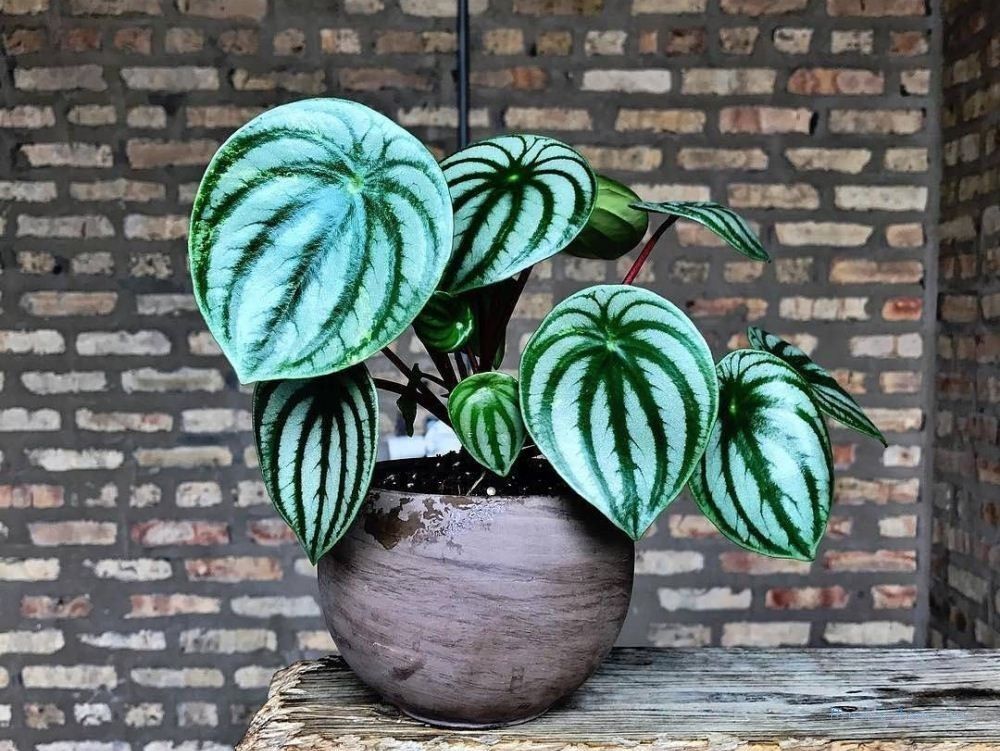
Peperomia is an ornamental deciduous houseplant belonging to the pepper family. Peperomia has a variety of shapes and sizes. The leaves of the plant can be rounded, oval, lanceolate, heart-shaped or elliptical. The color of the leaves also varies: from green to bronze, red, purple and even white. Peperomia can be an annual or perennial plant. It blooms with small flowers, which are collected in spike inflorescences.
Pilea
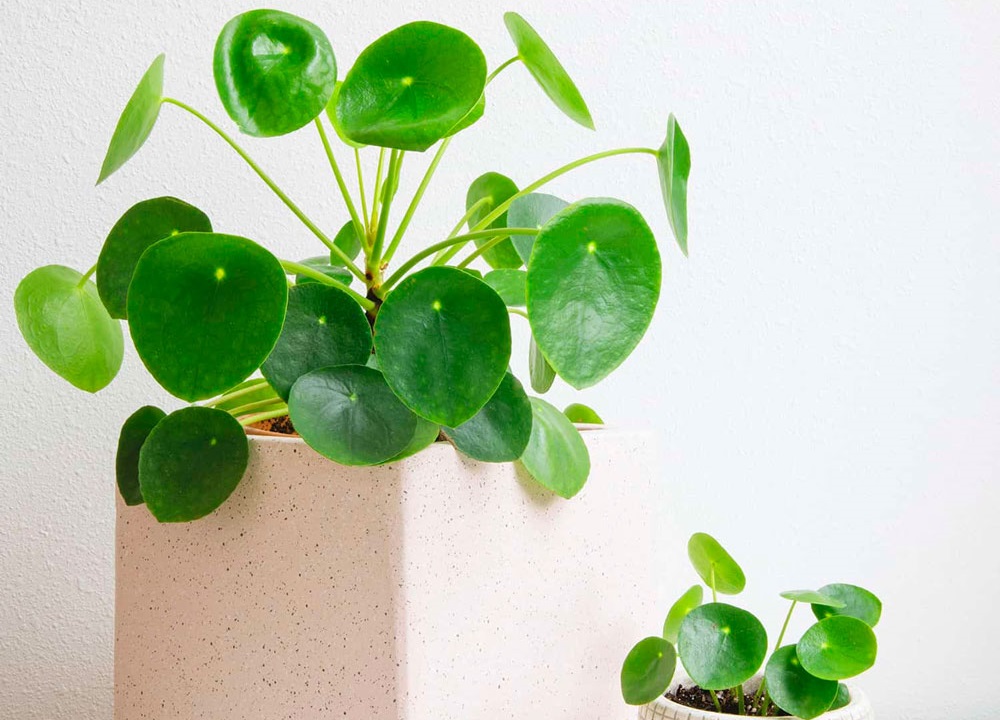
Pilea (lat. Pilea is a genus of herbaceous plants from the Nettle family (Urticaceae), numbering about 700 species. These unpretentious and graceful plants come from tropical and subtropical regions of South America, Central America and Africa. They are valued for their decorative foliage, which can be of different shapes, colors and textures.
Plumeria
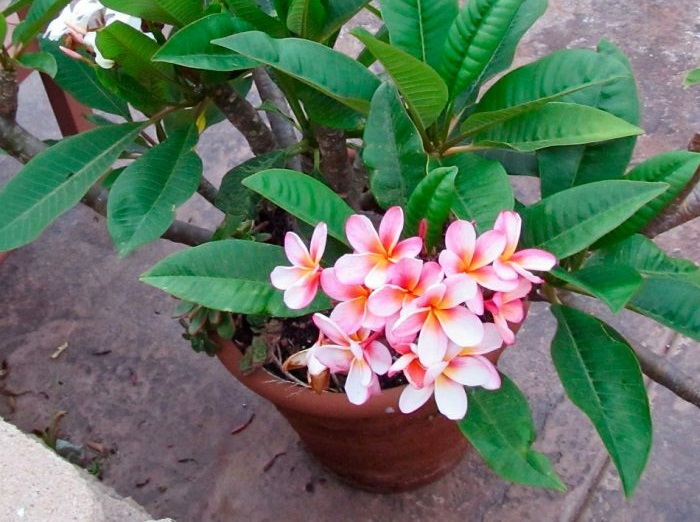
Plumeria (Plumeria) is a genus of tropical trees or shrubs belonging to the Apocynaceae family. This genus has about 8 species that are native to South and Central America, as well as the Caribbean.
Plumeria can reach heights of 2 to 8 meters. Its leaves are leathery, elliptical or oval in shape, dark green in color. The flowers are large, fragrant, with 5 petals, white, yellow, pink or red. Plumeria blooms in summer-autumn.
R
Radermacher home care
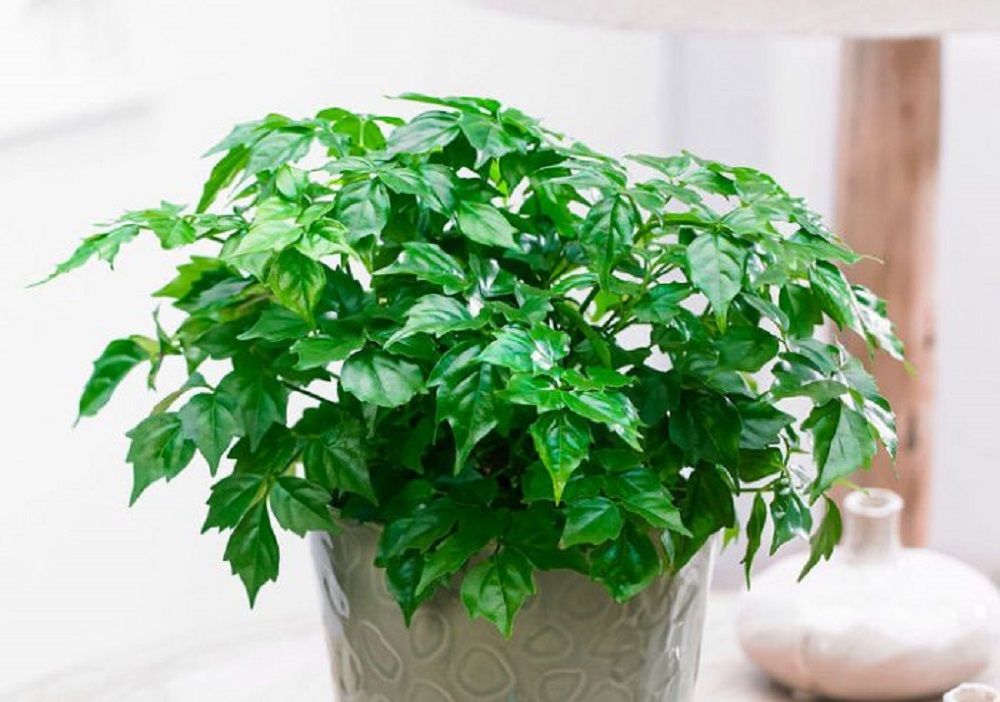
Radermachera is a genus of tropical trees and shrubs belonging to the Bignoniaceae family. The genus has about 15 species that are native to Southeast Asia and Australia.
Radermachera is a beautiful houseplant that does not require much care. Its large foliage and delicate flowers will decorate any interior.
Rebution
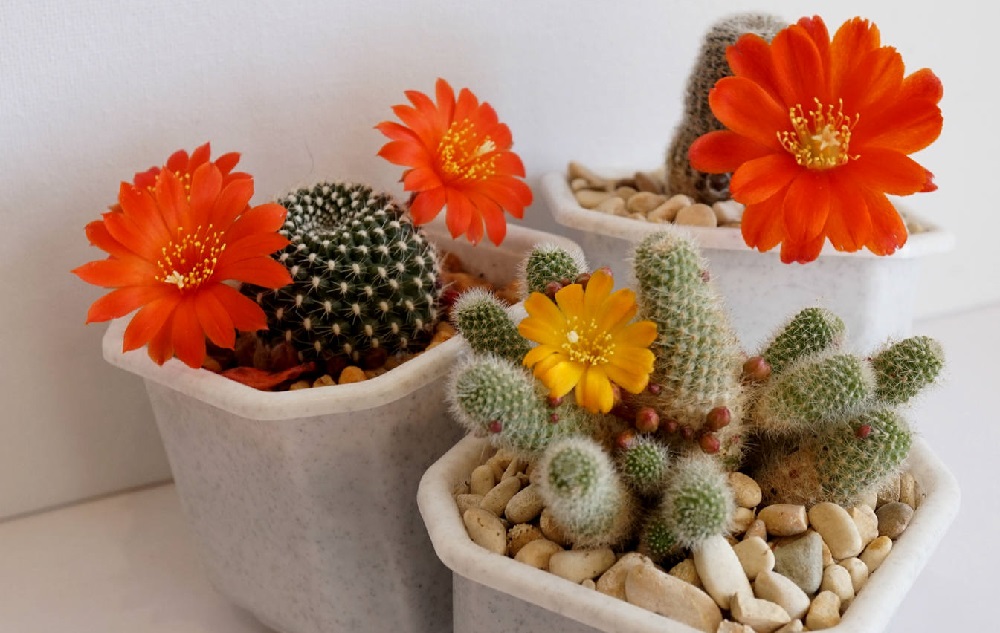
Rebutsia (lat. Rebutia) is a genus of cacti, which has about 40 species. These cacti are native to South America, from the mountainous regions of Bolivia, Argentina and Paraguay. Rebutia are prized for their vibrant flowers that appear in early spring.
The rebutia cactus can grow in height from 5 to 50 cm. The shape of the plant is spherical or cylindrical, the stems are ribbed, with thorns, the flowers are funnel-shaped, of different colors (yellow, orange, red, purple). Rubetia blooms in early spring, the fruits are oval, with seeds
S
Sansevieria (mother-in-law’s tongue)
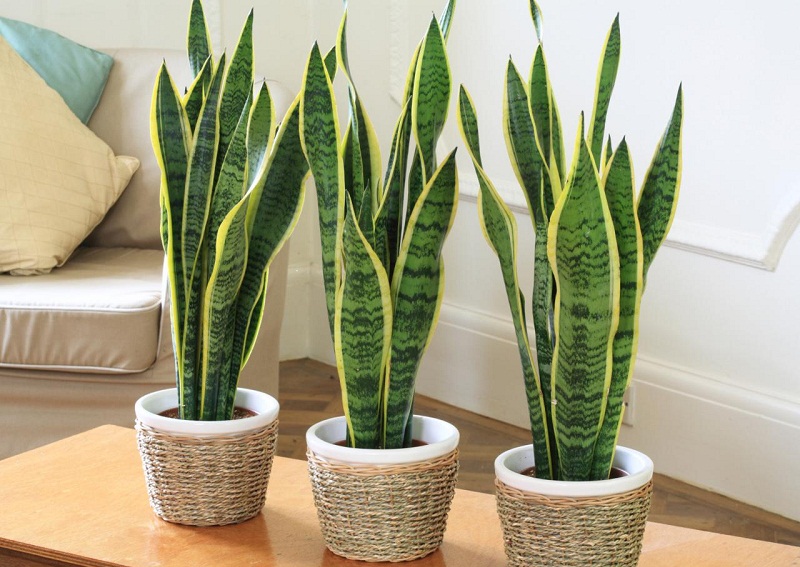
Sanseviera or sansevieria is popularly known as “mother-in-law’s tongue”, “wolf’s tail” or “pike tail”. Sansevieria is a succulent, part of the agave family, a close relative of dracaena and yucca. It is a perennial, evergreen ornamental plant with erect, hard, elongated (up to 1 m) leaves. Sansevieria blooms.
Read about useful properties, how to care, which fertilizer is suitable for sensevieria and how to transplant.
Read about sansevieria species.
Syngonium
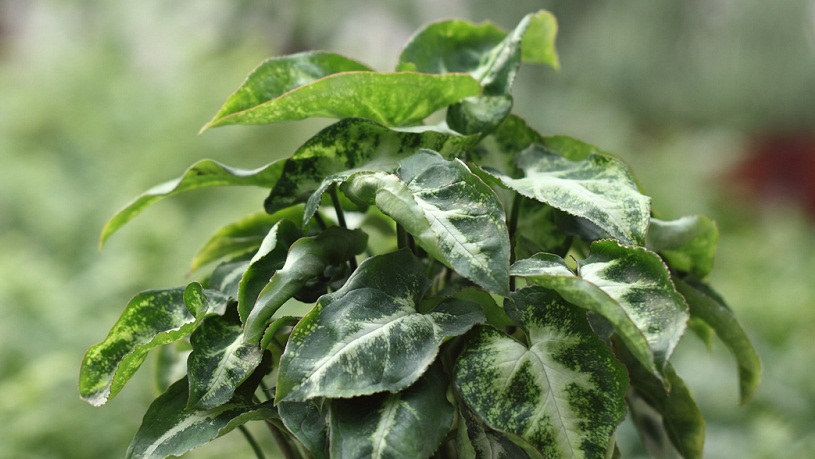
In nature, there are more than thirty species of syngonium, but as a houseplant it is represented by only two or three species.
Syngonium (Syngonium) is an ornamental-deciduous, evergreen, perennial, climbing plant with thin stems on which aerial roots develop that cling to any support. This plant belongs to the Aroid family. The color of the leaves of the syngonium is different: monochromatic or variegated, with silvery veins, strokes or spots; The color of the leaves varies from different shades of green to almost white. In young syngoniums, the leaves are whole, arrow-shaped, their color is much brighter than in old ones, in which the leaf eventually becomes dissected with 3-5 corners. In its natural environment, this plant can be found in the rainforests of South and Central America.
Read about pruning or pinching syngonium, transplantation, reproduction, mistakes in caring for syngonium.
Soleirolia
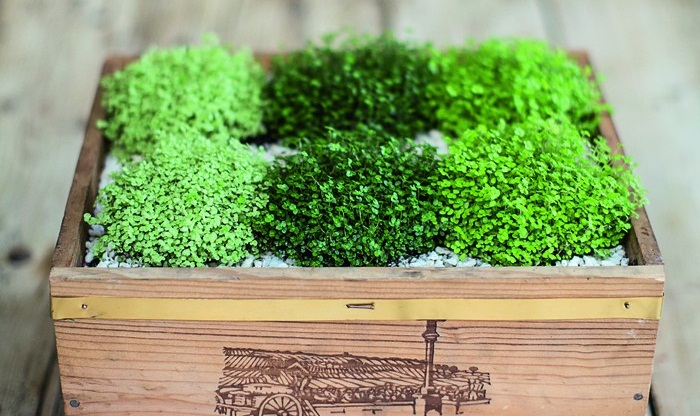
Soleirolia is a completely unpretentious ground cover plant, it can create a special atmosphere in your home.
In nature, soleirolia is found on rocks in humid and shady places on the islands of Corsica. The only species is Soleirolia Soleirolia (Soleirolia soleirolii). But breeders have bred several new varieties of Soleirolia not only with green, but with silver and even golden leaves. All of them form compact tubercles no more than 5 cm in height.
Read about care, light, watering, humidity and air temperature, top dressing, reproduction, difficulties.
Spathiphyllum
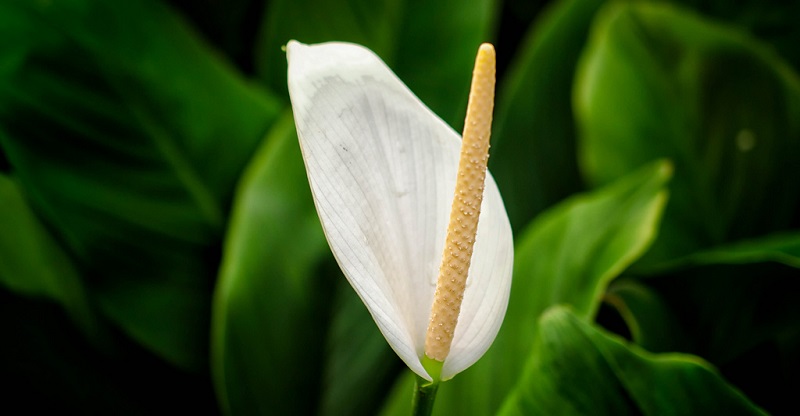
Spathiphyllum (Spathiphyllum) is an ornamental plant that blooms in spring. The leaves grow from the roots, have an oval shape, during flowering the flower looks like a “head of cabbage”, which is covered with a veil. This plant in its natural environment is found in the tropical forests of Brazil and Colombia, as well as in the rainforests of America, Venezuela. The name of the flower originated from the Greek words “spata” and “phyllum”, translated as a veil and a leaf.
Read about how to care, watering, fertilizing, transplanting, reproduction.
Read about spathiphyllum species.
Stephanotis
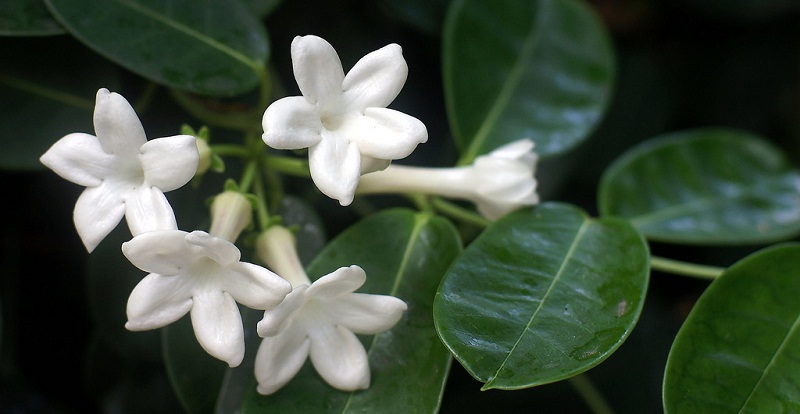
White flowers with a delicate aroma, which are very often used for bride’s bouquets – of course, we are talking about stephanotis.
Read about the types of stephanotis, care, transplanting and soil, pruning and pinching stephanotis.
Scindapsus
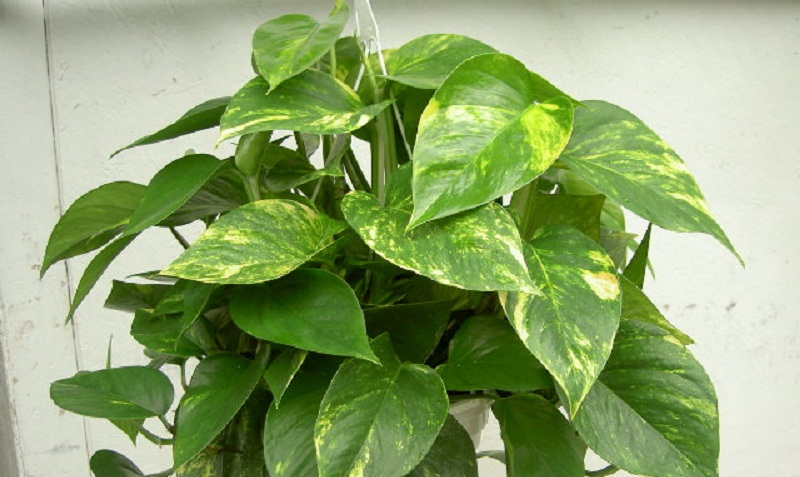
Scindapsus (Scindapsus) or pothos ( Pothos) is an ornamental vine with flexible stems on which heart-shaped variegated leaves grow, belongs to the Aroid family. Scindapsus is a very popular plant among beginner flower growers, because it does not require special care and special growing conditions.
Read about the care, reproduction, pruning and transplantation of scindapsus.
Smithian
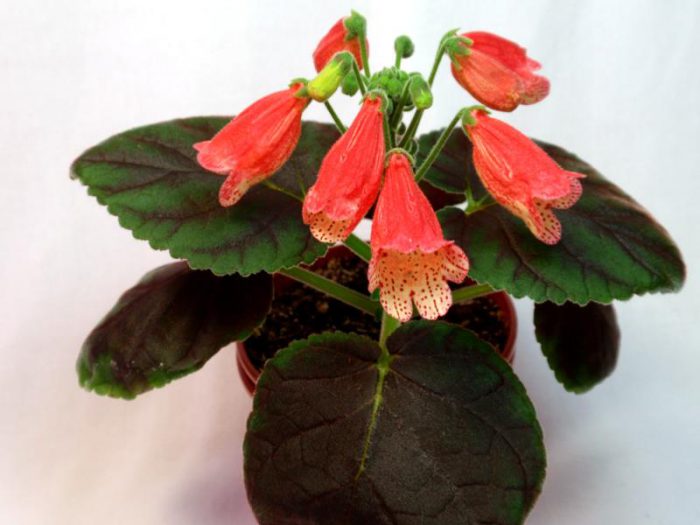
Smithantha (lat. Smithiantha) is a genus of perennial herbaceous plants from the Gesneriaceae family, native to the tropical forests of South America.
Smitianta has tubular flowers with five petals, collected in inflorescences. Smitianta flowers can be white, pink, yellow, orange, red or purple. The leaves of smitianta are oval or heart-shaped, with a serrated edge. The stem of Smitianta is fleshy, erect or lodging. Smitianta blooms in the current. Smitianta can reach from 30 to 60 cm in height.
Stapelia
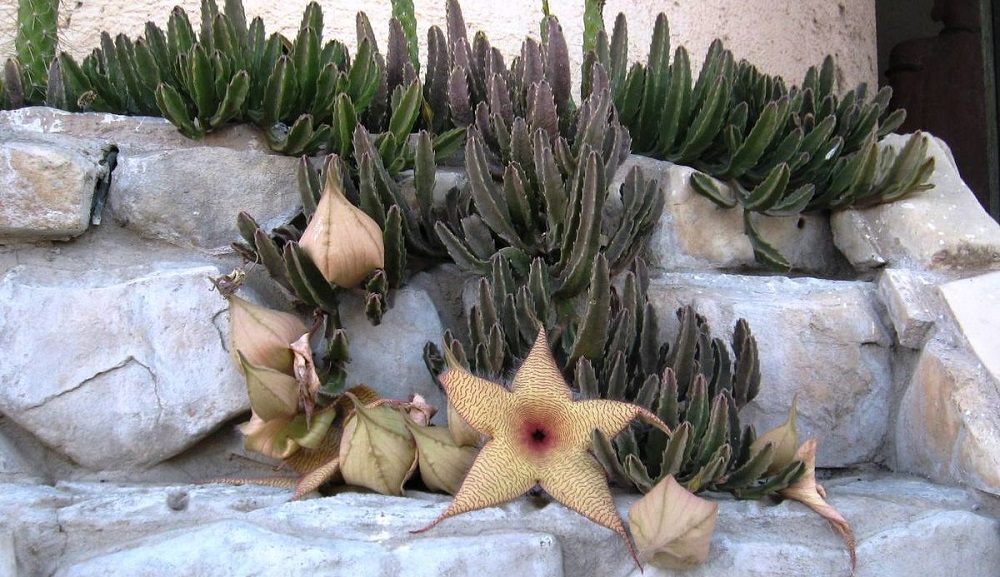
Stapelia (Stapelia L.) is a genus of herbaceous succulents from the periwinkle family, numbering about 40-100 species. These exotic plants are known for their unusual flowers, which mimic rot with their smell to attract flies for pollination.
Stapelias are native to South Africa, where they grow on rocky slopes and in desert areas. Some species can also be found in East Africa and the Arabian Peninsula.
Strelitzia
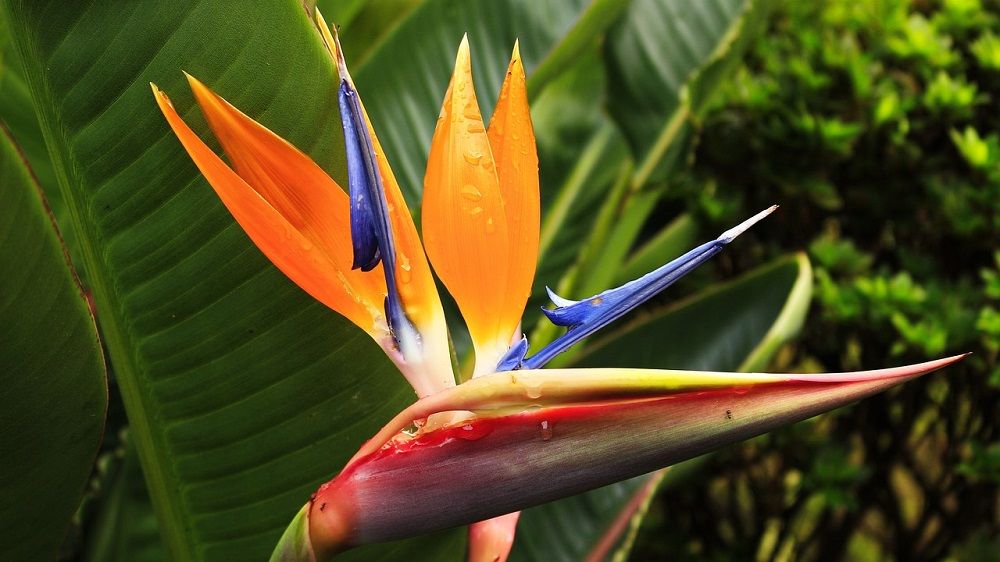
Strelitzia (Strelitzia) is a genus of herbaceous plants from the Strelitziaceae family. It has about 7 species that are native to South Africa. Strelitzia royalis is the national flower of South Africa.
Strelitzia are known for their striking flowers, which are shaped like a bird or a ship. The flowers have three petals that are joined at the base and three sepals that are joined in the shape of a beak. The colors of the flowers can range from yellow to orange, red, blue and purple.
Streptocarpus
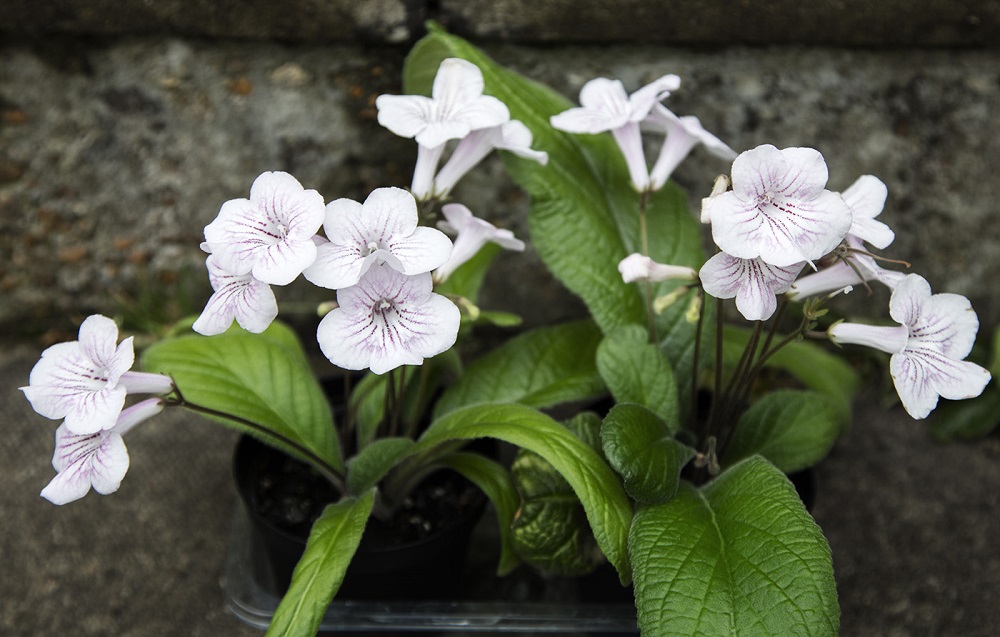
Streptocarpus (lat. Streptocarpus is a perennial herbaceous plant from the Gesneriaceae family, native to the rainforests of East and Southern Africa. This indoor culture is valued for its beauty, variety of shapes and colors of flowers, as well as for its relatively unpretentious care.
T
Tecoma erect
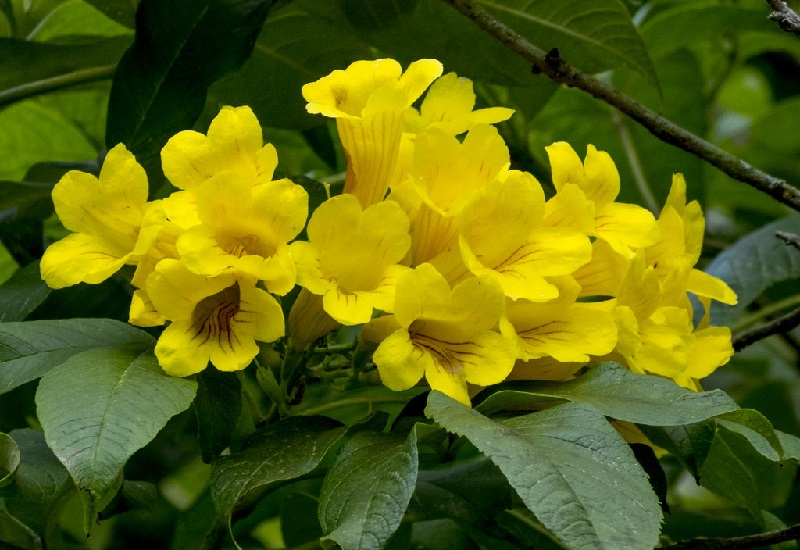
Tecoma is very widely used by landscape designers in all tropical and subtropical countries, because the plant blooms profusely from spring to late autumn and gives a bright accent to any landscape design.
Read about the climate for growing, care, reproduction
Fat Woman (Money Tree)
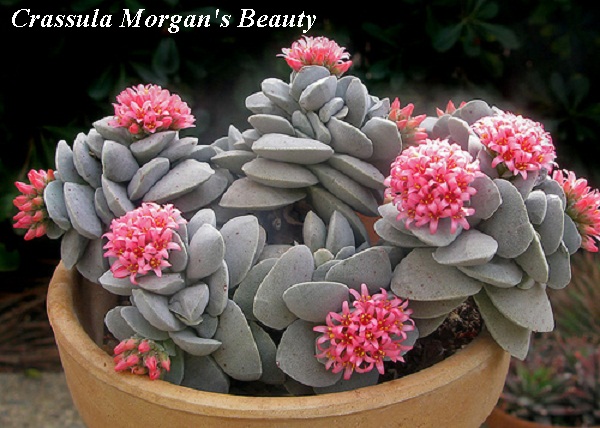
Crassula (Crassula), but the most commonly used name is “Money Tree”. The leaves of the fat woman are very similar to pennies, hence the name “Money Tree”. Many people believe that when there is a money tree in the house, the family will live in prosperity and prosperity.
Read about the types of fat woman, care, fertilizer, transplantation, reproduction, pests and diseases of the money tree.
Miniature rose (indoor).
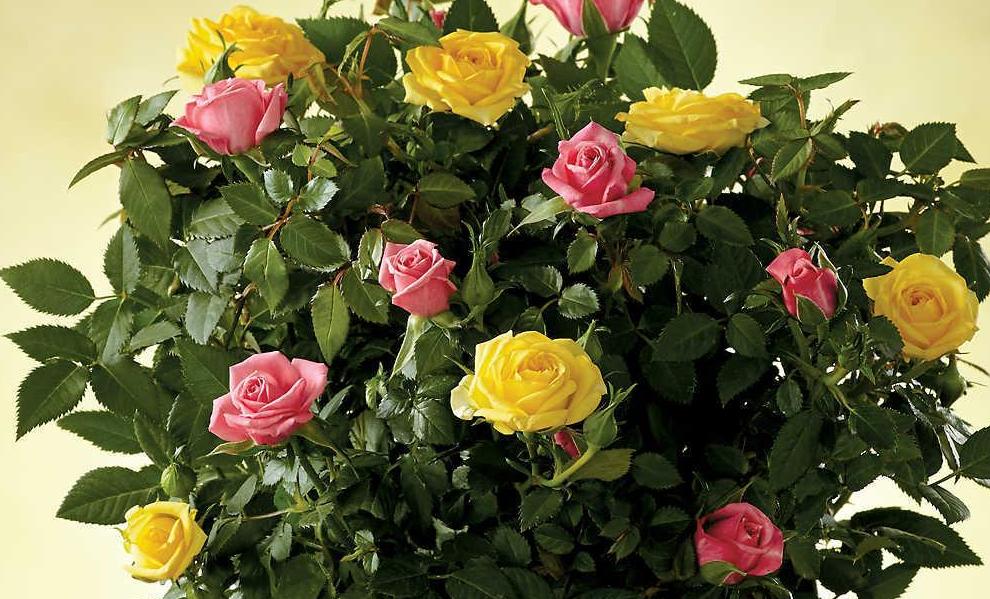
There are different types of roses: miniature, patio roses, standard, liana, scrub, tea, ground cover. Miniature roses begin to bloom in early May, but in stores you can find flowering pots at any time of the year.
Read about types of roses, care, reproduction, care after flowering.
Tabernemontana – care
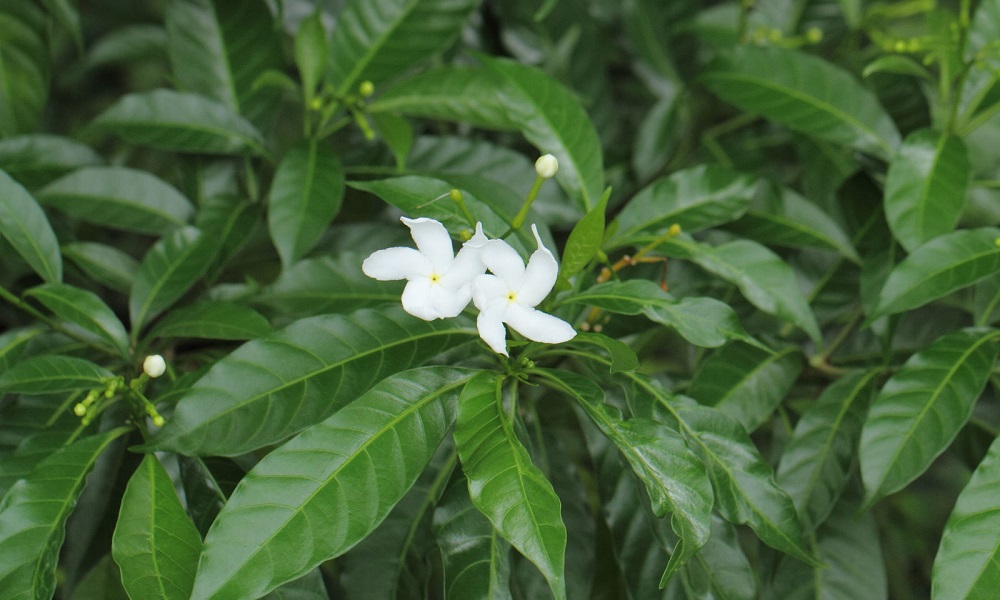
Tabernemontana (lat. Tabernaemontana) is a perennial plant belonging to the Kutrov family (Apocynaceae). Its name comes from the names of the German botanists Jacob Theobald Tabernemontan and Basilius Besler.
This plant can take the form of a shrub or a small tree, between 1 and 5 meters high. Its leaves are elliptical, dense, leathery, with a shiny dark green upper side and a light green underside.
Tabernemontana flowers are a real decoration of the plant. They are large, waxy, with 5-7 petals, arranged singly or in corymbose inflorescences. Their color can be white, cream, yellow or pink, and some species have a pleasant aroma of jasmine or vanilla.
F
Indoor violet
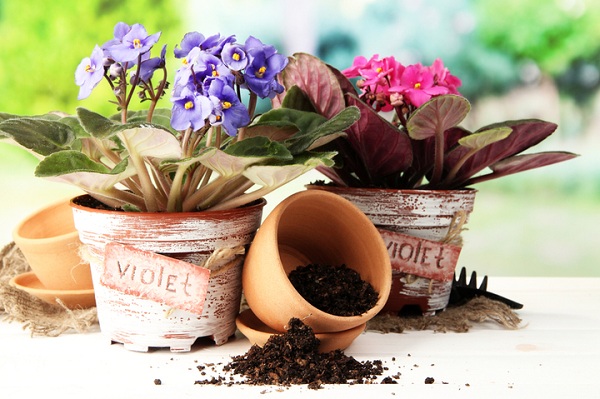
Saintpaulia (indoor violet) is a perennial herbaceous compact plant with beautiful multi-colored flowers, with oval dark or light green leaves, collected in a basal rosette from the Gesneriaceae family.
Read about caring for violets, air temperature, how to water violets, reproduction.
Ficus
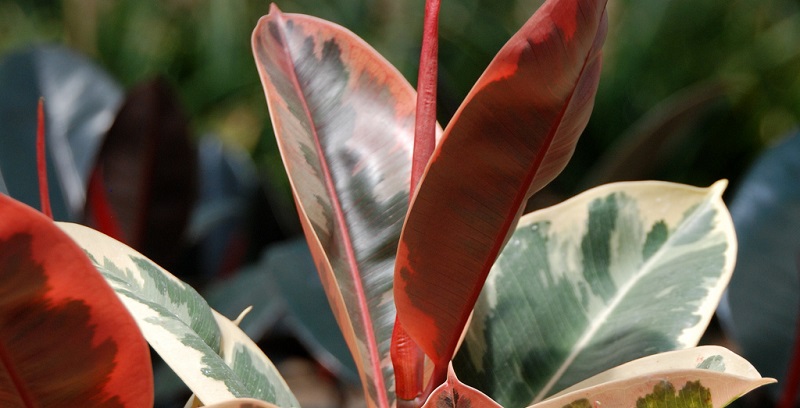
Ficus is an evergreen and deciduous plant from the mulberry family. The leaves of ficus are wide and oval, large or small, mostly glossy, although there are also matte ones. In their natural environment, ficuses grow in countries with subtropical and temperate climates. Ficus grows in Australia, America, Africa, Asia. Ficus is one of the most popular indoor plants, with more than 800 species of trees, shrubs and even vines. The size of the ficus varieties is simply impressive: there are dwarf plants from 10 cm in height, and some representatives of this species reach huge sizes. In the natural environment, you can find ficus inflorescences – simony. This flower is unique in its structure – only by breaking the inflorescences, you can see the ficus flower.
Read about care, reproduction, feeding of indoor ficus.
Fittonia
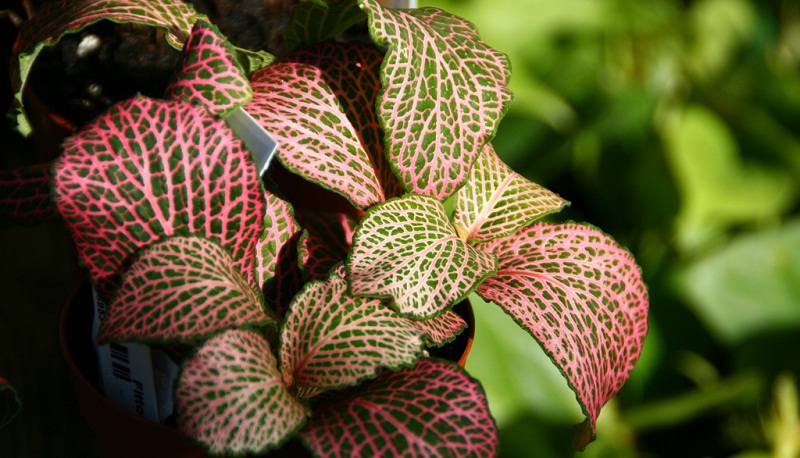
Fittonia (Fittonia) is an ornamental deciduous, herbaceous perennial found in its natural environment in South America (Peru).
Fittonia belongs to the acanthaceae family, has about 10 species. Fittonia is loved for its decorative leaves. Its leaves are ovate, dark or light green with bright light or pink veins. Fittonia blooms. The flowers are collected in spike-shaped inflorescences in the axils of the bracts. The bracts are rounded-ovoid in shape with a length and width of approximately 1 cm.
Read about care care, reproduction, transplantation, rejuvenating pruning, mistakes in the care of phytonia.
Fuchsia
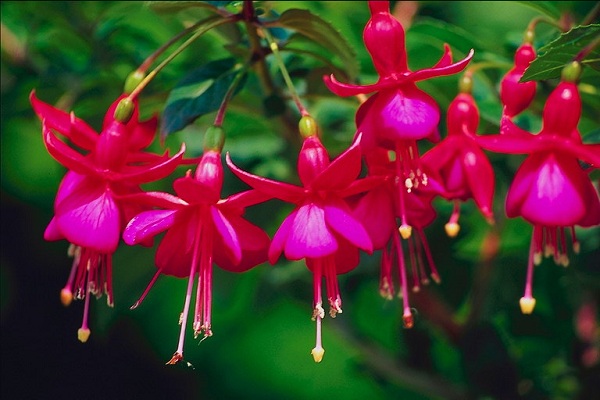
Fuchsia is a long-known and beloved indoor flower. Its lantern flowers can be admired for several months, of course, if they are properly cared for.
Read about how to choose fuchsia, care, place, fertilizers, pruning and shaping fuchsia, care after flowering.
X
Hirita
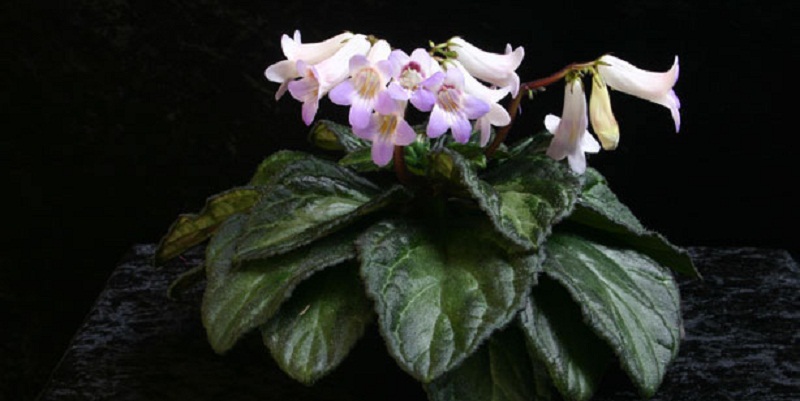
Chirita is a relatively new plant for us, but every year it becomes more and more popular. Interest in the chirita flower is due to easy care. This flower is suitable for beginner flower growers, and its species and varieties are impressive.
Chirita (Chirita) is a genus from the Gesneriaceae family, numbering up to 180 species of flowering perennial and annual herbaceous plants. This plant is very similar to indoor violet – saintpaulia. The stem of chirita is short, with age the stems become woody. The leaf plate varies from species to species and can be almost linear, rounded, ovoid in shape. Inflorescences are axillary, usually multi-flowered, racemose. It blooms from May to September with tubular flowers of white, blue, blue, pink color.
Read about types of hirita, care, air temperature, lighting, watering, transplanting, reproduction, soil, fertilizer for hirita
Chlorophytum
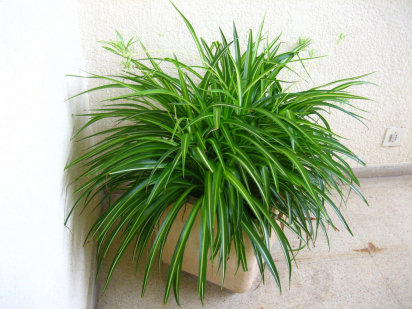
Chlorophytum is a perennial herbaceous plant, with elongated green, green-white leaves 10 to 60 cm long, gathered in a dense rosette, and hanging peduncles, on which white small flowers bloom, which, after flowering, become an airy mustache. The flower belongs to the lily family.
Today, there are up to 250 species of Chlorophytum, which grow in the humid vicinity of the rivers of the tropics and subtropics of America and South Africa. This plant differs from other indoor plants in that it quickly adapts to any home environment and is very easy to care for. This plant can be recommended for beginner gardeners, because it is very resistant and completely insensitive to sudden changes in temperature, lighting and humidity.
Read about the features of chlorophytum, useful for humans, care, reproduction.
Indoor chrysanthemum
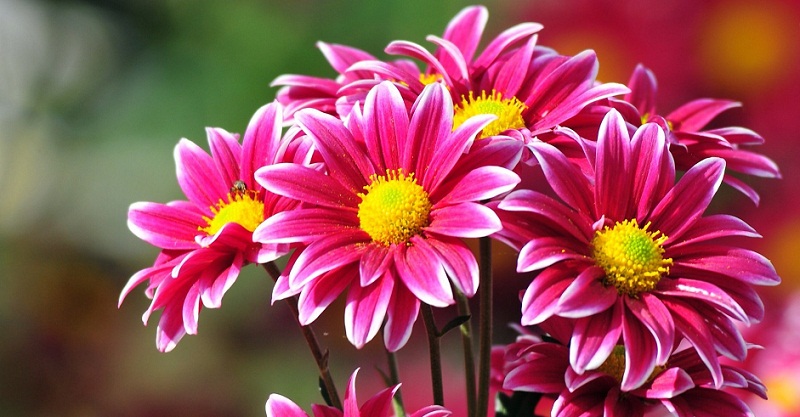
Chrysanthemums are favorite autumn flowers that are becoming more and more popular every year. Chrysanthemums can be grown, both in the garden and at home, as a houseplant. There are a number of types of chrysanthemums that are adapted to growing indoors.
Read about the choice of indoor chrysanthemums in the store, how to care, care after flowering.
Haworthia
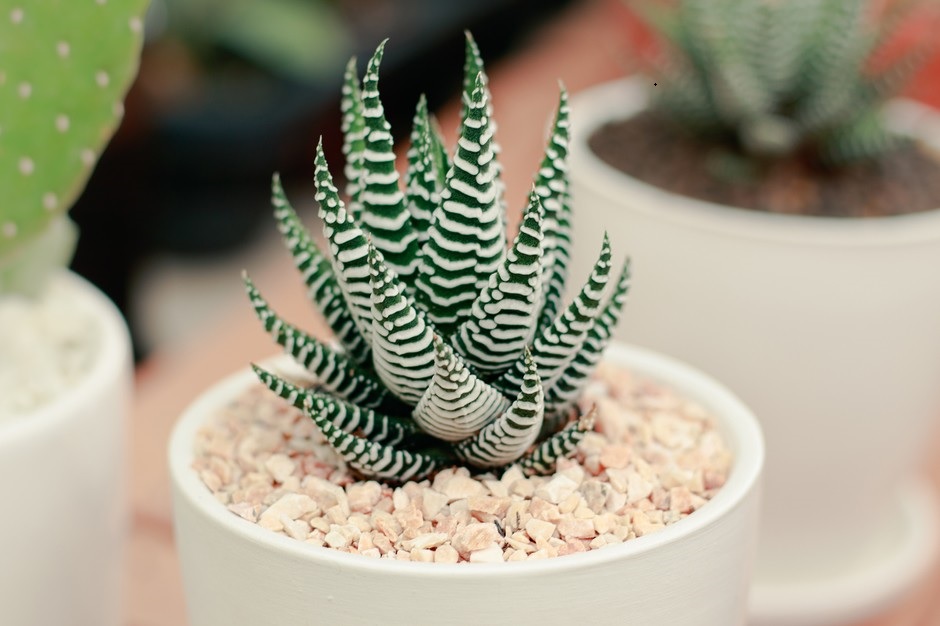
Haworthia (lat. Haworthia is an exotic succulent plant native to South Africa, belonging to the subfamily Asphodeloideae and the Xanthorrhoeaceae family. Its extravagant appearance makes it a popular houseplant among succulent lovers.
Haworthia is an unpretentious and beautiful succulent plant that will be a wonderful decoration of any interior.
Chamedorea
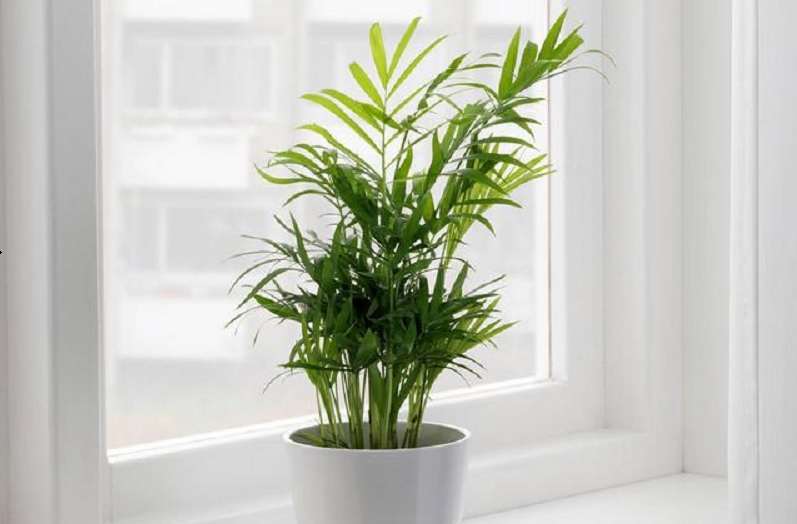
Chamedorea (lat. Chamaedorea) is an elegant palm tree native to the rainforests of Mexico, Central and South America. Its graceful, pinnate leaves and compact size make it a popular houseplant.
Chamedorea usually grows up to 1-2 meters in height indoors. Some species can reach 3-4 meters. The leaves of chamedorea are pinnate, with long, narrow leaflets. The color of the leaves can be green, gray or variegated. Chamedorea blooms in summer or autumn. The flowers are small, yellow or white, collected in inflorescences.
Hoya
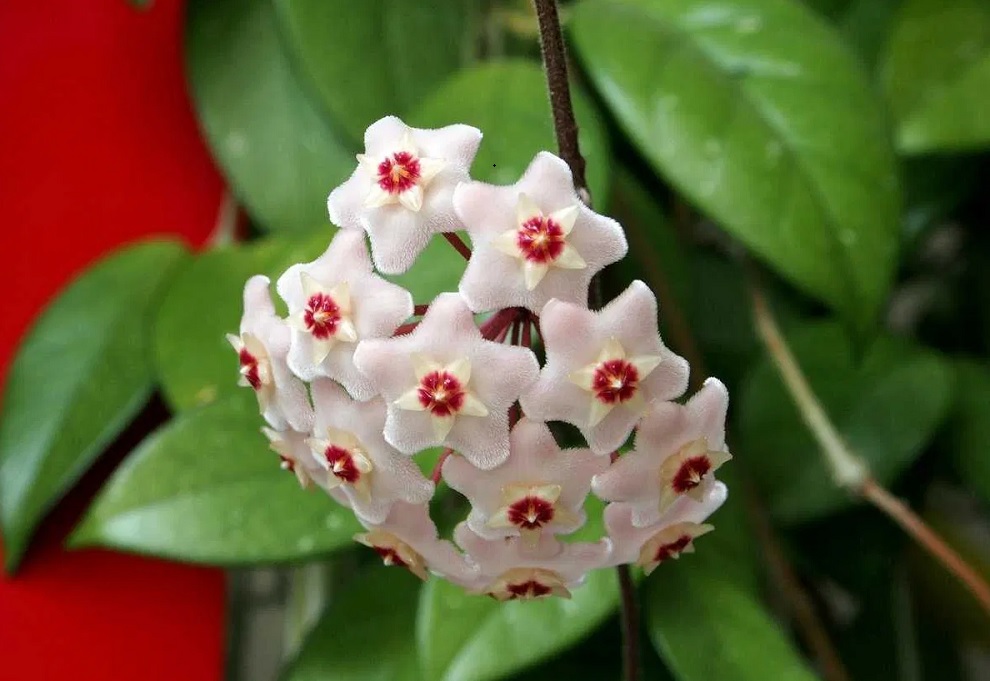
Hoya is an unpretentious plant to care for, which makes it popular among indoor flower growers.
Hoya (lat. Hoya is a genus of evergreen tropical vines and shrubs belonging to the subfamily Asclepiadoideae of the Apocynaceae family. Their natural range covers South and Southeast Asia, the west coast of Australia and Polynesia. Most hoya species grow in woodland, using woody plants as support.
C
Cyclamen
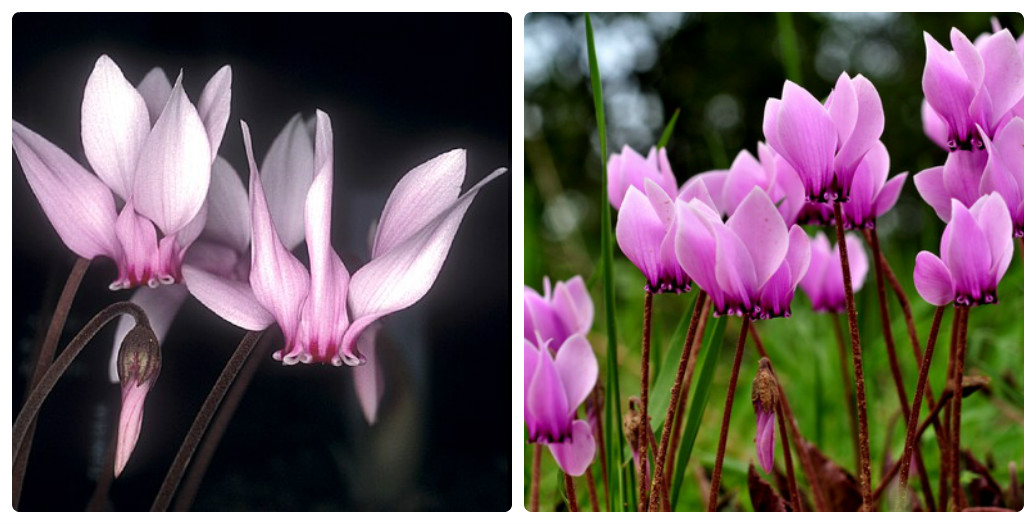
The popularity of cyclamen is growing every year. There are two types of cyclamen – European and Persian cyclamen. These two species conquer others with their magnificent flowering.
It blooms with beautiful flowers of different colors in the autumn-winter period, when there are so few bright sunny days. Its delicate flowers create a cozy and joyful atmosphere in the room. In nature, the cyclamen flower is found in Iran and Northeast Africa, but most often in Turkey and Italy.
Read about the types of cyclamen, how to choose cyclamen in the store, adaptation after purchase, care, fertilizing, cyclamen does not bloom, care after flowering.
Cyperus
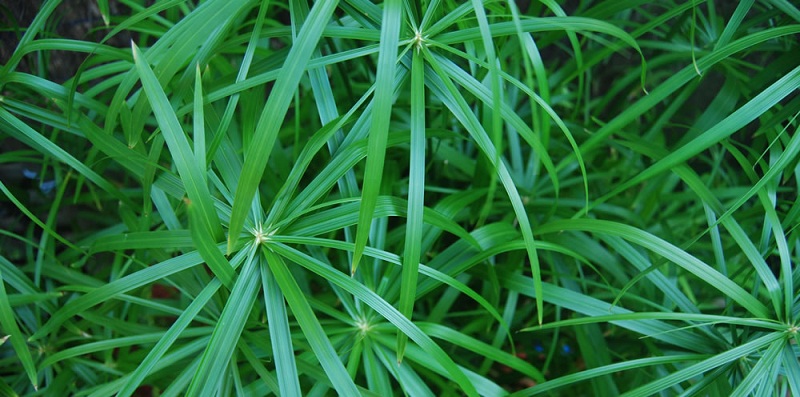
Cyperus (Cyperus) is a perennial herbaceous plant with straight, bushy stems, on which there are elongated linear leaves that form a dense umbel. Cyperus belongs to the sedge family. In Britain, cyperus, because of its appearance, was called the Umbrella Plant – “umbrella plant“.
Read about the types of cyperus that are most often found indoors, care, watering, reproduction.
Cymbidium
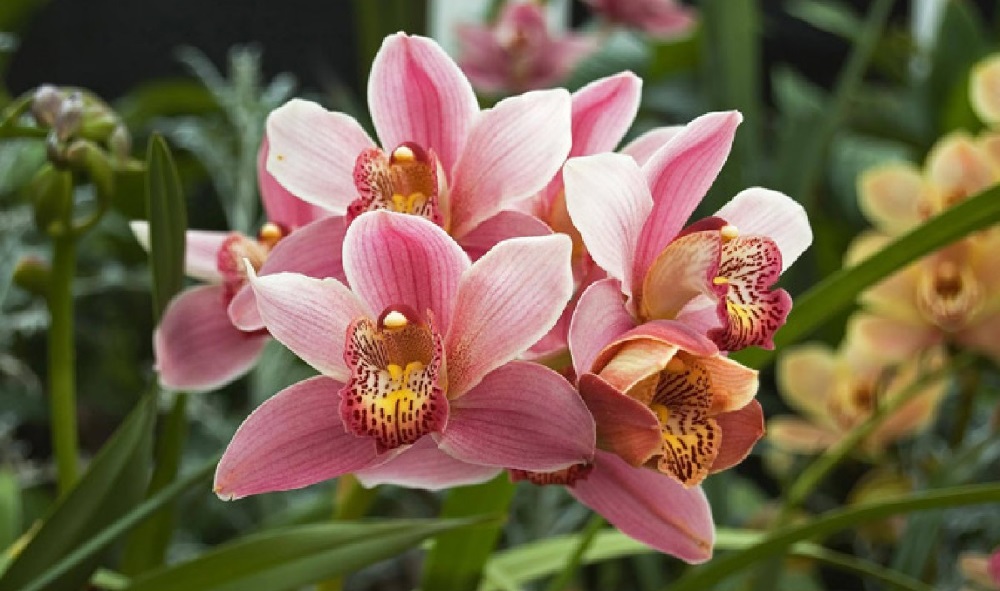
Cymbidium (lat. Cymbidium is a genus of perennial herbaceous orchids from the orchid family, which has about 60 species. They can be found in tropical and subtropical regions of Asia, Australia and Africa. These orchids are known for their elegant, long-lasting flowers that come in a wide range of colors and shapes.
Cineraria
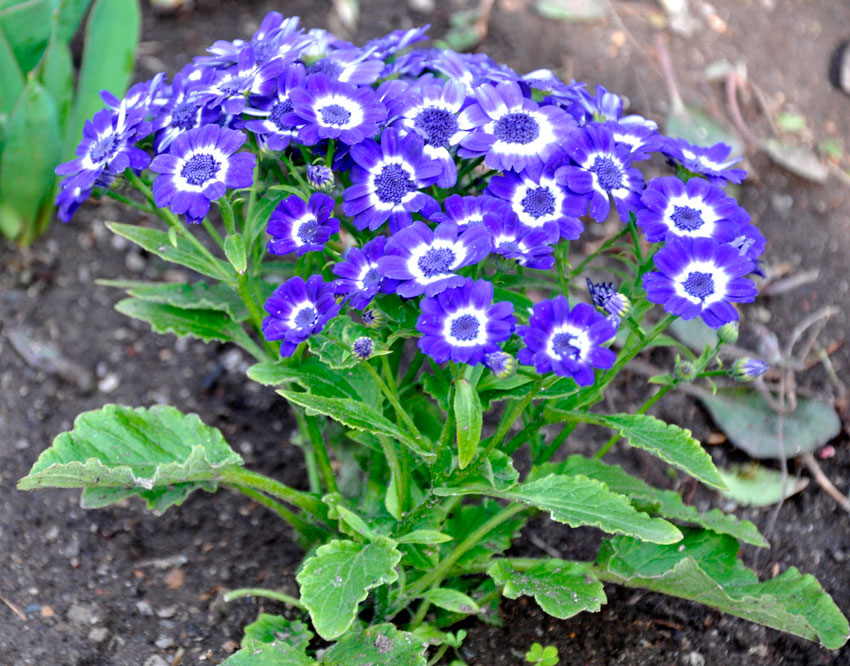
Cineraria is a genus of flowering plants from the Asteraceae family, native to South Africa. Most types of cineraria are herbaceous plants or small shrubs characterized by bright flowers that come in a variety of shades, including white, pink, purple, purple, and yellow. Cineraria is silvery, it is often used as a houseplant.
Sh
Scheffler
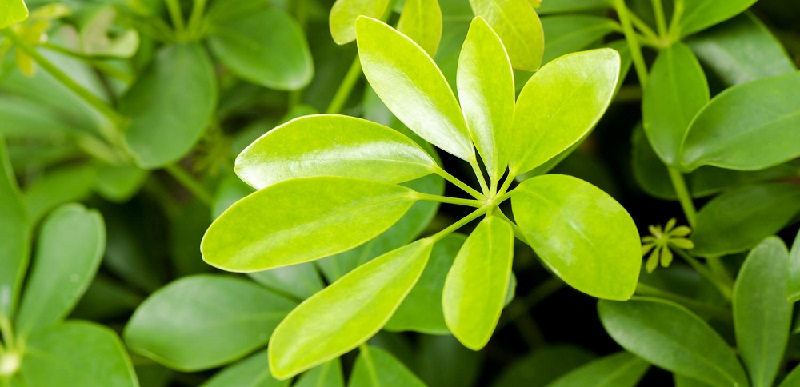
Schefflera (Schefflera) is an indoor, ornamental, evergreen plant with a large number of leaves, belongs to the Araliaceae family. The leaves, palmately cut into small leaves, such leaves resemble small umbrellas, which is why the shefflera is sometimes called the “umbrella tree”. In nature, shefflera can be found in the South. America, South-West. Asia and Africa. Under natural conditions, shefflera blooms with an inflorescence of small white flowers, and after flowering, clusters of berries appear.


