
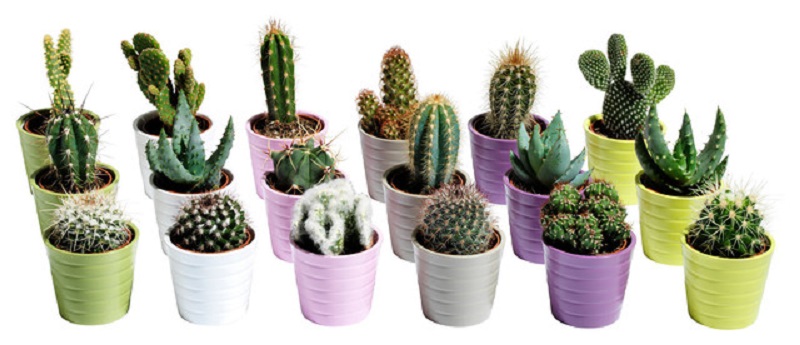
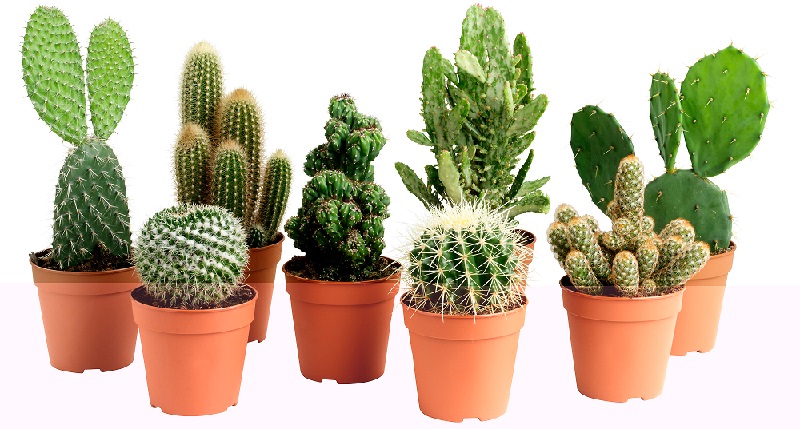
Cactus is an evergreen plant that has succulent stems with areola spines, belongs to the genus Sucolentae. Areolas are thorns and hairs on the stems of a cactus. Cacti are native to America, in nature they grow in the desert, bloom beautifully, tolerate drought and prolonged heat.
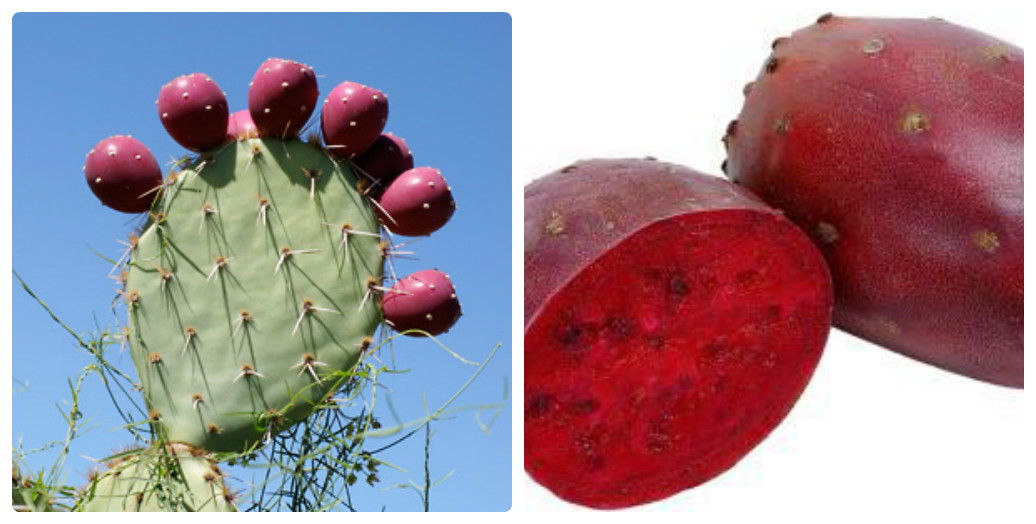
Before the advent of cacti in America, the natives used cacti for food, as medicine and for construction. In Mexico they are eaten like fruits; There are also plantations for growing cactus fruits.
Here, in Ukraine, cacti are found as ornamental plants. We are used to seeing cacti in the shape of small round or elongated spiny balls. In nature, cacti are tree-like – bushy sometimes do not differ from ordinary trees; columnar – from a distance they look like multi-meter branched pillars; ampelous – with stems bent to the ground; liana – grow on rocks, on stones, on the ground and on trees; Forest cacti are completely different from desert cacti and grow on trees.
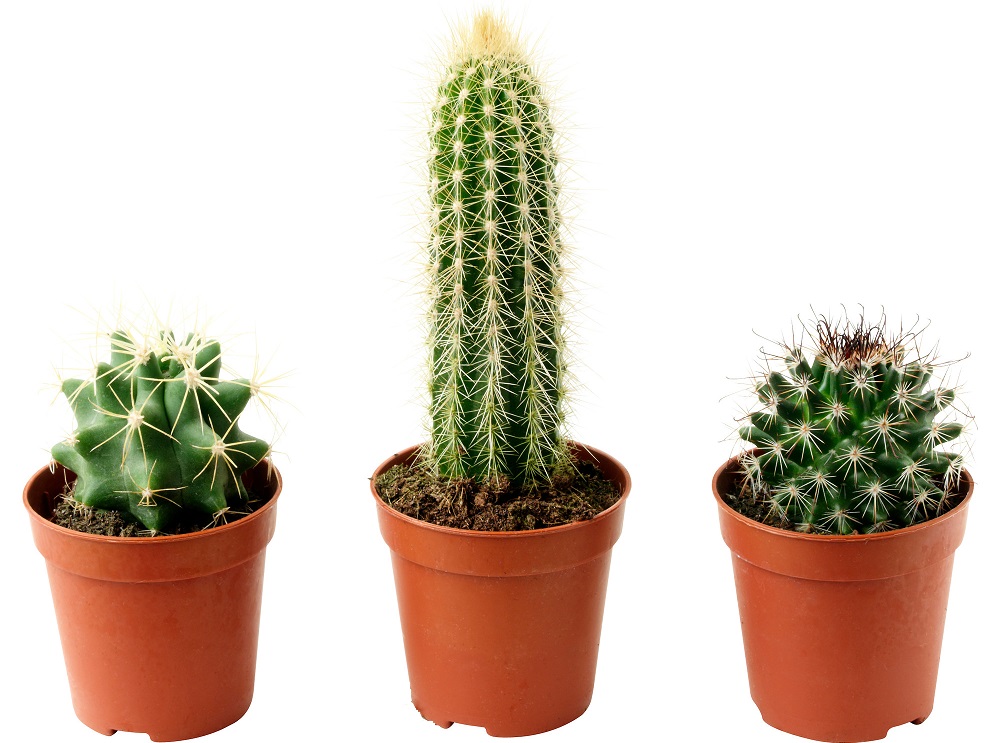
Desert cactus care
With proper care and timely transplantation, cacti will look healthy and will delight your eye with their unusual bloom. It must be remembered that cacti are different from other indoor plants, so an excess of water in the soil can cause the death of the cactus, and the summer heat and dry soil will “send” the cactus into hibernation. In order for cacti to grow well at home and bloom, they need a low temperature in winter, and a shaded place in summer, a moderate temperature (up to 25 degrees) and sufficient watering.
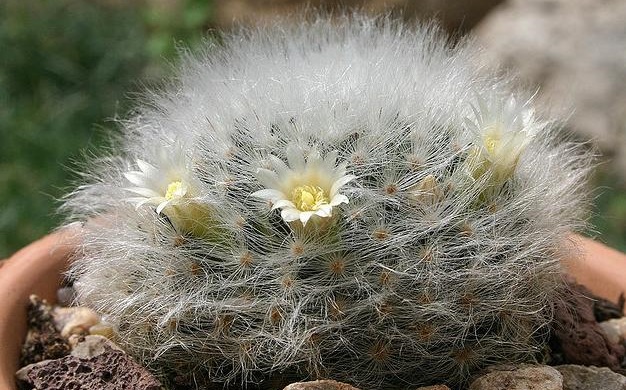
Air temperature for cacti
The temperature should be moderate from spring to autumn. In winter, you need to keep the temperature between 15-18 degrees, some cacti have the ability to withstand 5 degrees. But cacti that are on the windowsill in an unheated room on cold nights are best moved to a warmer place. Cacti Cepha-locereus senilis and Espostoalanata cannot withstand temperatures lower than 15 degrees.
Light brightness for cacti
Cacti are light-loving, need bright diffused light, especially in winter.
Watering and humidity for desert cacti
The basic rule of watering: it is better not to add than to overfill. In the spring, watering begins to be increased, in the period April – August, watering should be the same as for ordinary indoor plants (provided that the room is sunny and warm) – as the earth dries. Cacti need to be watered with soft and warm water. At the end of summer, watering is gradually reduced, and from mid-autumn it is watered very rarely and giblets (with tablespoons).
Cacti do not need spraying (except for Cleistocactus, you can spray), on hot, stuffy days, they do not spray the plant, but around it.
Soil and transplantation of desert cacti
For cacti, earth mixtures are mainly used in equal parts compost and sand with the addition of coal and peat. This mixture of earth is loose, airy and sufficiently moist. The chemical composition of the earth, for different types of cacti, needs, in equal proportions, organic and mineral components, but the acidity should be low.
Young cacti are transplanted every year, 3-4-year-old cacti – every few years. Transplantation is best done at the beginning of the growing season. The new pot should be 1cm larger than the previous one. Before transplanting (two to three days), do not water the cactus, the earth will easily crumble from the roots. To pull the thorny cactus out of the pot, wrap it with paper. Do not water or put in the sun for several days after transplanting. The choice of pot for a cactus should correspond to the size of the root system. If the cactus has short root lengths, choose a low pot, and cacti with larger roots need a deeper pot. Cacti are grown in plastic (the earth dries out more slowly, it is better to plant young plants that take root in such pots), but this is not a prerequisite at all, the pot can be clay (the earth dries out faster and cools down after watering) or glass (mostly used for decoration). Any pot must have a drainage hole to drain excess water – this is perhaps one of the most important conditions for growing succulents.
Reproduction of desert cacti
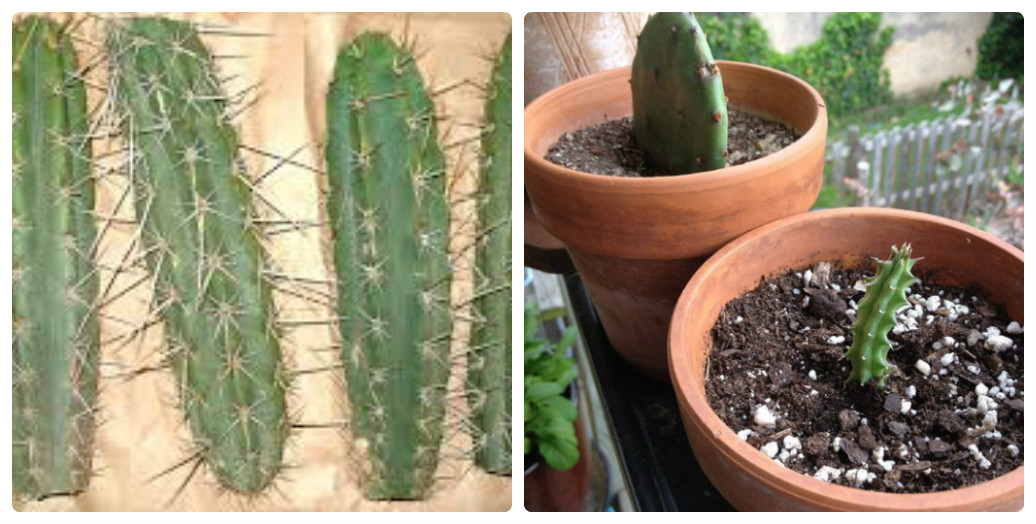
Most species of desert cacti reproduce vegetatively in spring or summer. Cactus cuttings are cut (they already have germinal roots), dried for 2-4 days before planting in a peat-based mixture, after a while the cactus will develop a root system.
Cacti are also propagated by seeds. Growing cacti from seeds is a serious and rather troublesome job. First of all, purchased seeds must be disinfected in a solution of potassium permanganate. Next, pour the earth in a small layer up to 1 cm and spread the seeds. The earth must be constantly moist, so it must be covered with glass or film – this will create suitable conditions for seed germination. Depending on the type of cactus and the quality of the seeds, the duration of germination can last from a day to several months. As soon as the plants have the first thorns, they need to dive into single pots in a more nutritious substrate. At the age of a few months, young cacti need the same care as other cacti. It is advisable to sow the seeds at the end of winter so that seedlings appear in early spring.
Cactus bloom
How to make a cactus bloom?
The flowering period of many cacti does not coincide with the period of active growth.
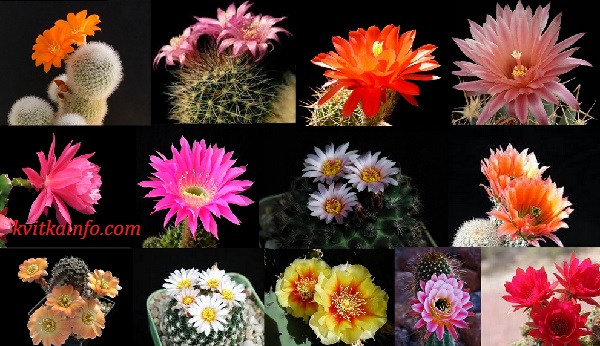
Some cacti (Lobivia, Parodia, Notocactus…) bloom quite often at a young age, while others such as Opuntia and Cereus rarely delight with their blossoms. The flowering of cacti can be expected at about 3 – 4 years of age, then they should bloom every year. The secret of cactus flowering is in young shoots that have flowering buds, and this requires proper care in summer and winter. To stimulate the flowering of the cactus, it is very important to keep the plant in a cramped pot.


