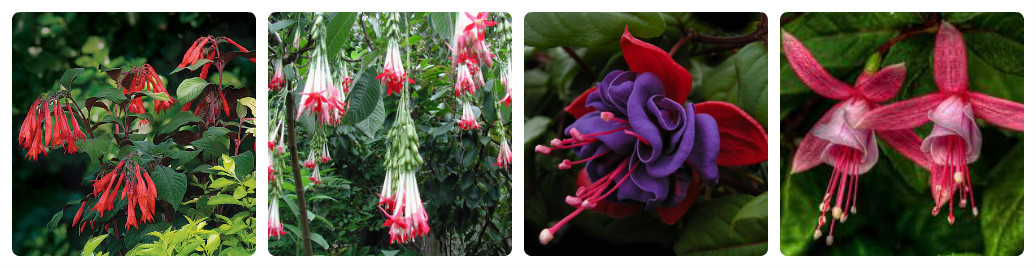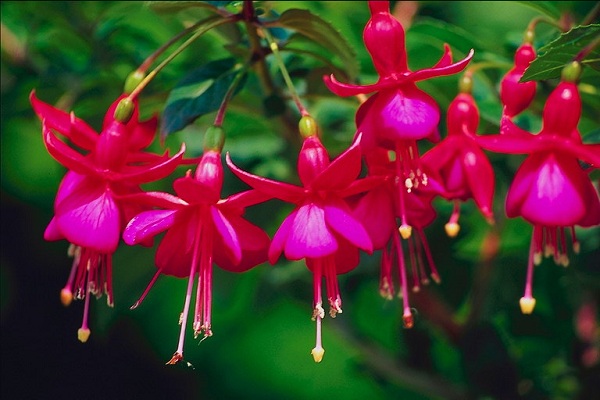
Fuchsia is a long-known and beloved indoor flower. Its lantern flowers can be admired for several months, of course, if they are properly cared for.
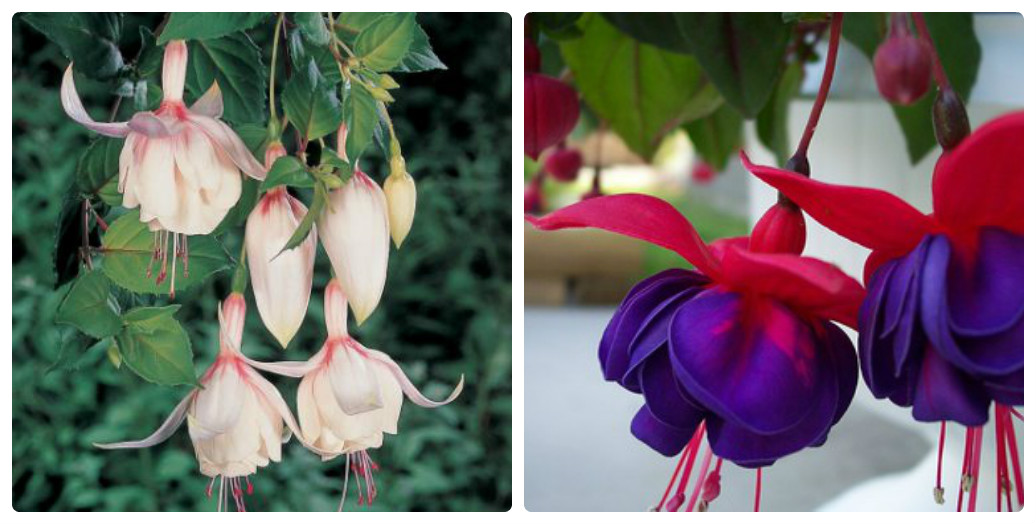
Fuchsia (FUCHSIA) is a perennial, beautiful exotic flower. Fuchsia has an unusual shape and two-tone color of the flower itself, which is very rare in other flowers familiar to us. These beautiful flowers will find their place in almost any garden, house or room. There are hundreds of hybrid forms of fuchsia flowers that will delight the eye with their unusual flowers from early spring to late autumn.
How to choose a fuchsia?
First of all, we choose according to the color of the flower and the size of the plant. Next, be sure to carefully examine the plant for spots on the leaves so that there is no rot. The following: we inspect the stems and turn the leaves, see if there are insects and cobwebs. If you have not seen or doubt that the plant is healthy, but you really want to buy fuchsia, bring it home, put it in the shade and treat it with chemicals. Choosing a healthy plant and proper care will ensure long flowering and a successful purchase.
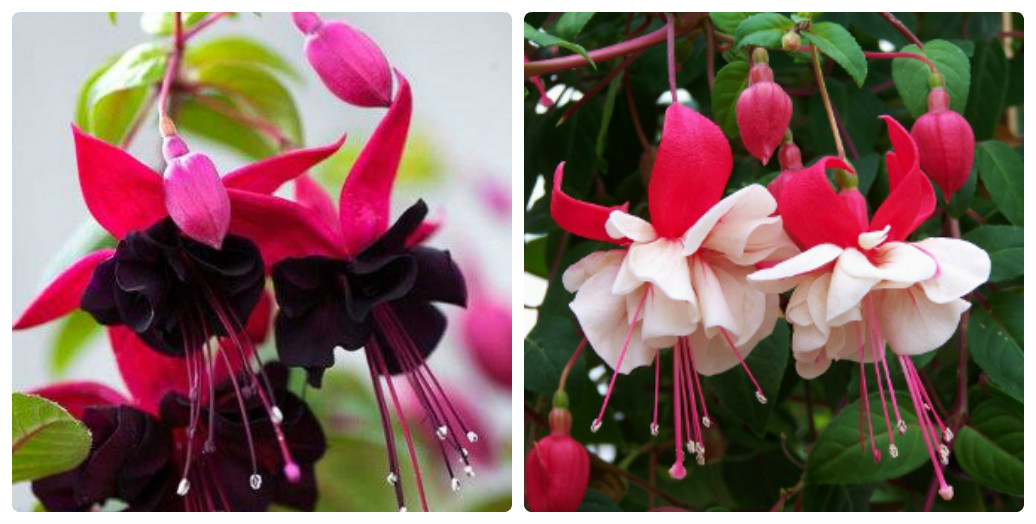
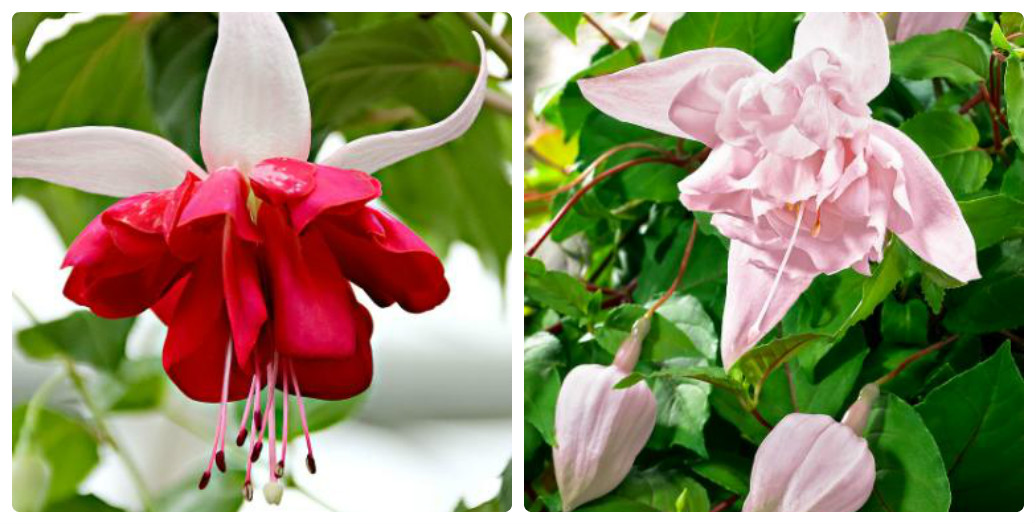
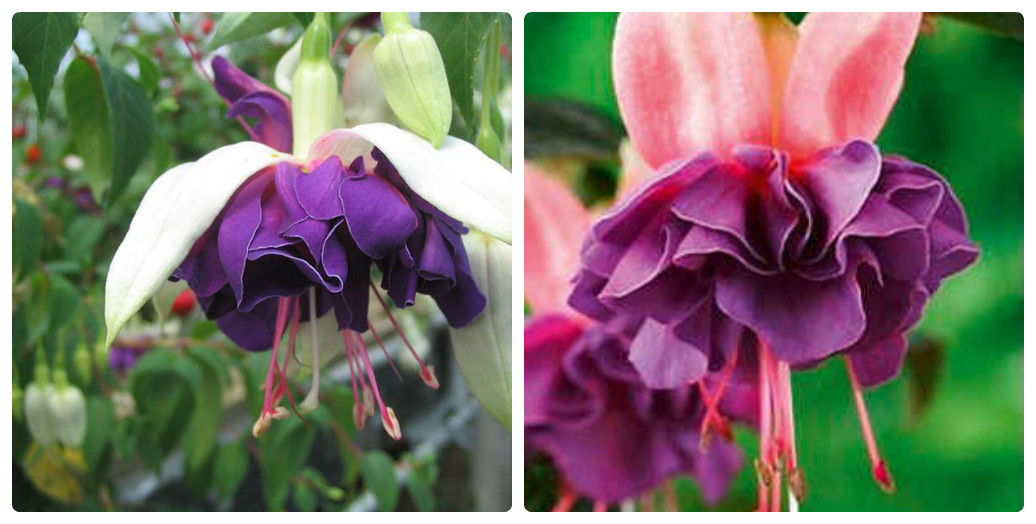
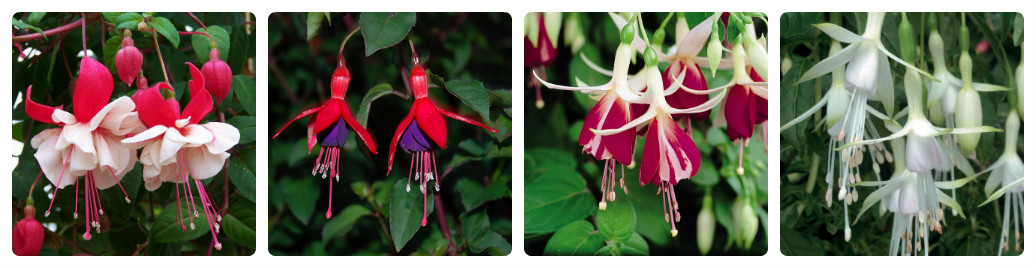
Flowers are both double, non-double and semi-double, ampelous, tree-like, bushy; different color combinations, white, pink, red, purple, also two-tone. So, you can pick up a whole collection of multi-colored fuchsias.
Fuchsia care:
Place. Light brightness
You need to choose the right place for the plant in the room, and in the summer in the yard. Fuchsia does not like frequent changes of location, because it is very sensitive to any permutations(it grows poorly, leaves and flowers fall off). The best place for fuchsia would be bright light, but without direct midday sunlight. Be careful in summer, very hot weather weakens the fuchsia and this does not allow the plant to fully develop.
If there is not enough sunlight in the room, fuchsia will feel great in artificial light. For artificial lighting, ordinary fluorescent lamps are suitable. If fuchsia reaches for light and does not bloom for a long time, it means that it has little light.
The optimum temperature for keeping fuchsia in summer is 18-25 degrees. It is sensitive to too high temperatures. If possible, take this flower outside in the summer, it will feel great outdoors. In winter, fuchsia is transferred to an unheated room with a temperature of 7-10 degrees.
Water and humidity for fuchsia
Fuchsia should be poured with settled water twice a day (morning, evening) in summer and until autumn on hot days, but do not overflow, as this can lead to root rot. Make sure the pot has a drainage hole and good drainage. In addition to watering, fuchsias love high humidity, it is worth spraying them often and even dousing them. Water for spraying and pouring should be at room temperature and settled. In winter, fuchsia should be watered very rarely – as the earth dries up.
Fertilizers for fuchsia
Fuchsias can be grown both in pots and planted outdoors for the summer. Fuchsias that grow in the open field are best fed with biological fertilizers, but they react well to mineral fertilizers, the main thing is not to overdo it, and for those that grow in pots, complex fertilizers for flowering plants are suitable. You need to feed the plants no more than once every two weeks. Do not feed in sunny weather, preferably in the evening. If the roots of the plant are very dry, first add a little plain water(so that the roots do not burn with fertilizers), and then with water with fertilizers. It is necessary to limit the use of fertilizers at the end of summer. Because at this time fuchsia is preparing for winter. In winter, a dormant period begins and the plant does not need to be fed.
Pruning and shaping fuchsia
Caring for fuchsias must necessarily include pruning or pinching, which contributes to the active growth of the plant, heals and renews it. Pinching is the removal of the upper part in order to reach the desired height. The purpose of pruning is to form the shape of the density and size of fuchsia we need. It is best to prune and pinch in the spring and throughout the year if it is necessary to form a plant.
How to transplant fuchsia
Fuchsia needs to be transplanted every year in the spring. The most obvious sign that indicates the need for a transplant is roots on the surface of the soil, sprouting roots from the drain hole at the bottom of the pot, or deformation of the plastic pot. Fuchsias do not like overheating of the root system. Constant overheating can be dangerous for the plant, so be sure to use white clay pots or planters!
The new pot should be no more than 4 centimeters wide and 5 centimeters deep from the old pot. Why? A pot that is much larger gives the roots too much room to grow, excess water, which can contribute to root rot. Remember to choose a pot that has drainage holes to allow excess water to drain out. The upper part of the plant will not grow until its roots begin to fill the pot.
If you are using a new clay pot, soak it in water for a few hours before planting the plant in it. A new clay pot is so dry that it will take all moisture from the soil.
The land for fuchsia should consist of peat, compost and humus (1 part is taken in total), as well as 2 parts of coarse sand.
Reproduction of fuchsias
Fuchsia is propagated by seeds and cuttings. This is most often done when pruning fuchsia. You need to immerse the twig in water and wait for the roots or stuff the twig into the ground that will take root. It is imperative to tamp the earth around the twig that is in the ground so that an air pocket does not form, which can lead to decay.
Cover with a jar or film to provide the desired humidity.
We put our flowerpot in a warm and shaded place. Leave for 30 days, periodically water as the earth dries.
Insect pests, how to deal with them?
If pests such as whiteflies, spider mites are wound up, then they will have to be dealt with with chemicals: a solution of karbofos, phosphamide is used.
Care after flowering
We remove faded flowers, cut off dried twigs, spray them from pests, bring them into a cool room for wintering, add as the earth dries.
In fact, caring for fuchsia is very easy: it is enough to choose a suitable place, water often and rarely feed, then the flower will delight the eye with its unusually beautiful flowers from early spring to late autumn.