
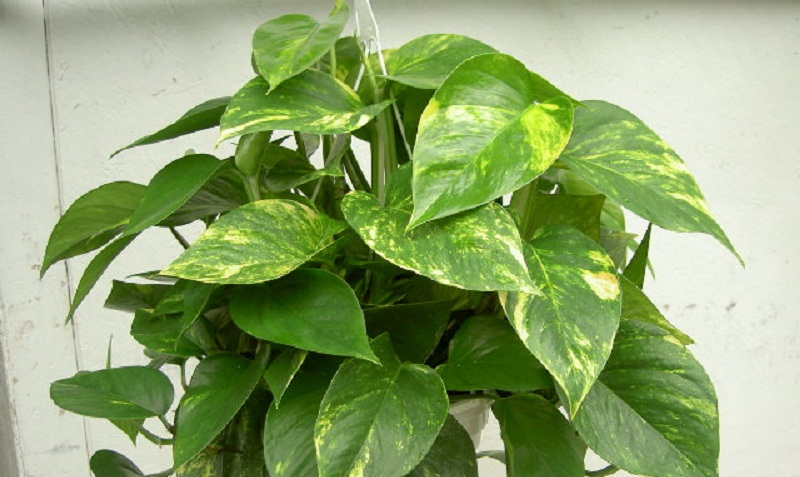
Scindapsus (Scindapsus) or pothos ( Pothos) is an ornamental vine with flexible stems on which heart-shaped variegated leaves grow, belongs to the Aroid family. Scindapsus is a very popular plant among beginner flower growers, because it does not require special care and special growing conditions.
This vine with aerial roots can grow in the darkest corner of your apartment, as well as in artificial lighting. Very often, scindapsus is used for a hanging planter, or allowed to curl along the wall.
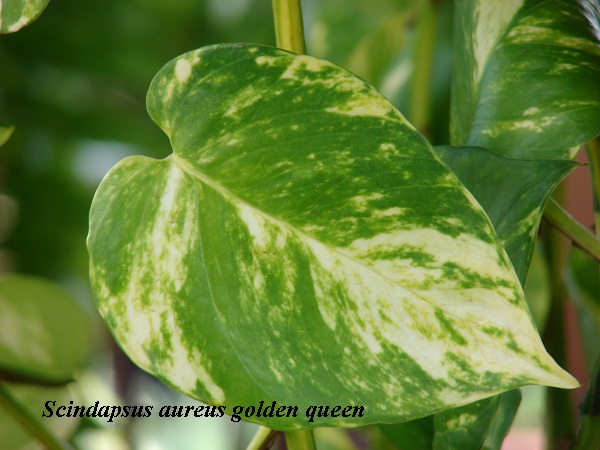
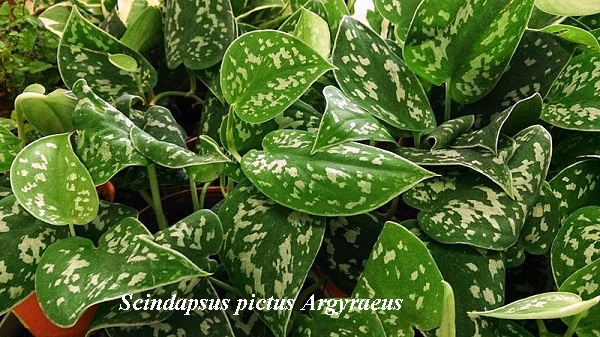
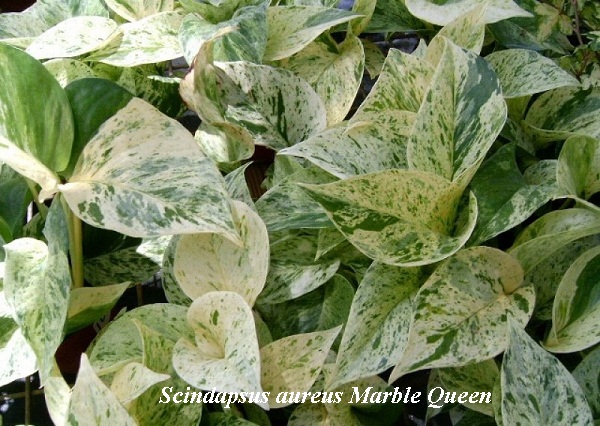
We will consider the types of scindapsus with the help of a photo.
Scindapsus care
Scindapsus is an unpretentious plant that is easy to care for, suitable for growing for beginner flower growers.
Light brightness for scindapsus
Scindapsus grows well in shaded places, but all the time in such (without light) places the plant cannot exist. This decoratively deciduous vine can grow in Mon., East, West. windows of the house, as well as on the south. away from the window. With insufficient lighting, scindapsus will lose its decorative appearance, the leaves will lose color and become smaller. Direct sunlight should be avoided.
Air temperature for scindapsus
Scindapsus is an unpretentious plant, it is suitable for the usual room air temperature (+18-+20°C ), but in winter the air temperature should not fall below + 12°C, for all species, the exception is S.pictus argyraeus, for which in winter the temperature should not be lower than +16°C. Scindapsus does not tolerate sudden changes in temperature and drafts.
Watering and air humidity for scindapsus
Scindapsus should be watered moderately so that the topsoil has time to dry out before the next watering. And in winter, when the air temperature is minimal (+12°C), watering is reduced (1 time in 7 days). Any water for irrigation can be used (at room temperature).
The air humidity for scindapsus should be high enough, spray the plant twice a day in summer, and during the heating season, because warm and dry air is favorable for the appearance of pests. How to increase air humidity?In winter, the plant is not sprayed in cold rooms.
See also:ORCHIDS – ORCHID CARE
Fertilizer for scindapsus
You need to feed the plant once every 14 days(spring – autumn) with a complex mineral fertilizer for deciduous plants. And in winter, top dressing should be reduced by half (1 time in 30 days).
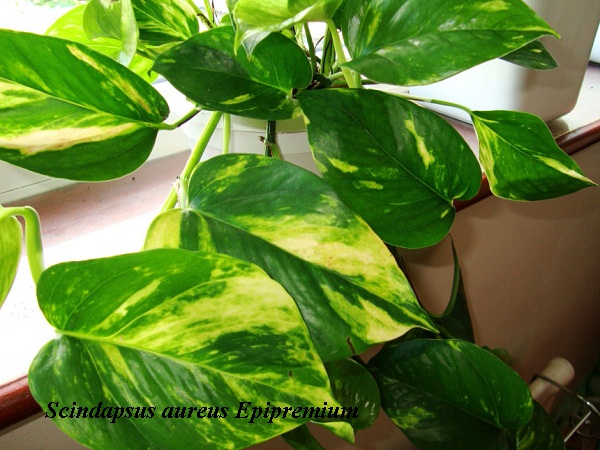
Pruning scindapsus
Scindapsus grows very quickly, therefore, for a more lush vine, the tops (growth points) are pinched or pruned. Over time, the plant loses its decorative appearance, the lower part of the stem is completely exfoliated, in which case the plant is rejuvenated by pruning. All cut parts are used for reproduction.
Scindapsus transplant
Young plants (up to 3 years old) are transplanted by transshipment annually, adult plants do not need frequent transplanting(1 time in 4 years), if it is not possible to transplant, replace the topsoil with a new one.
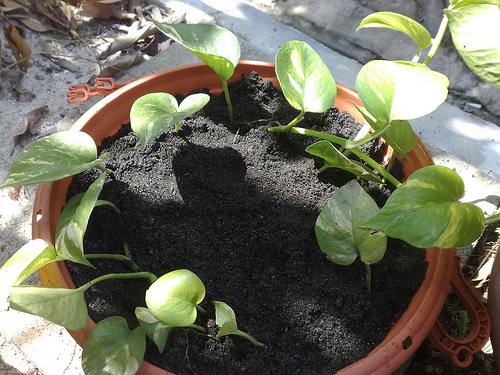
Reproduction of scindapsus
Scindapsus propagates by cuttings and layering.
Pests and diseases
Scindapsus can be attacked by: scale insects, spider mites and aphids.
Diseases appear with improper care.
The leaves turn yellow and fall off, the roots rot – overflow. The plant can be saved: remove the plant from the pot, rinse the roots, remove rotten roots, plant the plant in new soil.
The tips of the leaves dry – low humidity.
Twisted wilted leaves, stems rot – the plant is frozen.


