
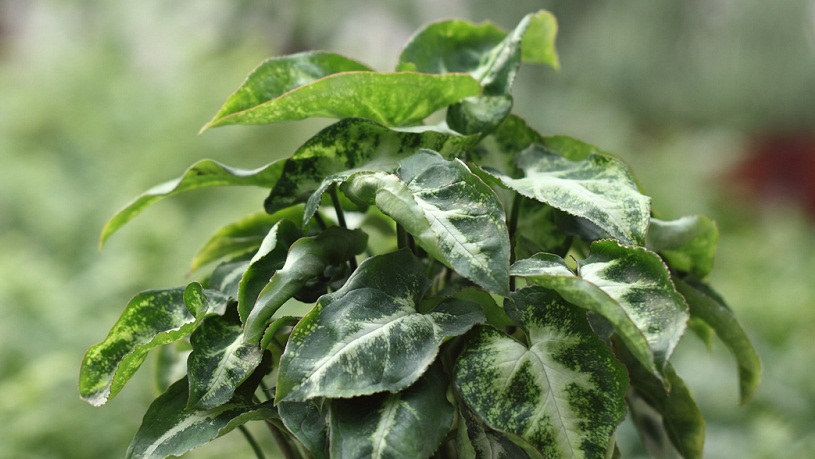
In nature, there are more than thirty species of syngonium, but as a houseplant it is represented by only two or three species.
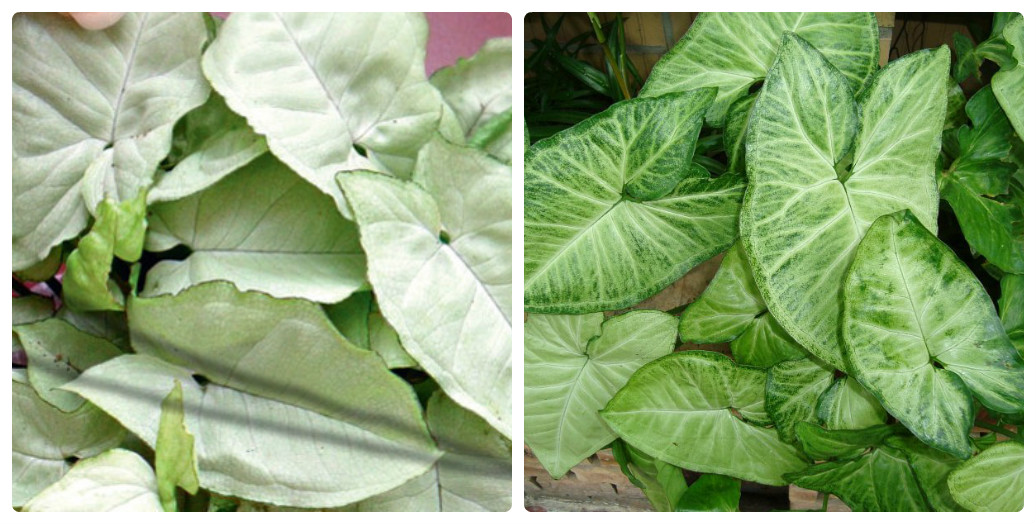
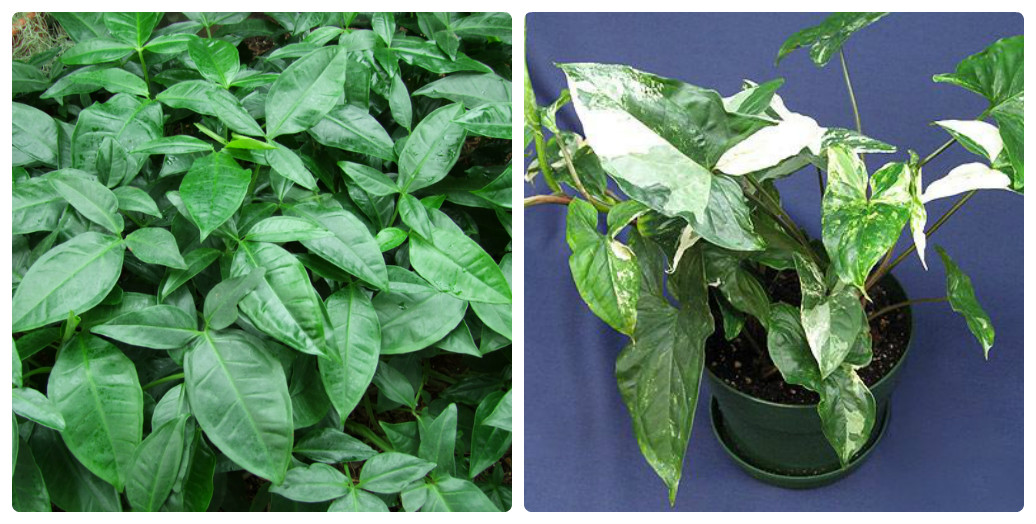
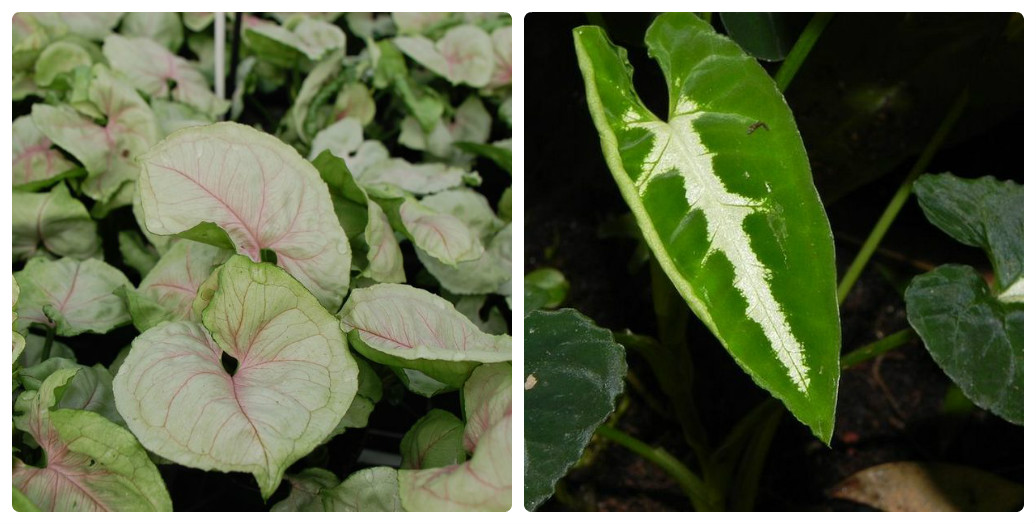
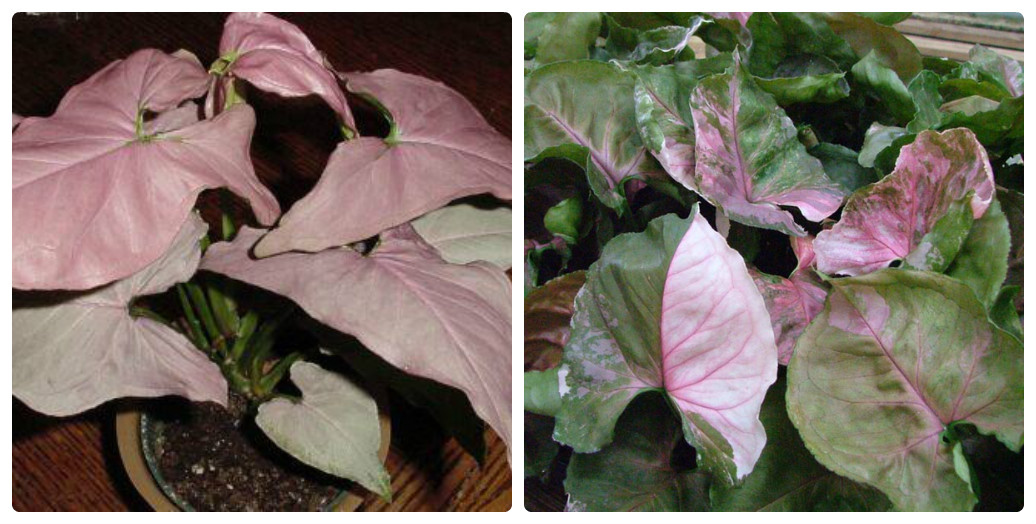
Syngonium (Syngonium) is an ornamental-deciduous, evergreen, perennial, climbing plant with thin stems on which aerial roots develop that cling to any support. This plant belongs to the Aroid family. The color of the leaves of the syngonium is different: monochromatic or variegated, with silvery veins, strokes or spots; The color of the leaves varies from different shades of green to almost white. In young syngoniums, the leaves are whole, arrow-shaped, their color is much brighter than in old ones, in which the leaf eventually becomes dissected with 3-5 corners. In its natural environment, this plant can be found in the rainforests of South and Central America.
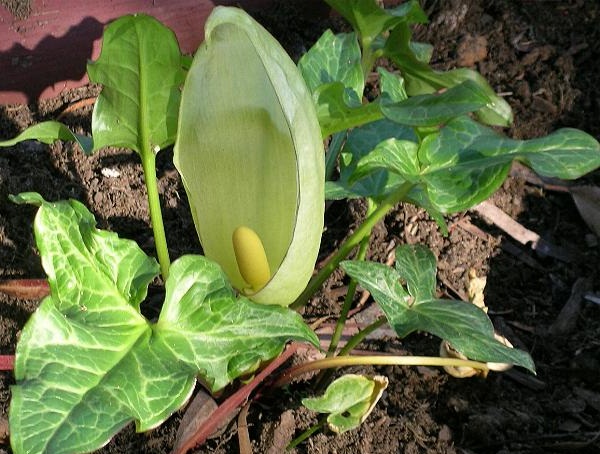
Syngonium flowers, like all aroids, look like a green head of cabbage with a pink or red veil, syngonium does not bloom at home.
Attention! The milky sap of syngonium is poisonous, like the juice of all aroids; If it comes into contact with the mucous membrane, it causes irritation.
How to care for syngonium
Caring for syngonium is easy, it is enough to correctly and timely comply with the care requirements and this plant will always look beautiful.
Light brightness
It is better to place the syngonium in partial shade or on the western or eastern sides of the house. It also withstands bright diffused light, but it is better to shade the plant from direct sunlight (its leaves fade). In winter, syngonium needs more light than in summer – at this time, due to insufficient lighting, its leaves become small and green, without color.
Air temperature for syngonium
Syngonium develops well at a temperature of +19-+24 ° C, in winter +17-+18 ° C; can tolerate a short-term drop in temperature to +14 ° C.
Watering and humidity for syngonium
Syngonium should be watered with abundantly settled, soft water at room temperature, all excess water must be drained. Between waterings, the top layer of the substrate should dry out. In winter, watering is reduced, unless the syngonium hibernates in a very warm room with dry air.
The air humidity for the syngonium should be high, so in summer its leaves should be sprayed or washed with warm, settled water, and in winter it is better to keep the pot with the plant away from batteries or increase the humidity.
How to feed syngonium
Syngonium is fed in the spring-summer period 1 time in 14 – 18 days with liquid mineral fertilizers for deciduous plants. In winter, they do not feed.
Pruning or pinching syngonium
Syngonium needs to be formed, but before pinching or pruning this plant, you need to decide what shape you would like to get: whether it is a vine, or the shape of a bush, etc. Every spring, you need to remove thin growths on the main stem, and for greater branching, young plants are pinched over the seventh leaf.
See also:ORCHIDS – ORCHID CARE
Syngonium transplant
Young vines are transplanted every spring by transshipment, and those that are 3-4 years old – after two to three years, when the roots will be visible from the drain hole of the pot.
The soil for syngonium should be loose, water and breathable, neutral or slightly acidic (pH 6-7). The soil mixture should consist of 1 part sod, 1 part leafy soil, 1 part peat and 1 part sand. Do not forget to water the plant after transplanting and do not feed for a month.
Reproduction of syngonium
Syngonium propagates by seeds or vegetatively: cuttings, dividing the bush.
Pests and diseases
If you follow all of the above care conditions, the plant will always be healthy and neither pests nor diseases will threaten it.
Pests such as aphids, thrips, scale insects and spider mites threaten syngonium.
Diseases appear with improper care.
Mistakes in the care of syngonium
Syngonium turns yellow, too small and pale leaves – from a lack of nutrients in the soil.
If the tips of the leaves darken and dry in the syngonium, after which the leaves fall off, this is a signal that the air in the room is too dry.
The leaves of the plant become dull and dull – waterlogged soil . The leaves fade and lose color – there is not enough light.


