
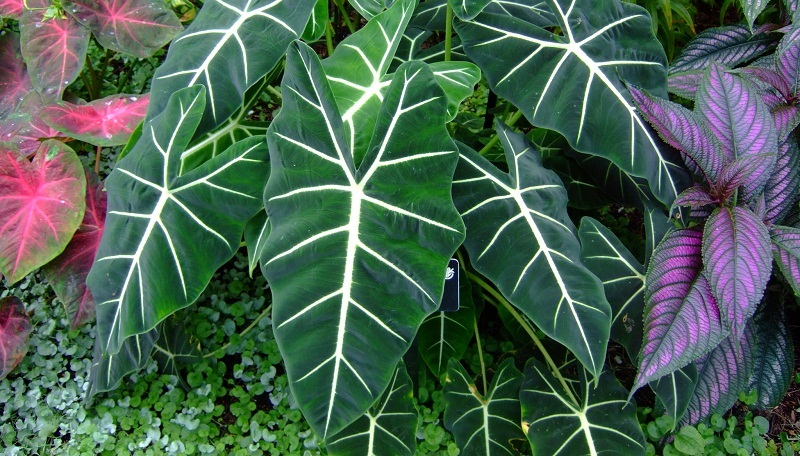
Alocasia (Alocasia) is a perennial, ornamental deciduous, exotic plant. The leaves of alocasia are elongated heart-shaped, pointed at the tips, the color of the leaf is dark green with white veins.
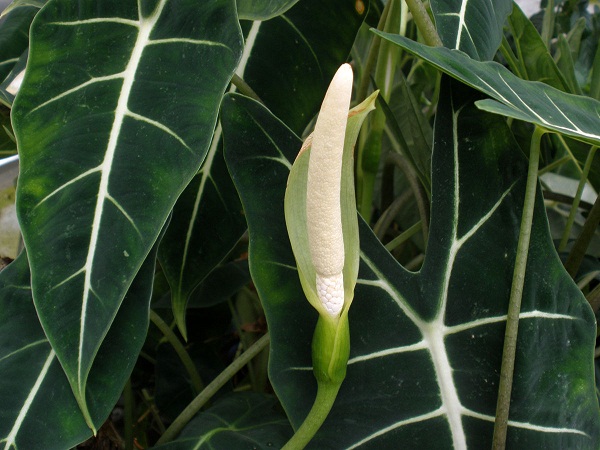
Alocasia blooms, flowers are inexpressive, white, collected in inflorescences. But it is impossible to achieve flowering when grown indoors.
Attention! Alocasia is a poisonous plant, use gloves when transplanting.
Types of alocasia
Most often, the following types of alocasia are sold in stores:
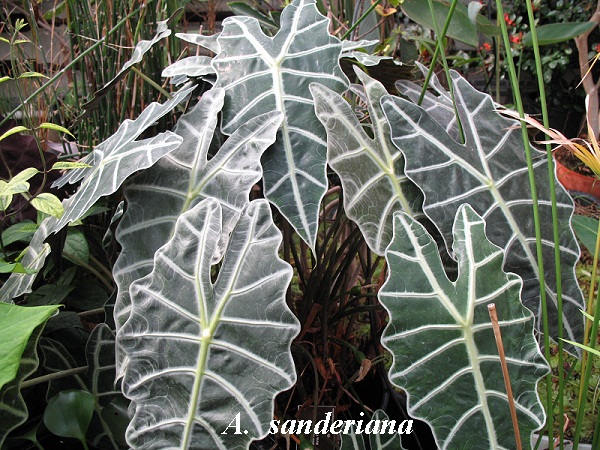
Alocasia sanderiana – white heart-shaped leaves are pointed at the corners, the leaves are metallic green in color, serrated at the edges.
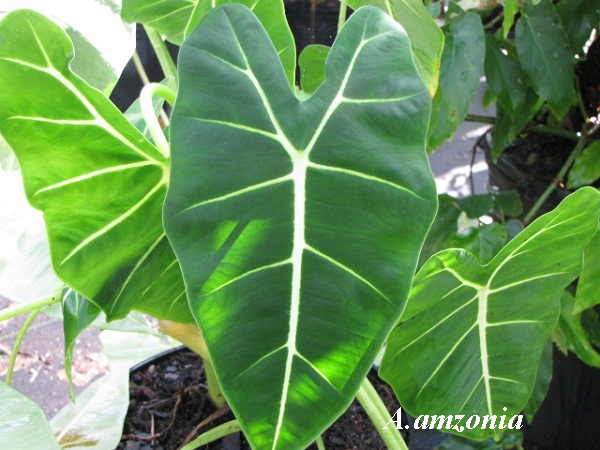
Alocasia amazonika – dark green leaves with bright white veins.
How to care for alocasia
Alocasia is a rather capricious plant, it reacts to uncomfortable growing conditions such as temperature and humidity, watering with cold water.
Light brightness for alocasia
Alocasia is a light-loving plant, it needs bright light without direct sunlight.
Air temperature for alocasia
Alocasia is a thermophilic plant, grows well at a temperature of +20°C, in winter the optimum temperature is +18°C.
Watering and humidity for alocasia
Alocasia is a moisture-loving plant. In the summer, abundant watering is required (up to 3 times a week), in winter, watering is reduced, but the earthen clod should not dry out, but should be slightly moist. Use soft and warm water for irrigation (+20°C). For alocasia, there should be high humidity, spray the plant 2 times a day.
Watch the video about indoor violet. Violet flowers are multi-colored, simple, double, wavy with a diameter of 2 to 4 cm.
Fertilizer for alocasia
It is necessary to feed the allocation every 2 weeks in the spring and autumn. Use fertilizers for ornamental deciduous plants.
Transplanting and soil for alocasia
Allocations are transplanted every year in the spring by transshipment into a larger pot, or the top layer of the earthen coma is replaced. The composition of the soil should include leaf soil, peat, moss, sand, charcoal (3:1:1:1:1)
Reproduction of alocasia
Alocasia is propagated by dividing the bush during transplantation.
Alocasia pests
The main pests of alocasia are aphids, whiteflies, spider mites, scale insects.


