
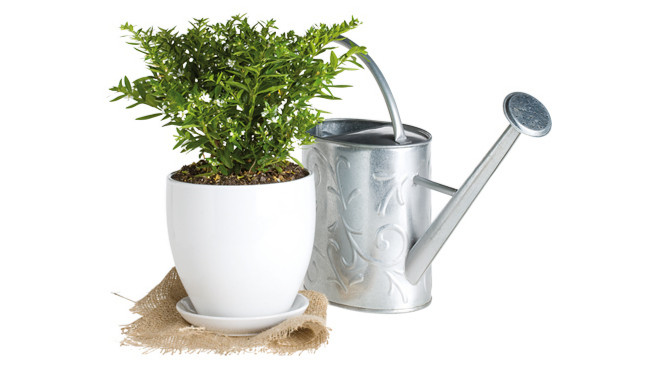
Features of caring for container flowers stem from the conditions that there is little soil, few nutrients and little moisture in containers.
Therefore, plants in containers need to be watered and fed much more often than in the open field. You can use the same fertilizers as for the main flower beds in the garden, or you can buy special, more concentrated ones. Be sure to cut off faded inflorescences from time to time, this should be done much more often than in flowers that grow outdoors. Do not forget: containers can be of any size, but you still need to try so that even the largest container can be moved if necessary.
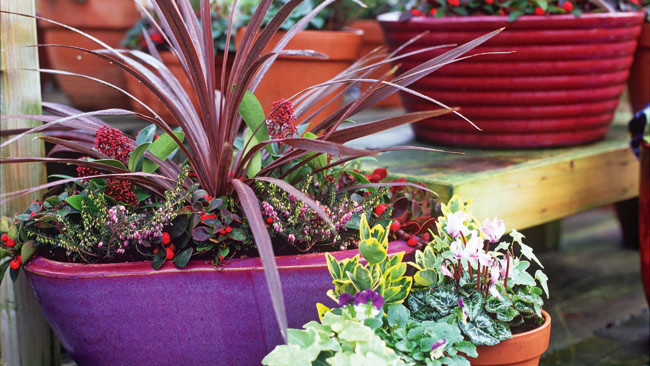
Watering and humidity for plants in containers
For plants planted in containers, daily watering is mandatory, since the soil in containers dries out faster than in the open field. In the hot summer period, plants need to be watered twice a day: in the morning and in the evening. Spraying plants in containers will also be well received, especially for ornamental deciduous and indoor plants. However, in no case do not spray plants in the sun – water droplets will serve as small lenses that can cause serious burns on the leaves. This should be done in the shade or in the evening, and use settled water. After each watering, lightly loosen the soil to a depth of 1-1.5 cm, only near the walls of the pot, so as not to damage the roots.
The smaller the container, the faster the roots absorb moisture from the soil. In small containers, if they are located in a sunny place, it is good to add hydrogel and perlite to the soil, then the earth will not dry out so quickly. If the forecast promises a heavy downpour, it is better to bring the containers under a canopy or cover with foil.
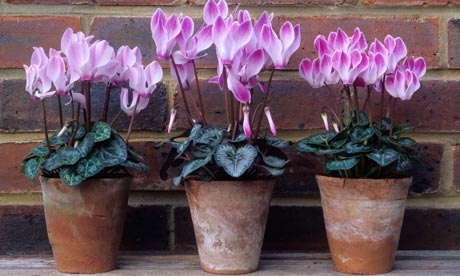
Features of feeding plants in containers
Sometimes plants in containers do not look very pretty. The reason is an insufficient amount of nutrients. In order for your plants in containers to feel good and bloom profusely, they must be fed every 7 days with a solution of complete mineral fertilizer. Several times during the summer, you can also feed with organic fertilizers diluted in a ratio of 1:20 (dry cow, chicken manure).
Fast-growing plant species should be fed once a week, slow-growing ones – once every 2-3 weeks.
The rule of thumb is that young plants need more nitrogen, while adults and flowering plants need more potassium and phosphorus.
Foliar feeding with a solution of mineral fertilizers will be very useful for plants in containers, especially for those plants that are in small pots, such top dressing is good and ampelous plants (feed during watering).
See also:ORCHIDS – ORCHID CARE
Features of plant care after flowering
For the active growth of plants in containers , be sure to remove weeds, cut off dried stems, cut off yellowed leaves, remove faded flowers along with seed pods, and remove faded plants completely, replacing them with others.
In autumn, all remnants of annual plants should be discarded; Prepare perennials for wintering, and move indoor plants indoors. The old soil must be thrown away so that diseases and pests do not accumulate, the containers should be washed well with soapy water and hidden until the next season.


